
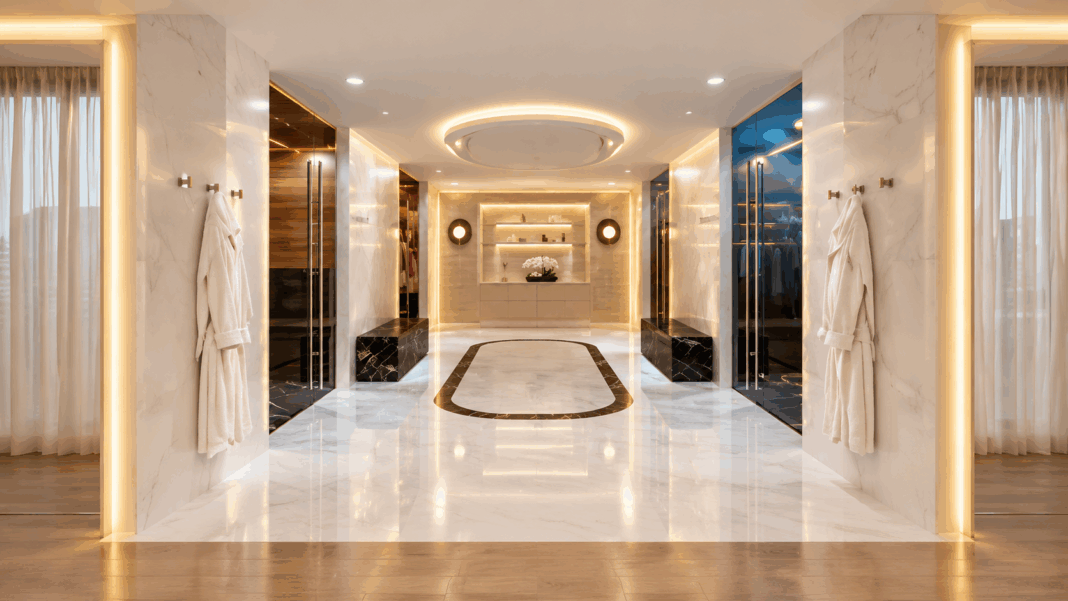
The hotel gym, that fluorescent afterthought tucked beside the ice machine, has been quietly losing relevance for years, and Hilton has decided to be the one to replace it outright. This January, when the 800-room Signia Hilton Indianapolis begins welcoming its first guests, it will introduce Signia Restore, an integrated wellness concept that treats recovery not as an amenity but as a reason to book the room in the first place. The space, designed by Rottet Studio, gathers high-performance training, clinical-grade recovery technology, mental reset rooms and a curated retail floor under one roof, overseen by a dedicated wellness concierge whose job is to translate a dense menu of options into something a traveler can actually use between a red-eye and a keynote. It is the clearest signal yet that the wellness-minded guest, the one who packs resistance bands and tracks sleep scores on the road, has become a demographic worth building rooms around.
The timing is not incidental. The Global Wellness Institute projects that wellness tourism will reach 1.4 trillion dollars by 2027, the very year Restore opens its doors, and the category is expanding faster than travel at large as burnout and the blurred line between work trips and personal maintenance push guests to expect more than a treadmill facing a wall. “At Hilton, we see wellness as an increasingly important part of how guests want to travel, whether they are on the road for business, attending a major event or simply looking to feel their best while away from home,” says Amanda Al-Masri, Hilton’s vice president of wellness. Restore is the brand’s answer, and it arrives with a specificity that suggests Hilton studied the premium boutique-gym and recovery-lounge economy carefully before committing.
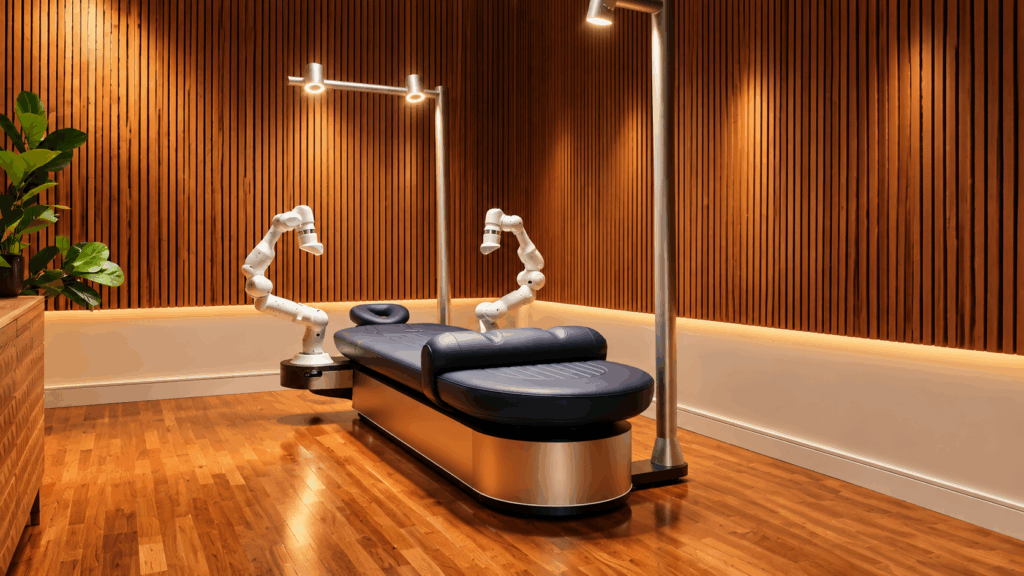
The fitness floor reads like a well-equipped members’ club: Peloton bikes and treadmills, rowers, conditioning gear, free weights and functional training zones. But recovery is where Hilton has spent its ambition. Restore will install Aescape, the AI-powered robotic massage platform that has been quietly colonizing premium gyms and hospitality venues, delivering precision bodywork without a human therapist on the clock. Alongside it sits the Ammortal Chamber, a multi-modality experience that layers red and near-infrared light, pulsed electrostatic fields, vibroacoustics, molecular hydrogen and guided breathwork into a single session, the kind of stacked-protocol device that until recently lived only in longevity clinics and the homes of the very committed.
The rest of the physical recovery zone fills in the contemporary biohacker’s wish list: Normatec compression, percussive therapy, an infrared halotherapy red-light sauna, a hybrid sauna, sensory showers and a dedicated cold therapy room. A separate mental recovery and readiness area is anchored by Zero G MindSync Harmonic Loungers, built to quiet the nervous system rather than the muscles, while the retail component sells functional nutrition, hydration products, wellness goods and athleisure, so a guest can leave with the supplement or the leggings that made the session work. It is a closed ecosystem, and crucially, Hilton has confirmed in its own FAQ that access will not be gated to overnight guests alone; locals will be able to book in too, positioning Restore as much as a neighborhood wellness destination as a hotel perk.
That detail matters, because it reframes what Hilton is actually building. Signia launched in 2019 as a meetings-and-events brand, engineered for the executive retreat and the leadership summit, and Restore leans into that lineage by offering private group buyouts for corporate gatherings, where a recovery floor becomes a genuine differentiator in a market where every convention hotel looks roughly alike. The company has said Restore will expand to select Signia properties worldwide after Indianapolis, though it has not named where, a restraint that reads less like hesitation and more like a brand testing its most expensive idea in one controlled room before scaling it.
What Hilton is betting on, finally, is a shift in what travelers refuse to leave behind. “With Signia Restore, we are expanding that vision through an experience that brings together movement, recovery and personalization in a way that feels elevated, approachable and highly relevant to today’s traveler,” Al-Masri says. The routine, once something a trip interrupted, is quietly becoming something a hotel is now expected to protect.