
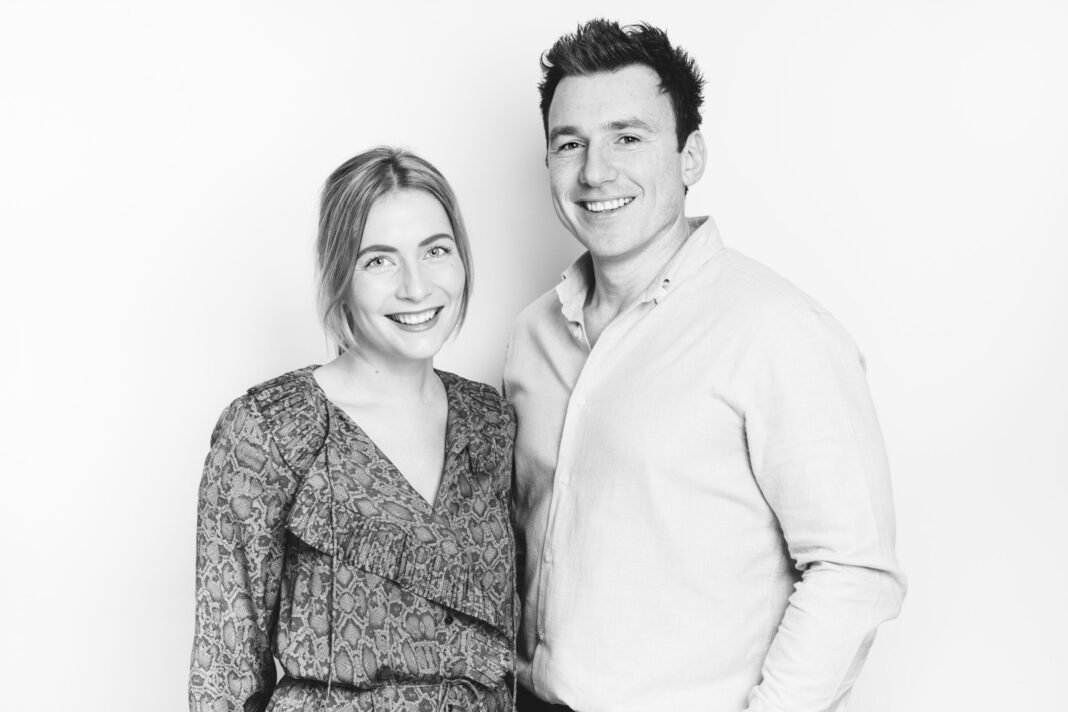
It started, of all places, on LinkedIn. Mark Curry, a scientist with what his wife calls a “crazy science-oriented but insanely creative entrepreneurial brain,” wanted to build a beauty brand and needed someone who could translate the chemistry into language a real person could use. So he messaged Colette Laxton, a marketing and brand communications specialist he’d crossed paths with years earlier at Boots U.K. The message became a company. The company, eventually, became a marriage. Eight years on, the two co-founders of The Inkey List sit at the head of a brand that industry sources expect to reach $200 million in retail sales in 2026, and they still talk about it the way they did at the start: as a problem they set out to solve for people who deserved better.
The problem, as they saw it in 2018, was noise. Skincare had become a maze of marketing jargon, endless trends and escalating price tags that left consumers overwhelmed rather than informed. “We believed people deserved better,” Laxton says. Their answer was radical in its plainness: transparent education, clinically proven formulas and packaging so unfussy it verged on austere, all engineered to keep prices between roughly $7 and $22. The simplicity was never an aesthetic pose. Stripped-down tubes made the products cheaper to produce, easier to stock and, crucially, less intimidating to buy.
If there is a philosophy underwriting all of it, the brand has given it a name: smart skinimalism, its own evolution of the pared-back movement that has been quietly reshaping bathroom shelves. Where traditional minimalism simply subtracts, The Inkey List frames its version around barrier health and multitasking ingredients that, in its words, work harder for your skin. The science is catching up to the sentiment. Research cited by the brand found that people using three to four products experienced significantly less irritation than those layering eight or more daily, and dermatologists have been vocal in agreement. “The 10-step skincare routine is definitely waning in popularity, and as a dermatologist, I’m very pleased about this,” board-certified dermatologist Dr. Loretta Ciraldo has said, noting that maximalist regimens introduced conflicting formulations and needless irritants.
The clearest proof of the founders’ method is a product they could have left alone. The Oat Balm Cleanser is one of their bestsellers, moving one unit every 30 seconds globally and ranking as the top cleansing balm at retailers including Sephora and Boots. Yet its ratings hovered around 3.9 stars, below the brand’s usual 4.3, as customers complained about oil separation, graininess, residue and a tube that fought back when squeezed. An early reformulation failed during scale-up testing. Rather than accept the compromise, Curry and Laxton went back to the lab and stayed there. “Four years and 129 formulations later, we just relaunched an entirely reformulated Oat Balm Cleanser,” Curry says. It arrived at Ulta Beauty in June, the centerpiece of a campaign pointedly titled “Zero Drama. For Every Skin.”, and early reviews have rewarded the patience, with the improved balm now posting a 4.8-star average. He kept the squeezable tube on purpose. “As someone who studied microbiology, I prefer it, too.”
That instinct to listen is not decorative. It runs through INKEYLab, the brand’s community-first platform where limited drops go directly to its most engaged customers before shaping what comes next. It produced a collaboration with community member Jamison Lange on reusable eye patches that began in Instagram DMs and sold out in 50 minutes. It also, Laxton is careful to note, has limits. “We don’t chase innovation for innovation’s sake,” she says, even as the brand brings exosomes to market at $22 and retinal technology at $15. The Ulta expansion, which followed years of Sephora exclusivity, outperformed expectations but taught them a different customer requires a different playbook.
Curry is unsentimental about what the job actually demands. “I always say, if you are a founder, you have to be resilient,” he says. “I joke that you have to be a psycho. You have to be able to sell the dream and show the success to your community, but at the same time, underneath the hood, you might have multiple people issues, your cash may be running out.” The dream he is selling, still, is the one from that first LinkedIn message: a prestige brand with mass appeal, proven at home in the U.K. and now spreading its wings. “The skincare industry doesn’t need more noise,” Laxton says. “It needs brands that genuinely care about helping people understand their skin.” That, more than any single formulation, is what they are betting the next $200 million on.