
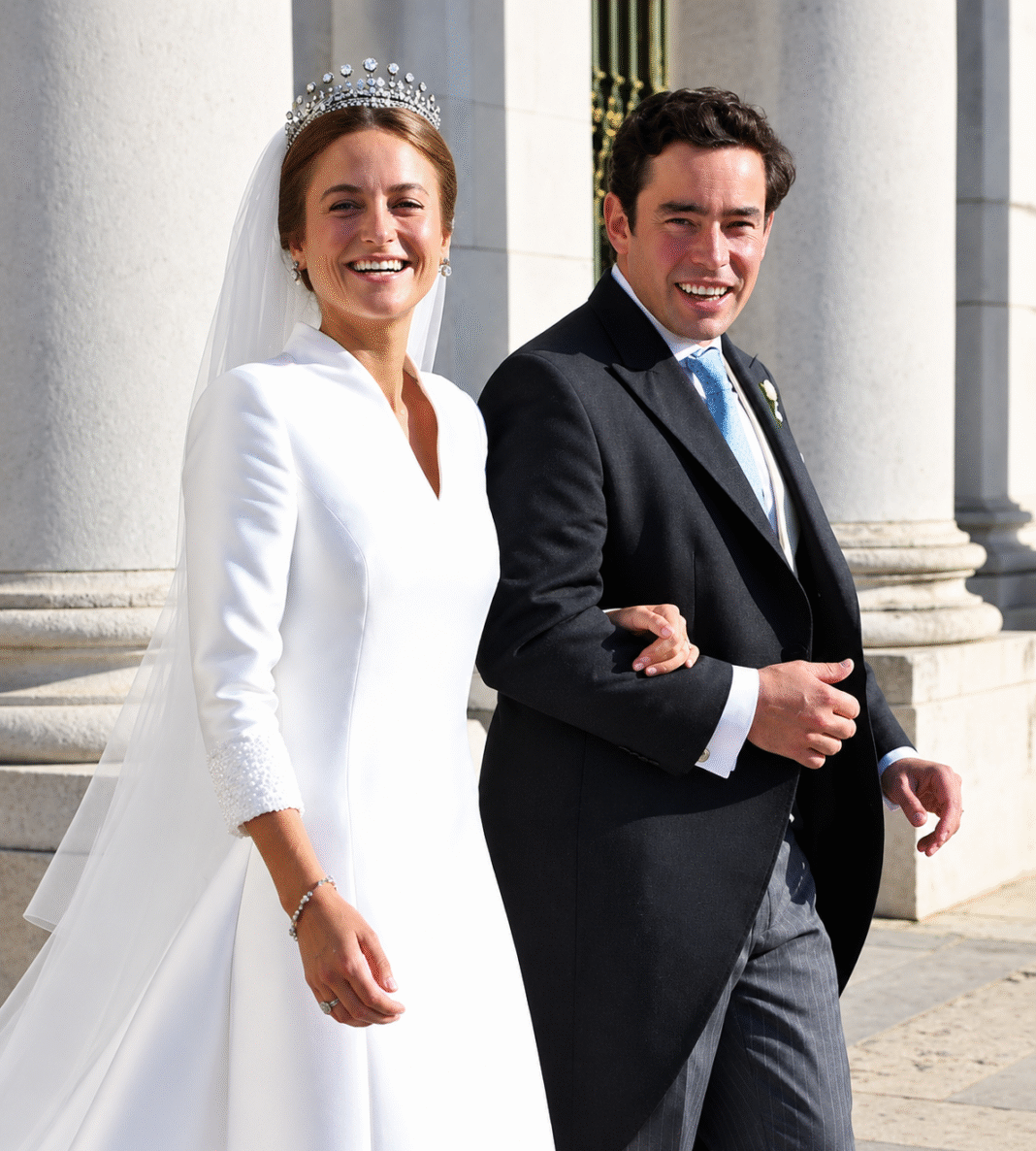
Portugal had not staged a royal wedding in nearly thirty years, not since the Dukes of Braganza married in 1995, and so when Maria Francisca of Portugal, Duchess of Coimbra, stepped from an eighteenth-century carriage onto a red carpet outside the Basilica of the National Palace of Mafra on October 7, 2023, the country understood it was watching something close to history. She came to marry Duarte de Sousa Araújo Martins, a lawyer and the grandson of the painter and architect João de Sousa Araújo, inside a Baroque monument her own ancestor King João V raised at the start of the eighteenth century. The cardinal patriarch of Lisbon, Dom Manuel Clemente, presided. Roughly twelve hundred guests filled the palace, among them representatives of the royal houses of Luxembourg and Liechtenstein, Miriam de Ungría with her sons the Princes of Bulgaria, and the Duke of Calabria. The symbolism was unmistakable: a court without a throne, dressed once more in its full inheritance.
At twenty-six, the bride turned to Portuguese designer Luzia do Nascimento, a choice she had telegraphed with uncommon serenity. “I know perfectly well that it’s going to be spectacular,” she told HOLA! that summer, speaking of Luzia and her niece Catarina with the ease of someone handing over a family secret. The gown answered the confidence. Cut from mikado silk, it drew its line directly from the dress her mother, Isabel de Herédia, wore in 1995, a deliberate act of continuity rendered in a flattering bateau neckline, three-quarter sleeves finished with cuffs embroidered in small crystals, and a long, unhurried train.
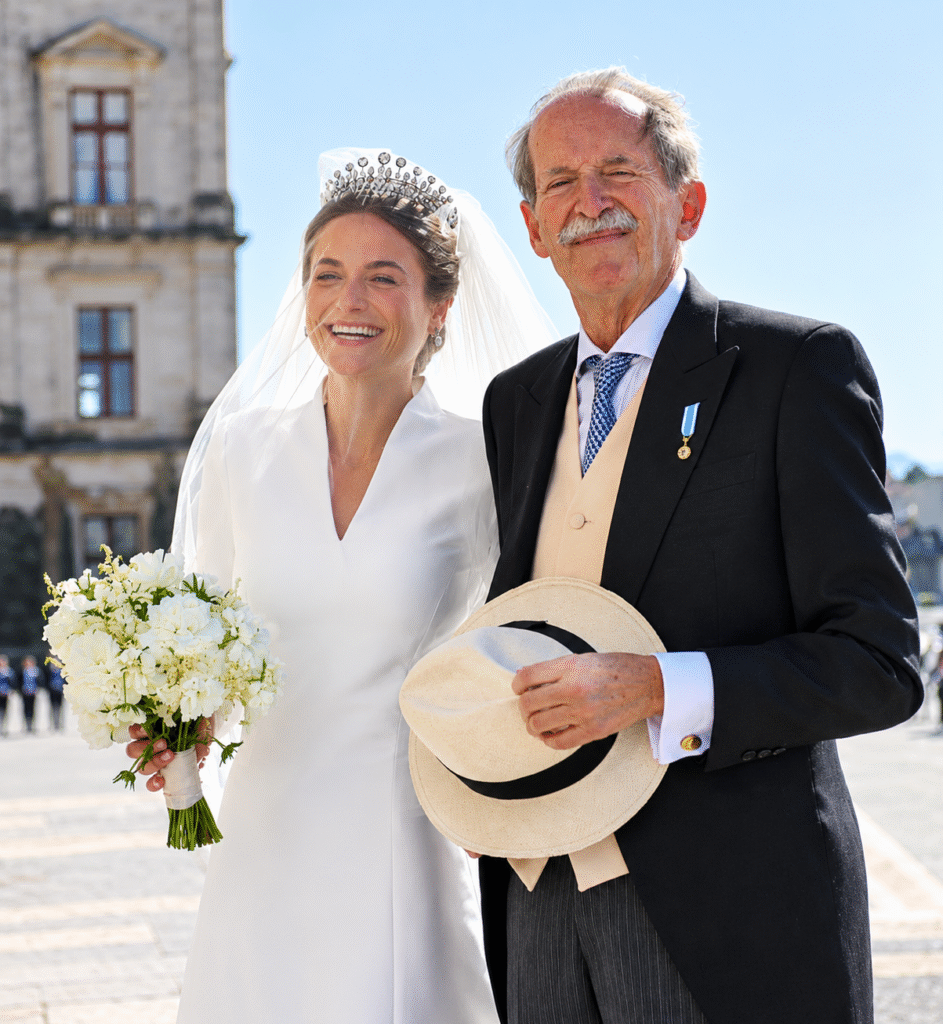
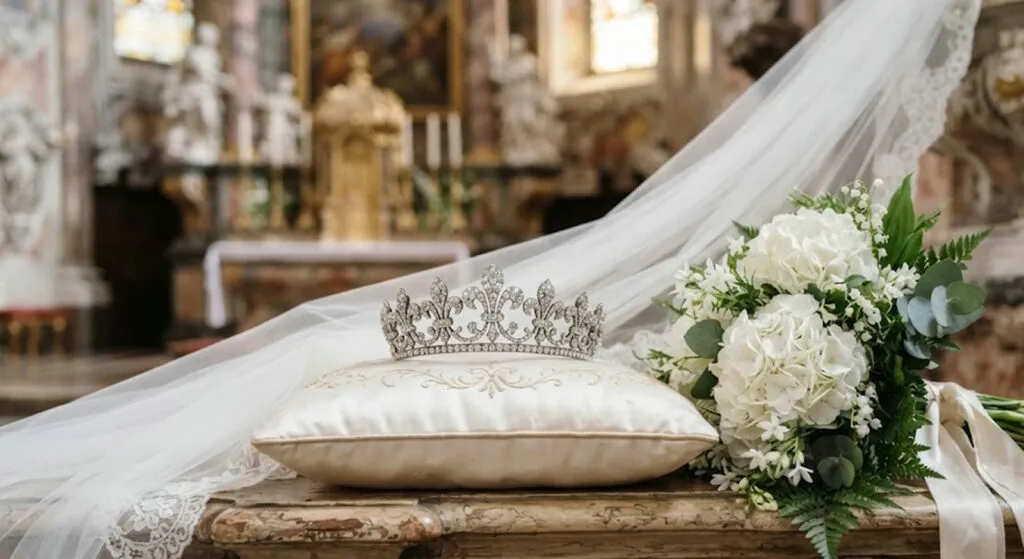
The jewels carried the deeper story. Beneath a cathedral-length veil of white silk tulle sat a tiara made in 1887 for Amélia of Orléans, the last queen of Portugal, a commission from the crown jewellers Leitão & Irmão set with eight hundred diamonds in silver and gold, worked into fleur-de-lis motifs and rows of diamond necklaces. The piece was conceived with a quiet cleverness that suits a family in waiting: in the Renaissance manner, it can be worn closed like a crown or opened flat as a tiara. Amélia kept it after the monarchy fell in 1910 and left it to her godson, the present Duke of Braganza, whose wife wore it first in 1995 and whose daughter now wore it second. Maria Francisca paired it with antique diamond clip earrings chosen to echo the round toppers of the diadem, and carried a bouquet of white hydrangeas touched with greenery, aligning herself with the restrained school of royal brides rather than the cascading drama of Diana or Charlotte Casiraghi’s single sprig of lavender.
There was a public dimension few modern weddings attempt. On leaving the basilica, the newlyweds greeted the crowds gathered in the Terreiro and cut the first cake of the day with a sword, a loaf shared out among the thousands who had waited behind flags and portable chairs. Only then did the celebration turn private, moving to the bride’s family home in São Pedro de Sintra for a gala dinner of some four hundred and twenty guests built around traditional Portuguese gastronomy.
For that reception, Maria Francisca did what Kate Middleton, Beatrice Borromeo, and Princess Eugenie all did before her, changing into a second, lighter dress, this one kept secret until the final moment. Also by Luzia do Nascimento, it was simple and white with a halter neckline that read as a clear nod to the Stella McCartney design Meghan Markle chose for her own evening in 2018. She finished it with emerald and diamond earrings and a matching brooch that had belonged to her grandmother Francisca, tucked into a half-up hairstyle. In a single day the Duchess of Coimbra had answered both of royal fashion’s standing questions, honoring a lineage with one gown and joining a global conversation with the next.