
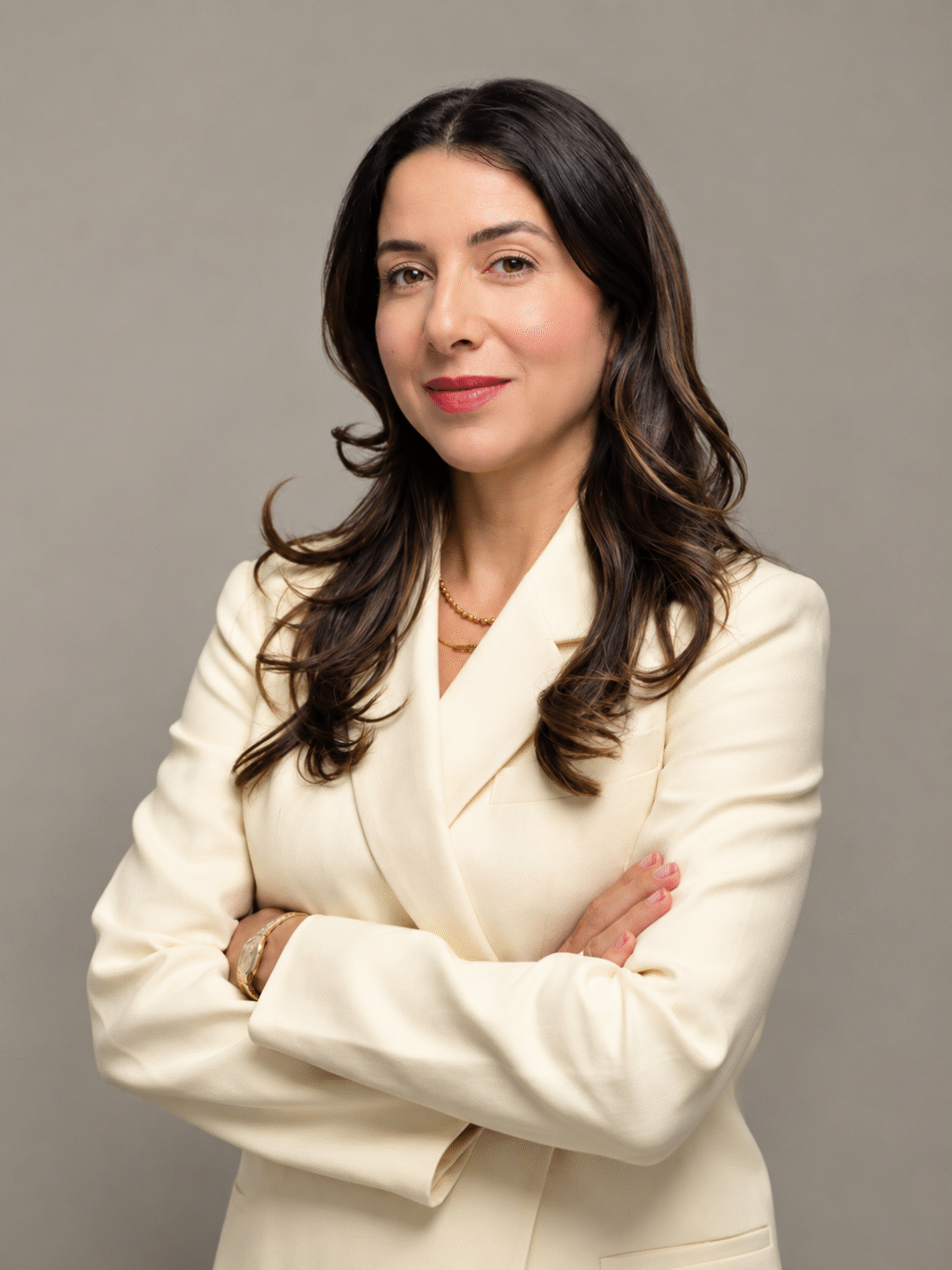
In the same week Sasha Plavsic signed away the majority of ILIA Beauty, the clean makeup brand she had grown from a late-night experiment in a Vancouver studio suite into a hundred-million-dollar business, she was too depleted to stand up. Years of unrelenting stress had hollowed out her immune system, and a kidney infection moved in with a severity that would take two and a half years to recover from. “It could have killed me,” she says now, with the plainness of someone who has stopped dressing up the truth. The 2021 sale to the Courtin-Clarins family, the storied French dynasty behind Clarins and their first major acquisition through the holding company Famille C, should have been the summit. Instead it was the moment her body finally sent the bill for the climb.
Plavsic’s ascent reads, at first, like the tidiest of founder fables. In 2009, freshly heartbroken and fighting the acne that had shadowed her since childhood, she moved back in beside her parents’ garage at thirty. Her mother, already fluent in ingredient labels from years of managing her son’s severe allergies, told her to read what she was actually putting on her skin. What Plavsic found unsettled her: several of the products marketed as remedies were quietly aggravating her breakouts. This was well before “clean beauty” congealed into a marketing category, when the shelves offered a hard choice between naturals that underperformed and prestige formulas thick with dubious ingredients. She saw the gap and moved into it, funded by a $25,000 line of credit and two credit cards, formulating a tinted lip balm from eight at night until two in the morning after full days at an aromatherapy company. Three manufacturers told her it could not be done before a fourth agreed to try.
Her instincts, it turned out, were her sharpest asset. When Sephora came calling in 2012, a year after launch, she said no, understanding she lacked the capital and strategy to make the partnership pay. She was right to wait. By the time ILIA arrived in Sephora in 2017 with two products, she had helped the retailer define the very clean beauty standards it would sell against. The gamble compounded spectacularly. The brand’s hero, the Super Serum Skin Tint SPF 40, a dewy hybrid of niacinamide, hyaluronic acid, and mineral sun protection now clinically tested and stocked in some thirty countries, has moved more than a million units. “A lot of decisions I’ve made are from that little voice in your head or feeling in your stomach,” she says. “It’s amazing what we do to cover it up and not listen to it.”
But intuition is a poor defense against the arithmetic of scale. ILIA’s revenue leapt from $5 million in 2018 to $100 million by 2021, and Plavsic’s body absorbed every increment. She had her first child in 2015, lost a parent, and ran the company largely solo while her husband traveled eight months a year. “I was pretty much dying inside,” she says. Her story is less an outlier than a symptom: research from the Female Founders Alliance finds that seventy-five percent of women founders experience burnout, with forty percent citing gender itself as their chief fundraising barrier. Women pitch to skepticism, defending downside scenarios, while men pitch to opportunity. Even past a million in revenue, she says, raising money “was like pulling teeth.” Recognizing her ceiling, she did what many founders resist until too late, and hired a CEO in Lynda Berkowitz.
The relocation to Canada after the sale was where the reckoning landed. Her kidneys were failing, the accumulated interest on years of running on adrenaline. “It was a moment of like, okay, I got to figure this out, because actually nothing else matters,” she says. The timing of the exit proved fortuitous as the M&A market cooled, but the real dividend was space to heal. She offers a fisherman’s metaphor for her rebuilt relationship to work: once she lived at the bottom of an icy Canadian lake, holding her breath; now she stands on top of it, reaching into the soft spots only when needed. She keeps most meetings midweek, guards one daily hour she calls “my little moment,” and accepts help at home without the old guilt, though guilt, she admits, still visits weekly. That guilt is not personal failing but cultural design, a game rigged so that a woman is either an absent mother or an underperforming founder. Plavsic has quietly retired the fantasy of having it all. “You’ll never regret picking your family over some opportunity in business,” she says.
“You won’t remember that one meeting. You’ll remember the other moments”