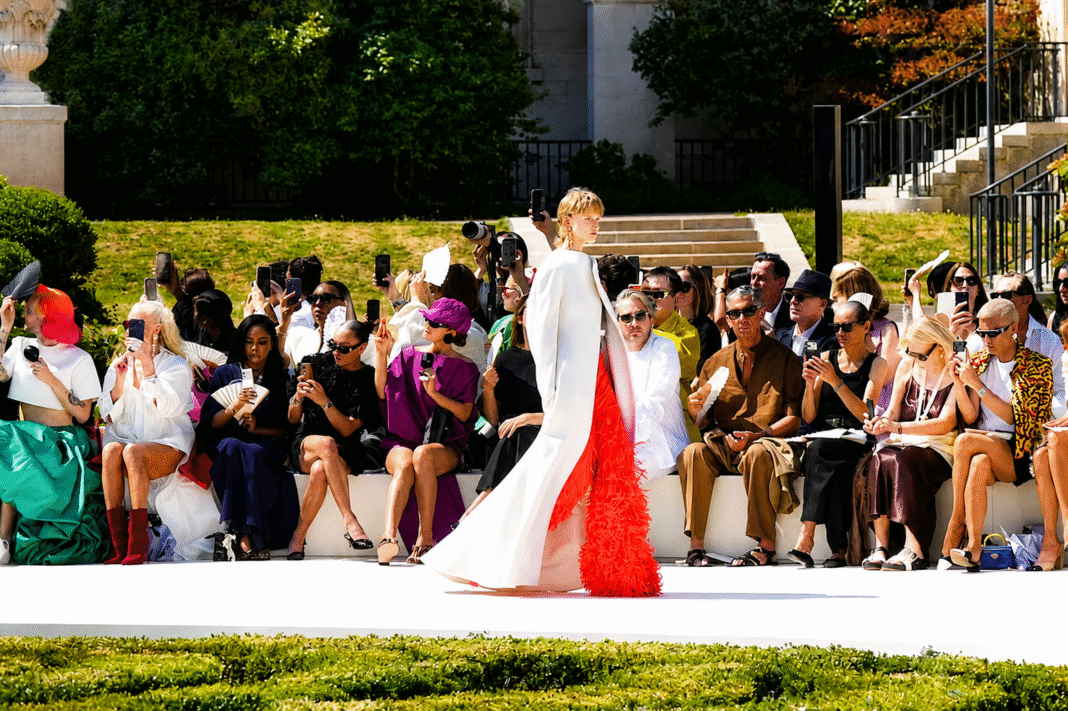
On the morning of July 8, in the circular garden of the Cité Internationale Universitaire de Paris, more than a year of anticipation finally resolved into fabric. Pierpaolo Piccioli, the Rome-born designer who left Valentino in 2024 and took the helm of Balenciaga last summer, presented the house’s 55th couture collection under a scorching Paris sun, his first since assuming the role. He chose not to stage it inside the historic salons at 10 Avenue George V, and that decision alone signaled the tenor of everything that followed: a return to first principles, staged in the open air, watched by a front row that included Lily Collins, Demi Moore, Rachel Sennott, Teyana Taylor, and Anna Wintour.
What Piccioli offered across fifty-two looks was not a raid on the archive. He resisted the obvious temptation to resurrect Cristóbal Balenciaga‘s most recognizable silhouettes and instead reached for the deeper grammar underneath them: the methods, the values, the belief that couture is a discipline before it is an image. “Change comes from within,” read one line from his show notes, and the phrase functioned less as a slogan than as a thesis. Newness, in his telling, does not begin with surface decoration. It emerges from construction, from cutting and draping, from the hands inside the atelier.
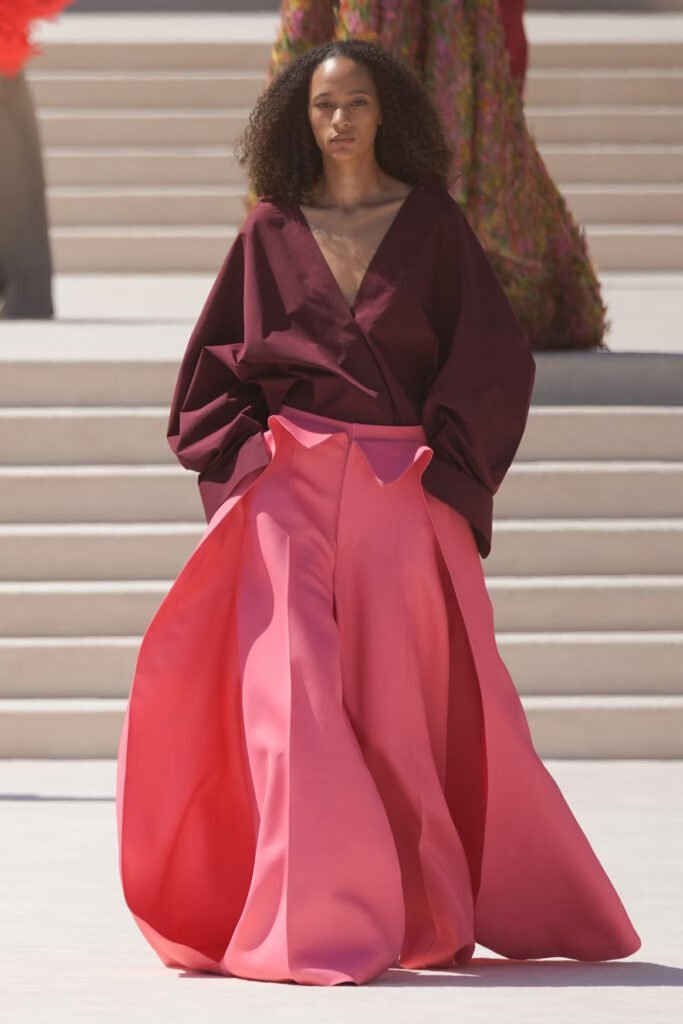
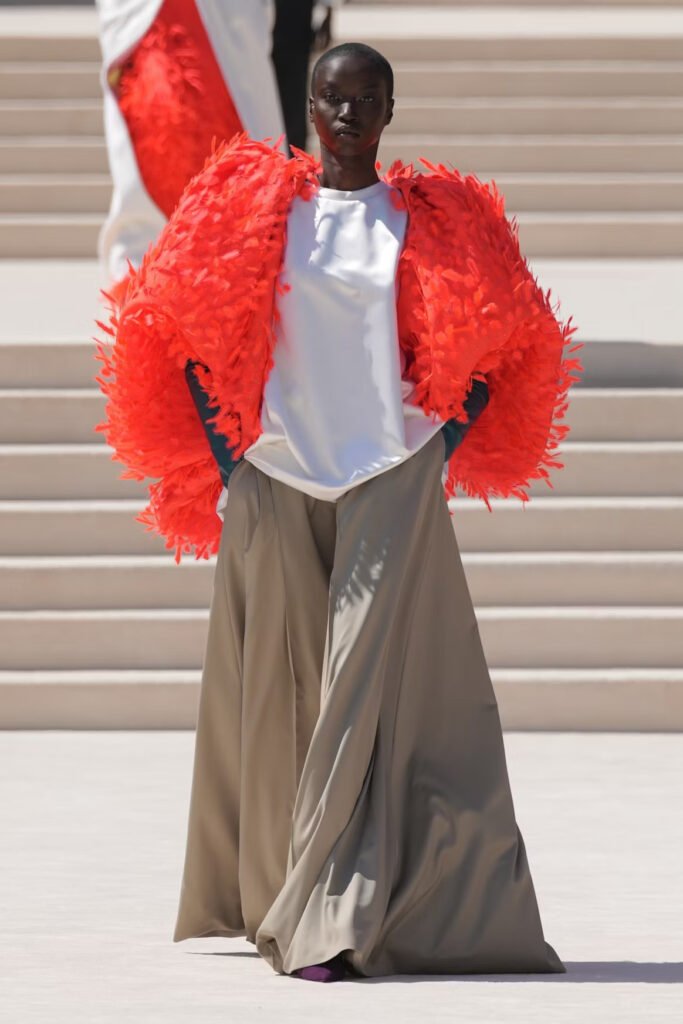
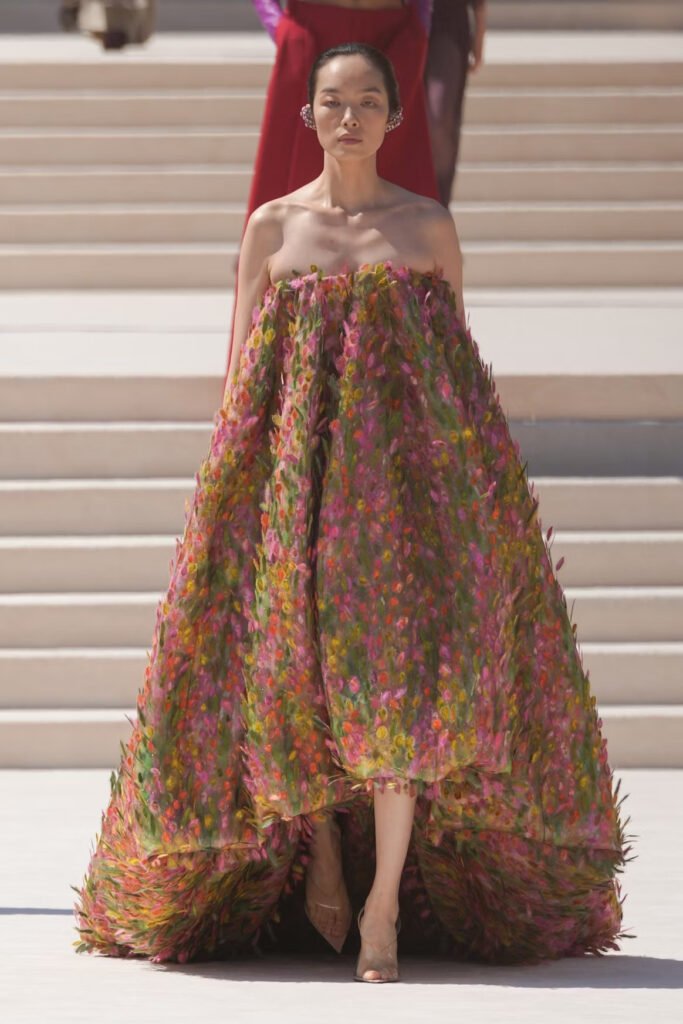
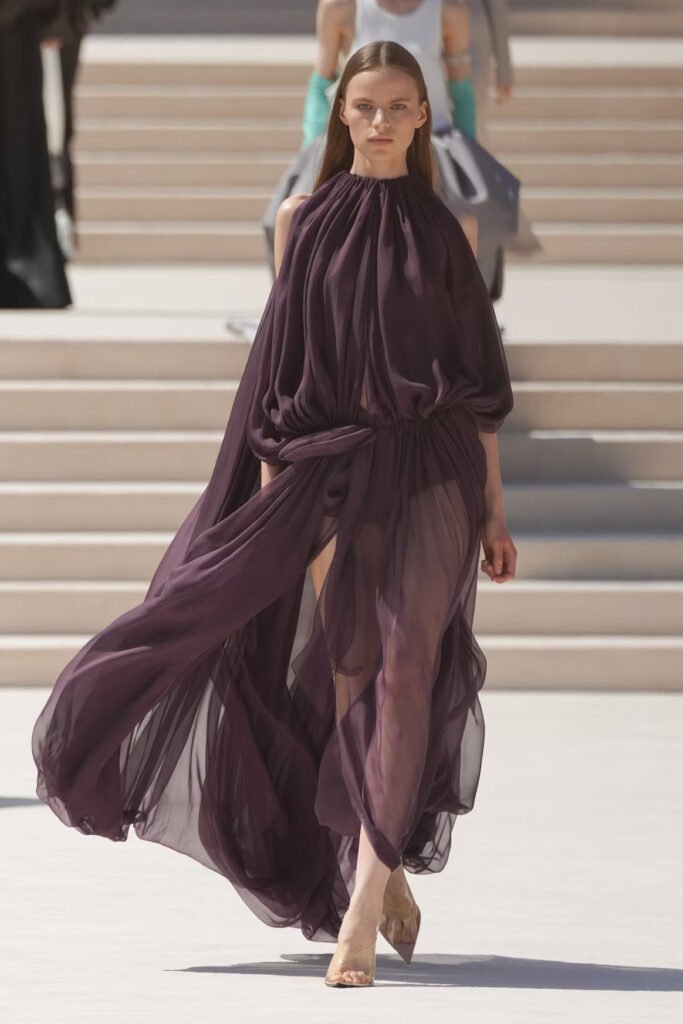
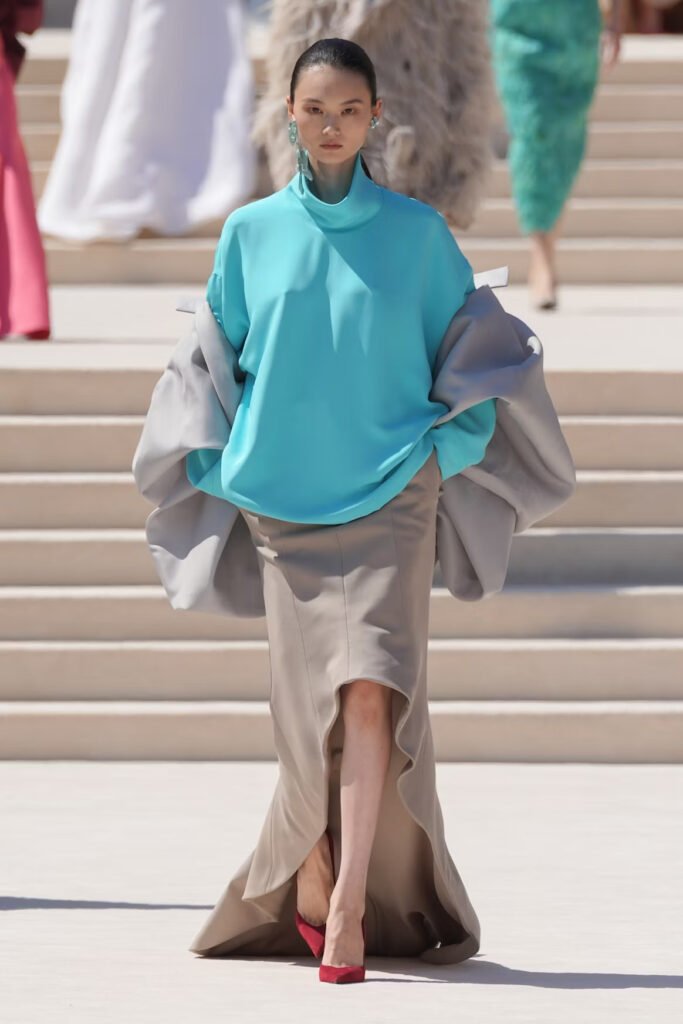
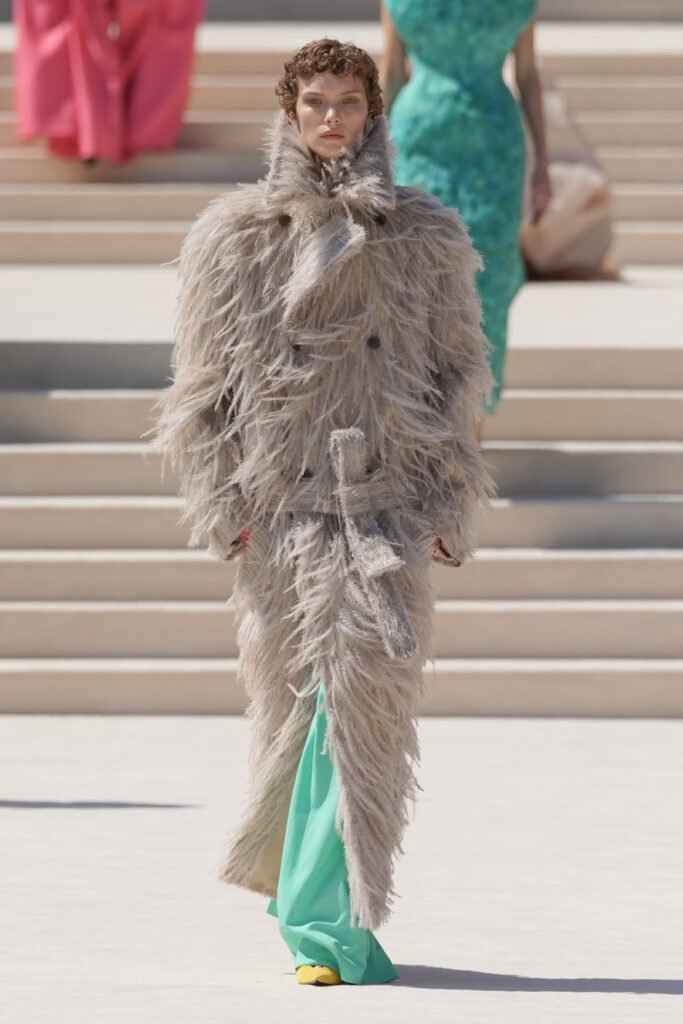
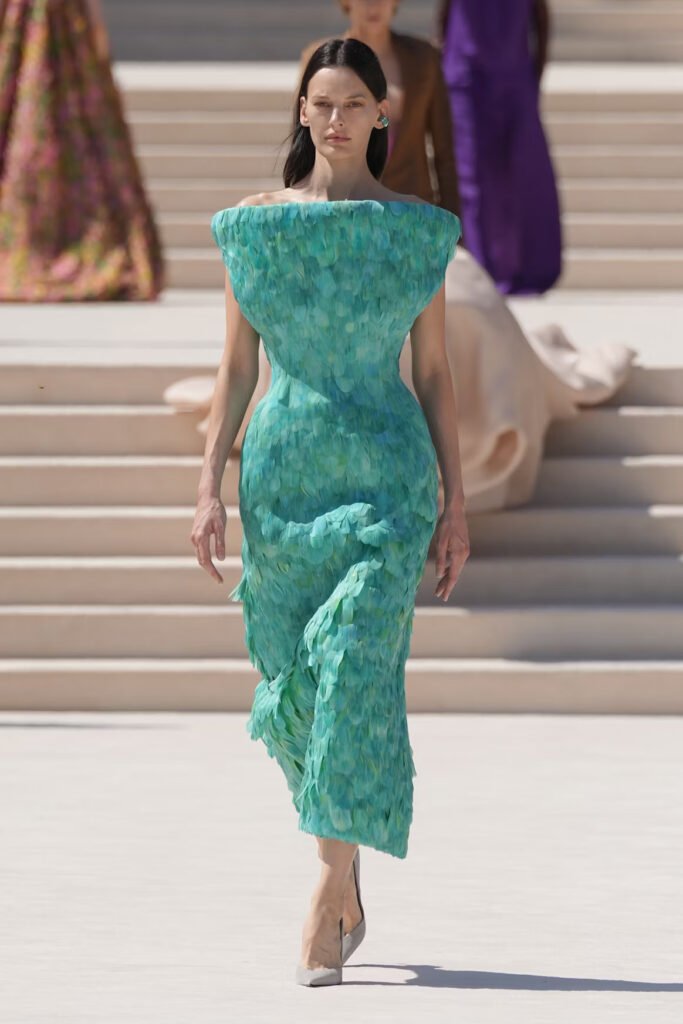
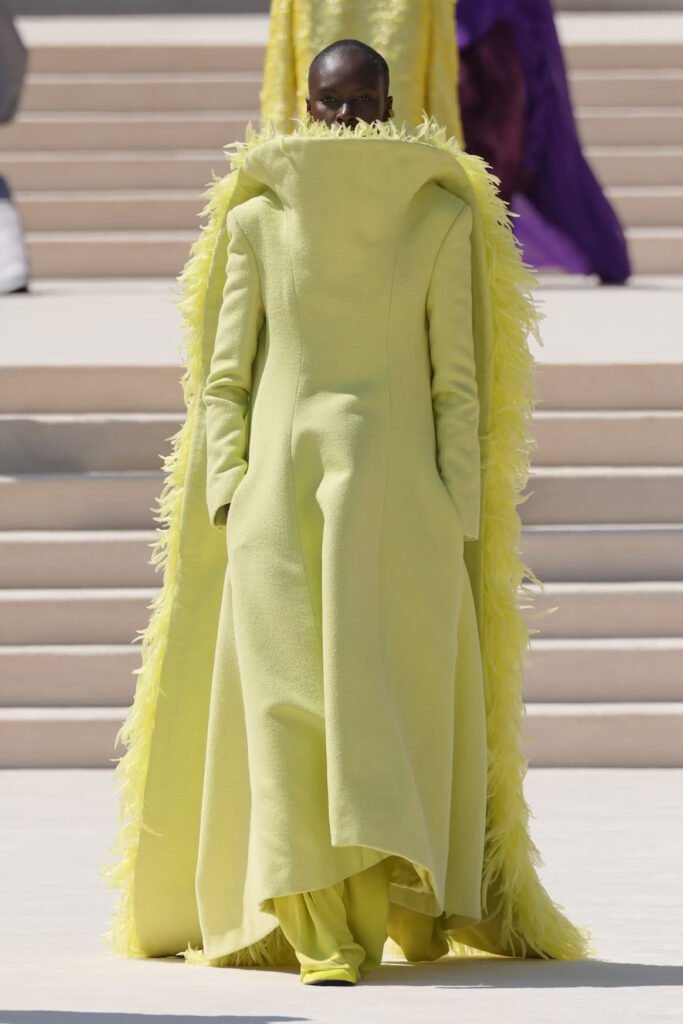
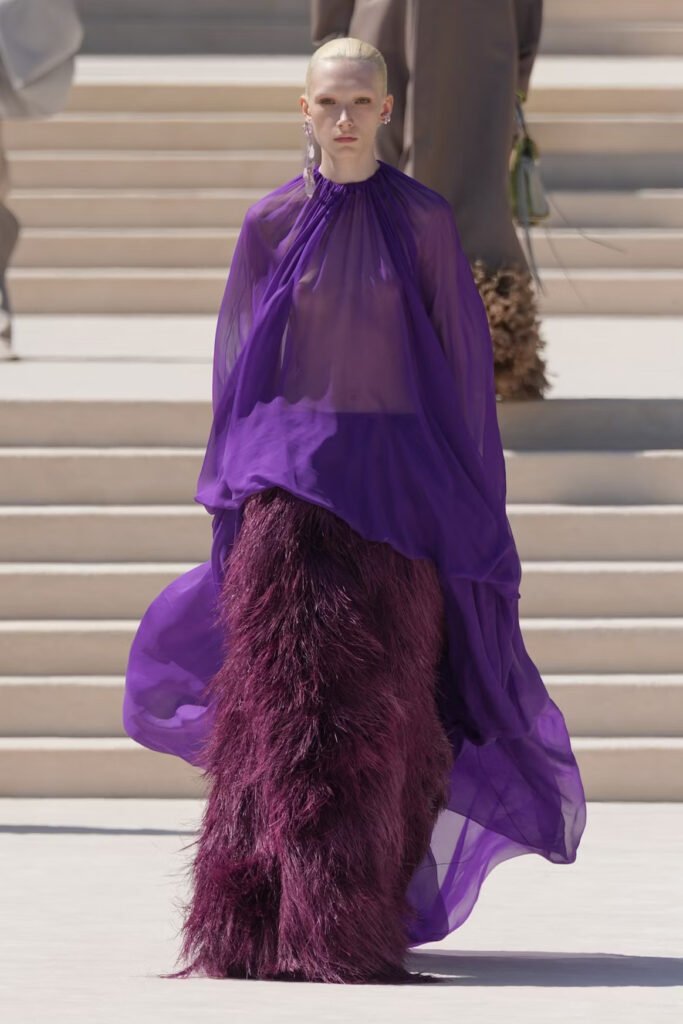
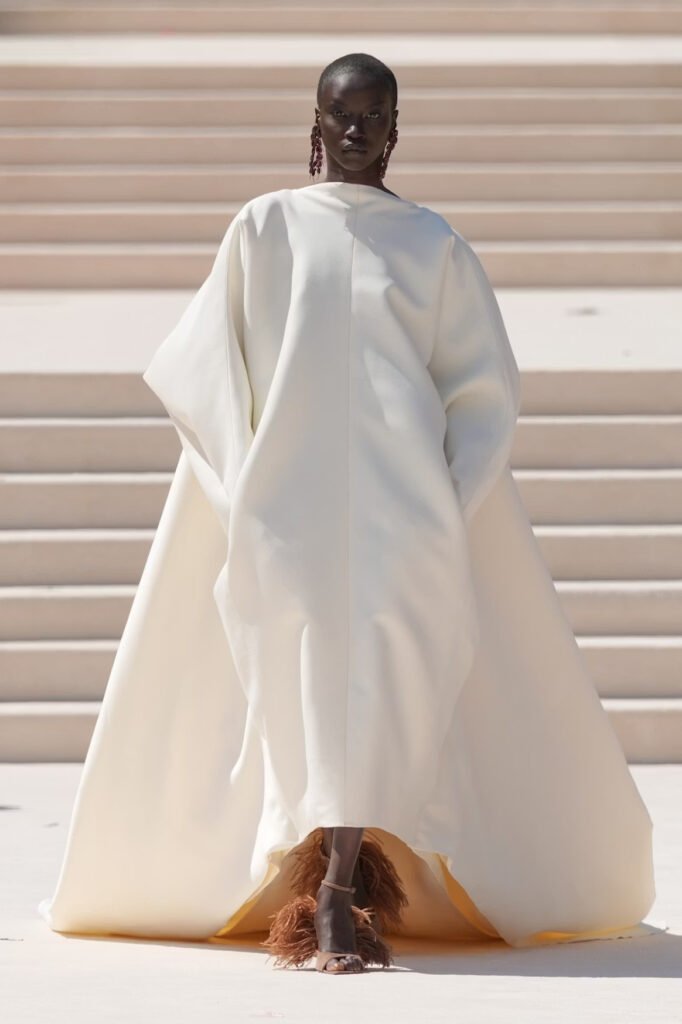
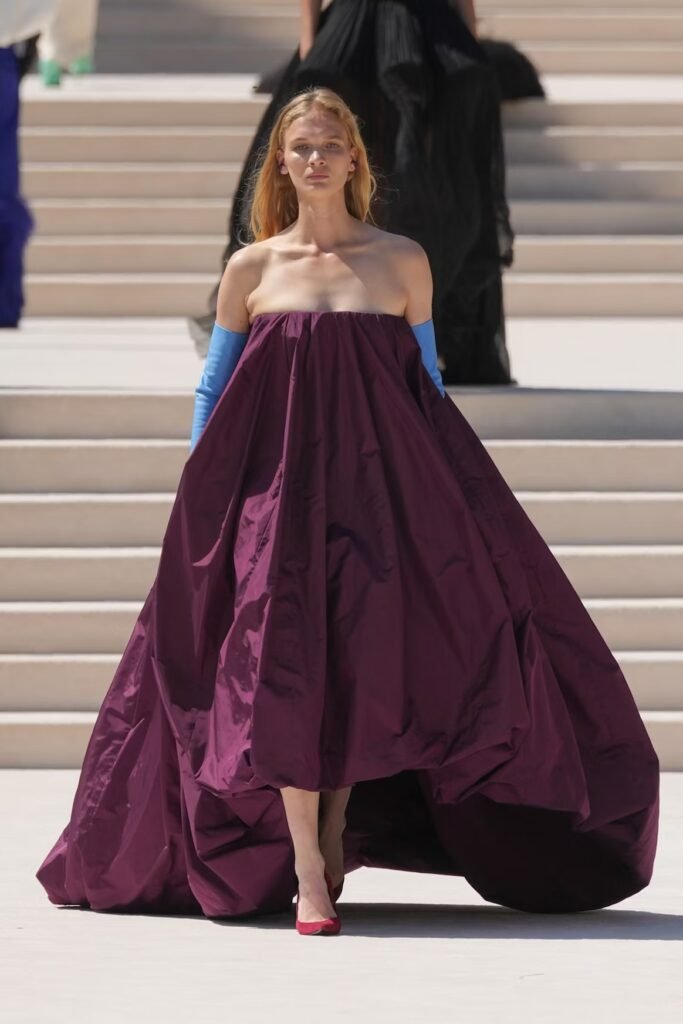
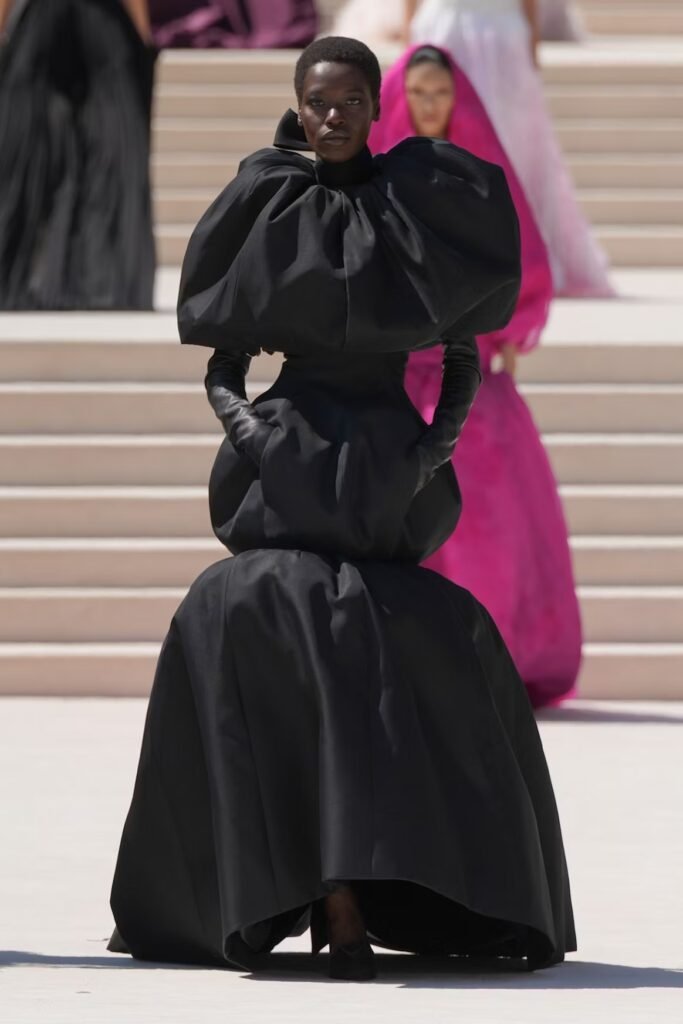
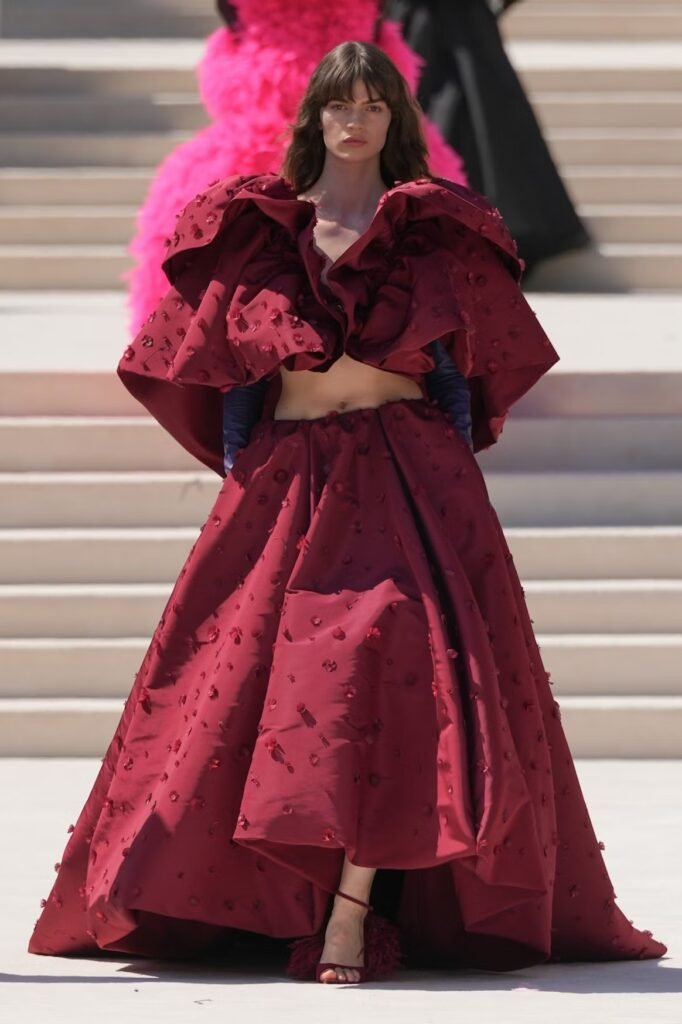
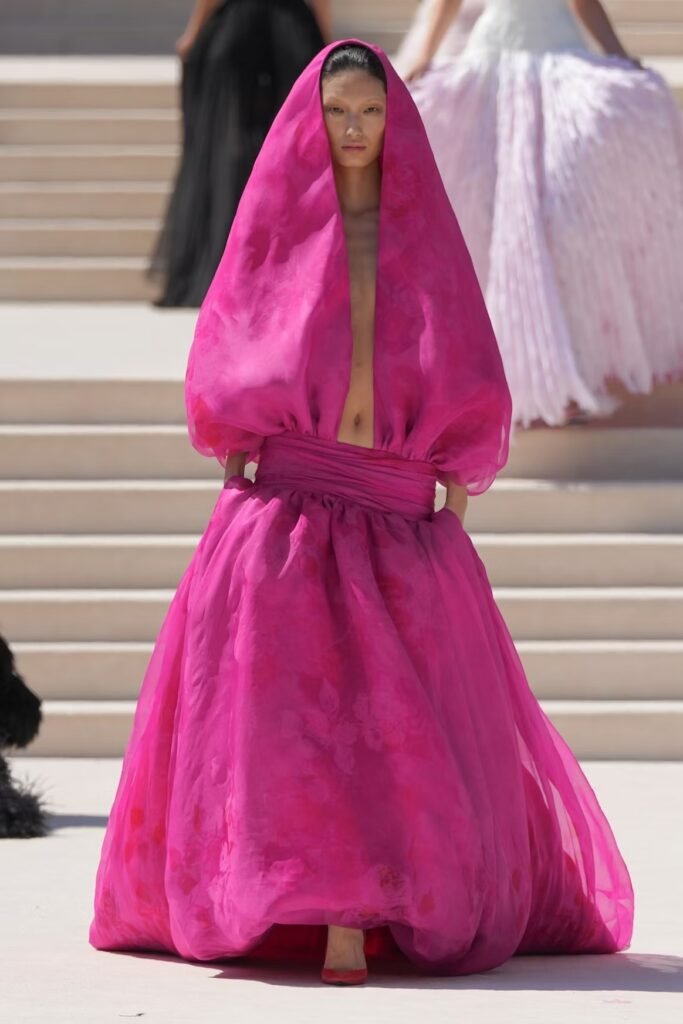
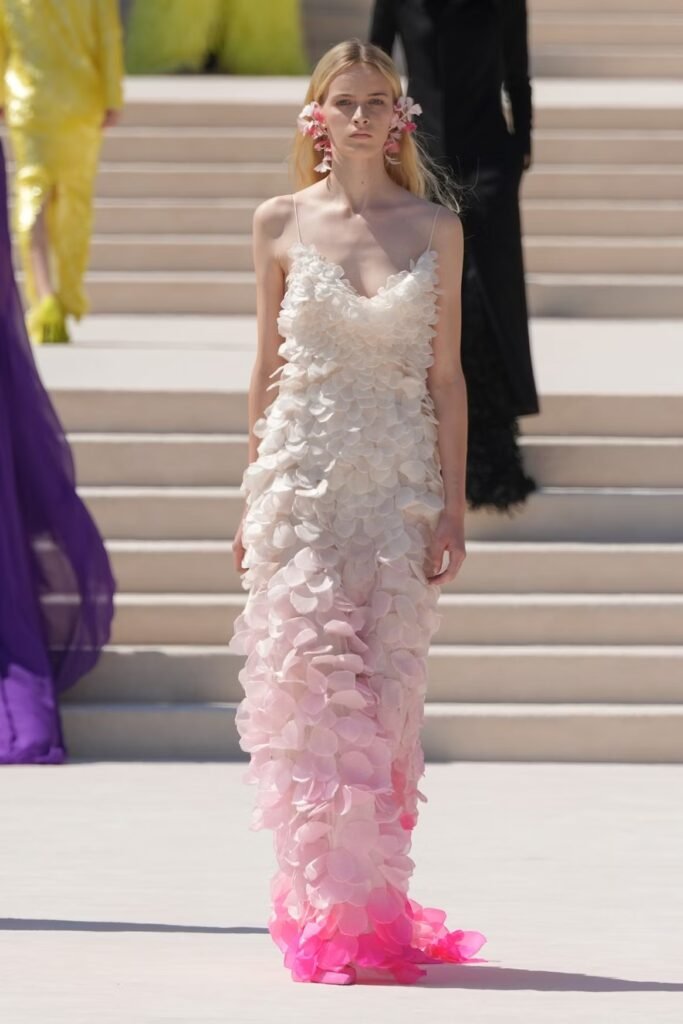
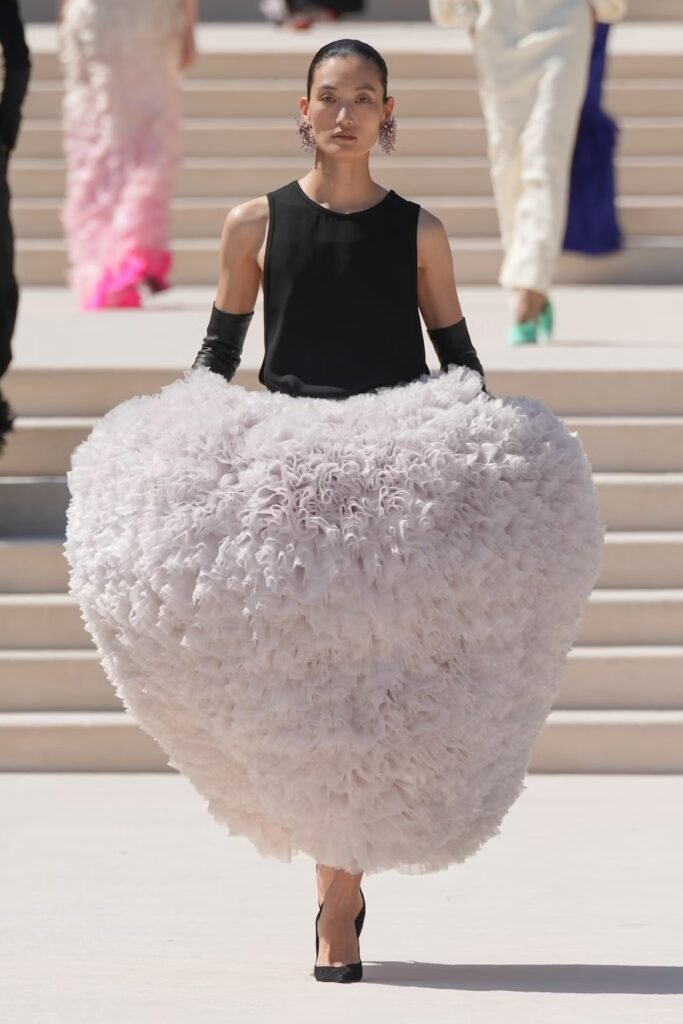
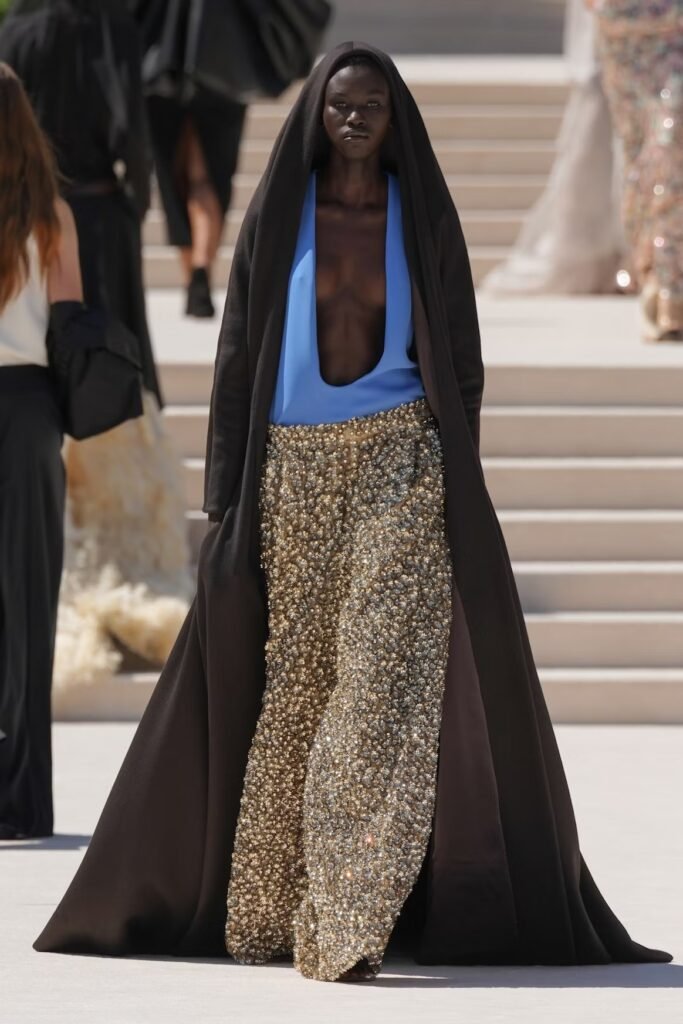
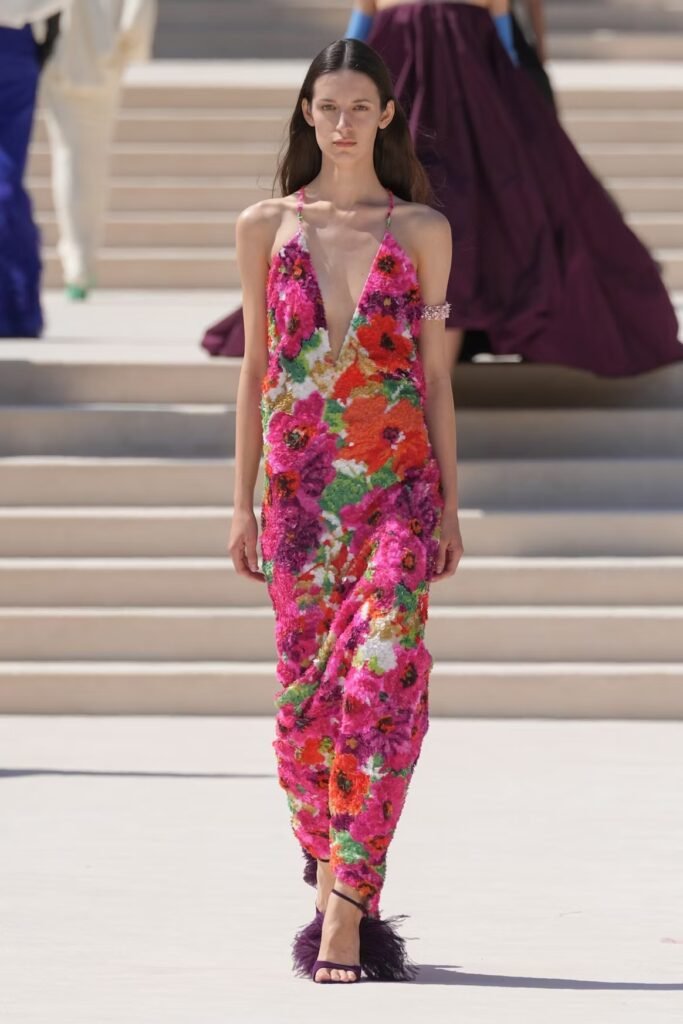
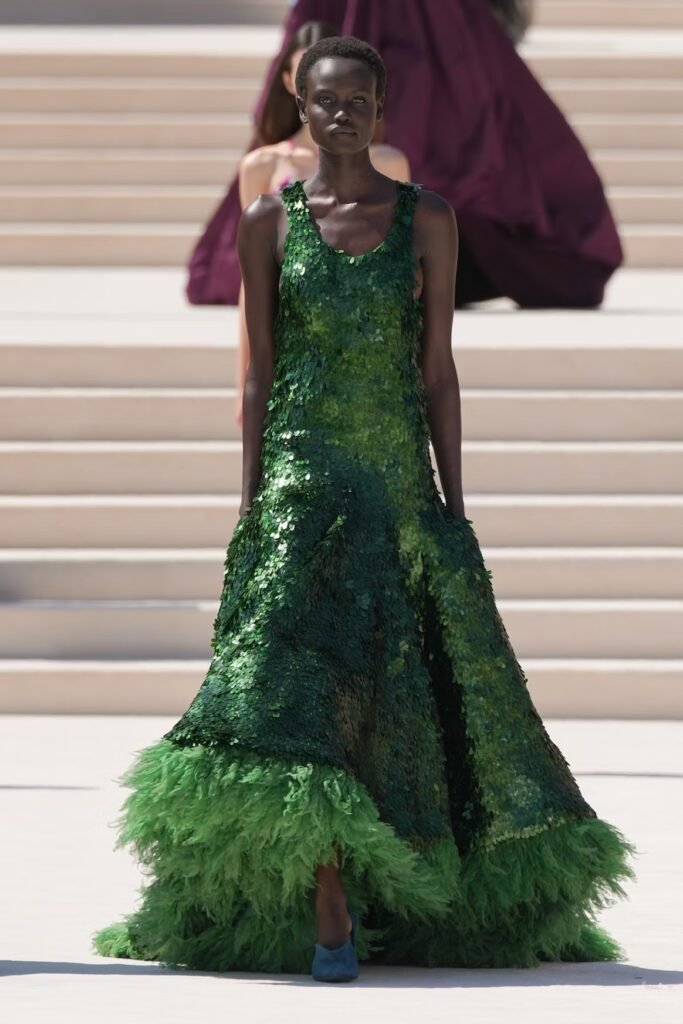
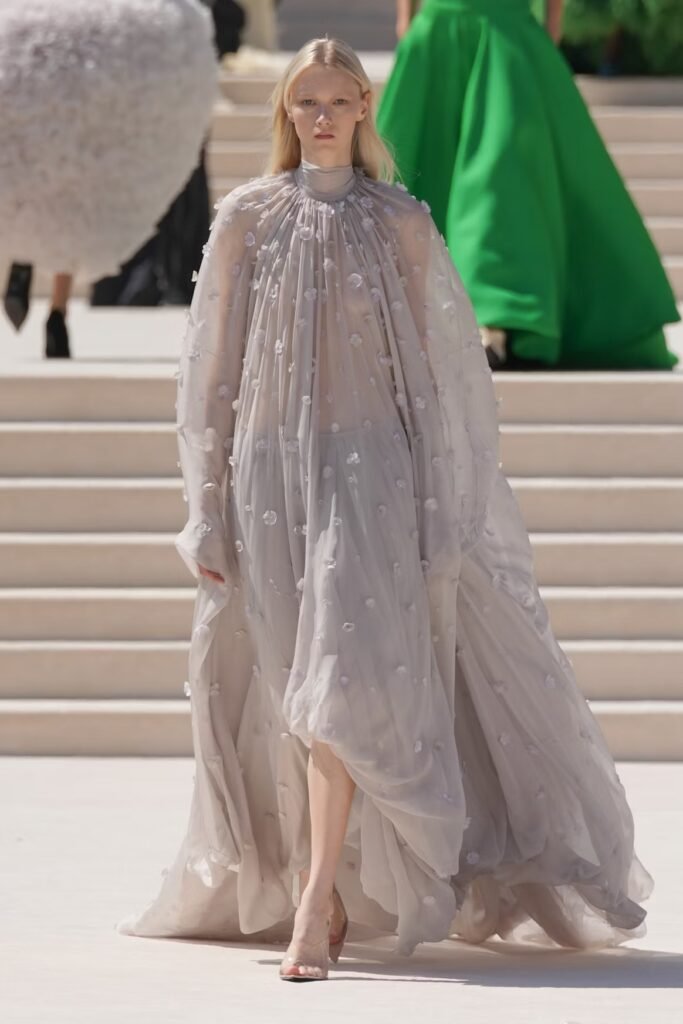
The collection carried an almost elemental quality, the visual logic of a classroom learning to name its shapes. Colors moved from high saturation to absolute achromatic black, volumes swelled to gargantuan proportions in one look and shrank to something dainty in the next. Piccioli understood, as Cristóbal did, that a run of vivid tones needs the interruption of black to be fully seen. A phosphorescent yellow coat might arrive beside lilac feathered trousers, purple opera gloves beside red tailored slacks, before the all-black looks returned to cleanse the eye, the couture equivalent of sorbet between courses.
There was precision in every line, but Piccioli insisted the collection was born of feeling rather than technique. “We built our own language, full of new words and timeless ones,” he said. “We searched. We tried. We remembered.” That attention to remembrance extended to the body itself. Cashmere coats and dresses were tailored from three-dimensional digital scans of the individuals who would wear them, producing an uncanny rightness between garment and wearer, a fit that reads less like fate than like careful engineering. The dimensionality demanded a full 360-degree view; a single piece could transform entirely between its entrance and its exit.
Piccioli also pushed the house’s long history of textile innovation somewhere genuinely forward. Among the materials on the runway was AMSILK, a bioengineered silk alternative produced through protein engineering rather than sericulture, its arrival marking one of the first appearances of lab-grown silk in a couture context. It was a quiet gesture toward a sustainable future, folded into a collection otherwise concerned with permanence.
The show closed not with a designer’s solitary bow but with roughly fifty artisans from Balenciaga’s ateliers descending the university steps in white coats, walking alongside Piccioli to a standing ovation. Some smiled, some wept. “This is our collection. This is our work. This is Balenciaga Couture now,” his notes declared, and the finale made the sentiment literal. In a season that followed poetic triumphs at Dior, Chanel, and Schiaparelli, Piccioli answered the question every incoming creative director eventually faces, what does this house mean to you, by treating Cristóbal’s legacy as something living. Eccentric at its surface, fundamentalist at its heart, the collection concerned itself with belief systems rather than spectacle: something profoundly familiar, and entirely new.