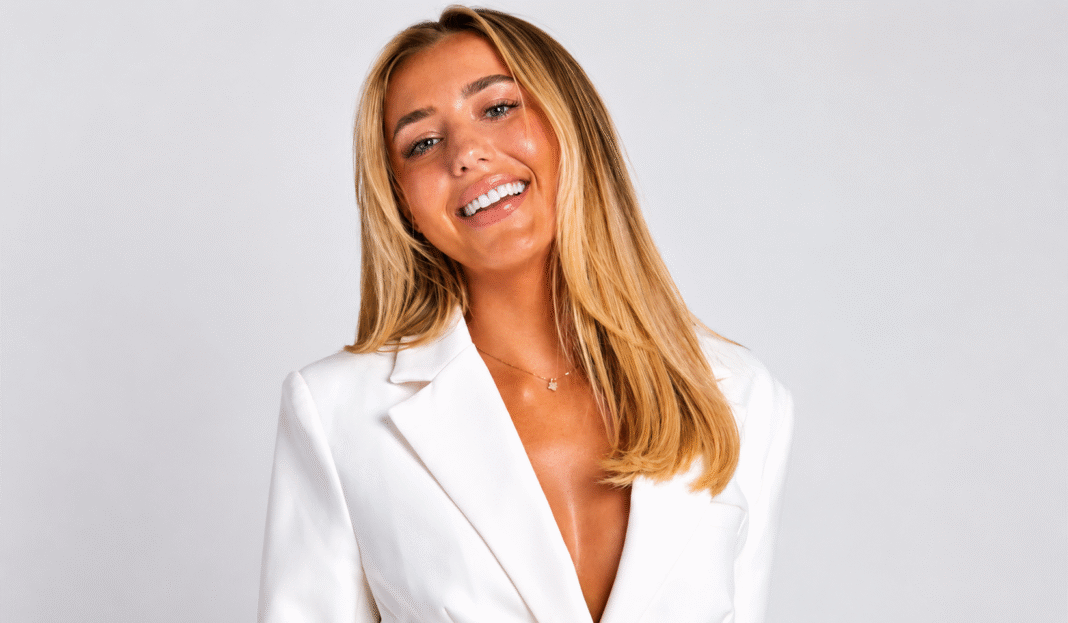
Most founders who reach eight figures can point to the funding round that carried them there. Aimee Smale points to a waitlist. When she launched Odd Muse in 2020 from her bedroom, twenty-two years old and midway through lockdown, she had personal savings, no outside backing, and the problem that has quietly killed plenty of promising young labels: demand she could not yet afford to meet. Her answer became the architecture of the entire company. Rather than buy stock she couldn’t pay for, she sold it first, and five years later that instinct has turned into a London-to-SoHo womenswear brand turning over roughly £24 million, profitable every year since launch, and still entirely self-funded in a category built almost entirely on other people’s money.
The mechanics were disarmingly simple. Odd Muse would open a waitlist of perhaps a thousand people for a run of only 100 to 200 units, let it sell out, and collect the cash before paying its suppliers. “My pre-order model was kind of like my investment,” Smale says, and what began as a cash-flow workaround hardened into a marketing flywheel, scarcity that kept the label permanently in demand. At its peak, around eighty percent of the catalogue sold on pre-order. Today she estimates it is under five percent, a quiet marker of how far the balance sheet has matured.
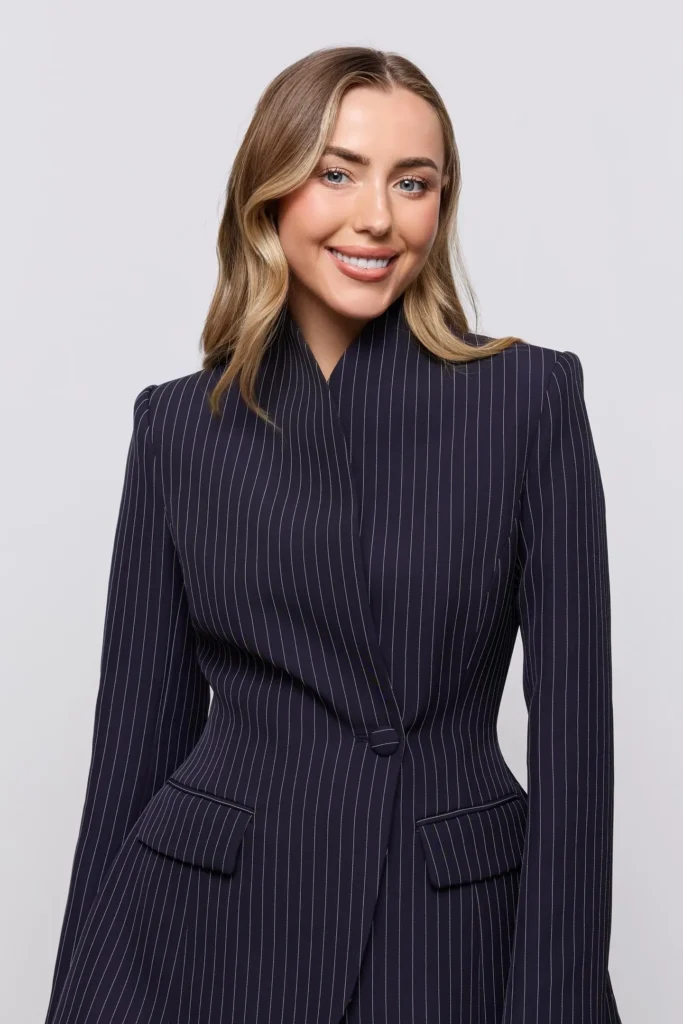
Her starting point was never capital. It was conviction. A former buyer’s assistant at ASOS, a job that paid her around twenty-six thousand dollars a year, Smale left to chase a gap she felt the British market had left wide open: mid-luxury clothes built to last, made for young women who wanted to feel elevated without chasing every micro-trend. That thesis became a discipline. Where fast-fashion rivals push hundreds of styles a season, Odd Muse released fewer than sixty products in all of 2024, betting that a tightly edited range of hero pieces, the Ultimate Muse Blazer it launched with still sells today, does more work than a flood of newness. “We just see our slowness as a bit of a USP,” she says. “It makes the products more exciting when there’s less of them.” The product mix has surprised even its founder. She first imagined Odd Muse as a workwear label, until a 2022 holiday dress sold out so emphatically that the public recast it as a dress house almost overnight.
If the pre-order model was the financial innovation, the second engine was Smale herself. She began posting on TikTok in 2020, narrating the launches, the viral blazer, the late nights packing orders on her floor, at a moment when founder content barely existed. “There was no founders online to just ask a silly little question,” she recalls of a feed then ruled by dance trends and coffee routines. “I saw it as a bit of a gap.” The transparency compounded. People who had followed the story for years didn’t just buy the clothes, they showed up. “No one’s gonna show up to a store if they don’t know who they’re showing up for,” she says, and the queues at every opening have proven her right. That openness has opened doors, too; she counts entrepreneur and podcaster Steven Bartlett among the mentors a voice note away.
The personal brand has since become its own enterprise. In April, United Talent Agency signed Smale to its Creator Division, the same roster that includes Elizabeth Day, Jamie Laing, and Sophie Habboo, as part of an agency push that has grown its UK creator business by more than sixty percent in a year. She has launched a podcast and a Substack, and this year introduced The Odd Muse Impact, a twelve-thousand-pound grant for a female founder, a way of turning her own no-blueprint beginning into somebody else’s starting line. Still, she insists on a boundary between woman and label. “I always want Odd Muse to be bigger than me,” she says. “I always want Odd Muse to have ten times the followers than I do.”
For a digitally native brand, Odd Muse has been notably committed to brick and mortar, and characteristically unhurried about it. The first store, a small pink boutique on Monmouth Street in Covent Garden, opened in 2023, the same year the brand debuted at London Fashion Week. A Selfridges Manchester concession followed, and last October the label unveiled a five-storey New Bond Street “Townhouse,” a ten-year lease on a 3,500-square-foot address once home to cashmere house Johnstons of Elgin. Smale had to fight for it. “I was told no, I was told I could open elsewhere, I didn’t need to take on New Bond Street,” she has said.
“But Odd Muse is all about standing tall in luxury conversations and inviting our community into a world luxury fashion previously didn’t think to invite them into”
The boldest move has been across the Atlantic. A November 2024 pop-up at 55 Mercer Street in SoHo, a space once occupied by Australian label Zimmermann, performed strongly enough that Smale grossed about a quarter of a million dollars on opening weekend and converted it to a permanent lease by January 2025. She relocated to New York to lead the expansion herself. The United States already accounts for around forty percent of the business, yet she frames the country as almost untouched. “We’re not even scratching the surface,” she says.
Five years in, with a team of more than sixty across several countries, Smale describes herself finally stepping into the role she assigned herself on day one: creative director, thinking in horizons of three and five years rather than the next order. She is also increasingly vocal that founder wellbeing deserves more honest airtime than the standard “it’s been crazy” shorthand allows, and that candor reads less like complaint than like the same instinct that built the company, saying the quiet part out loud and trusting the audience to respect it. “I haven’t been able to build this brand to the level it is now through being deceitful,” she says. “Odd Muse’s got a good thing going.” On the evidence, eight figures of revenue, profitable every year, flagships on two continents, and not a penny of outside money, it is hard to argue.