
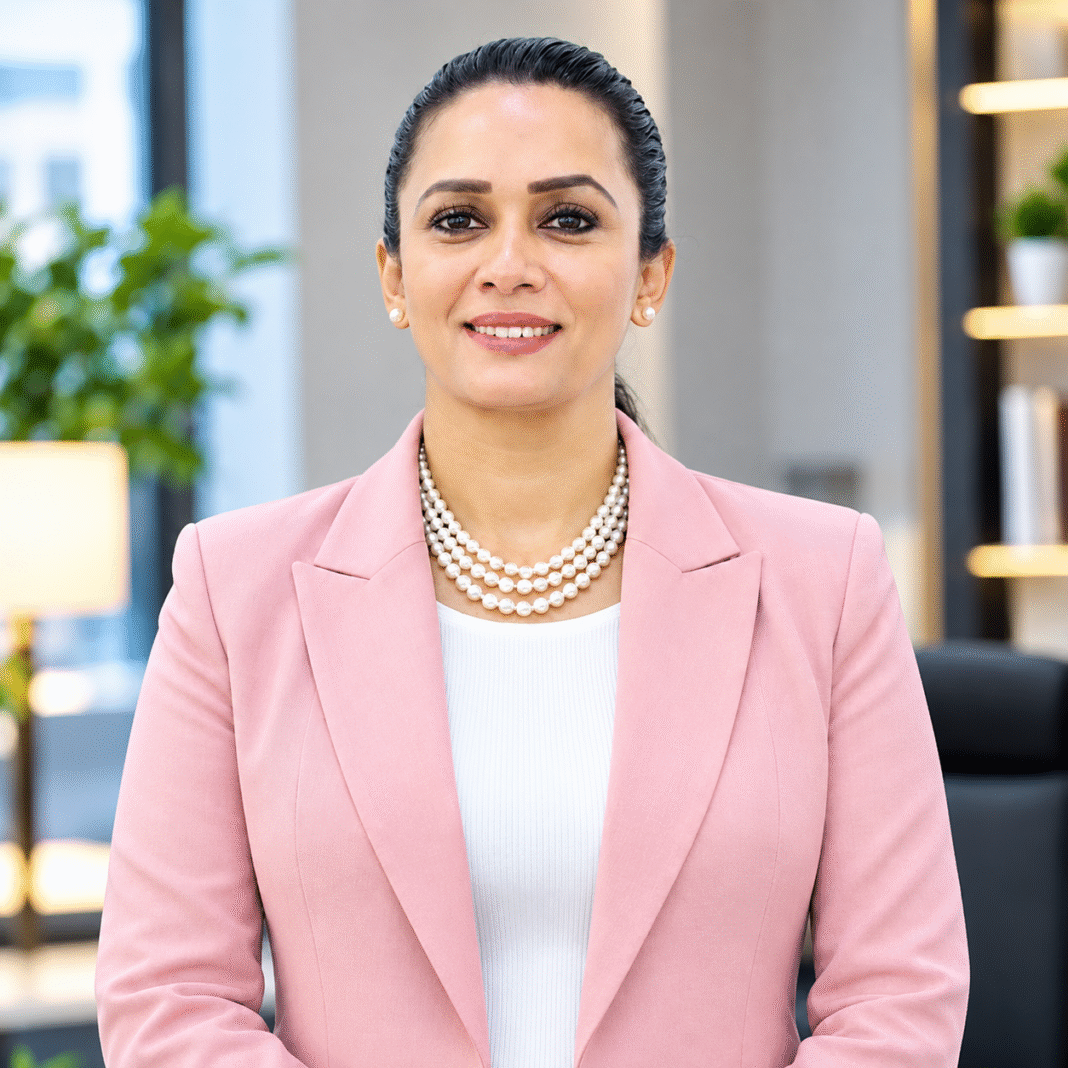
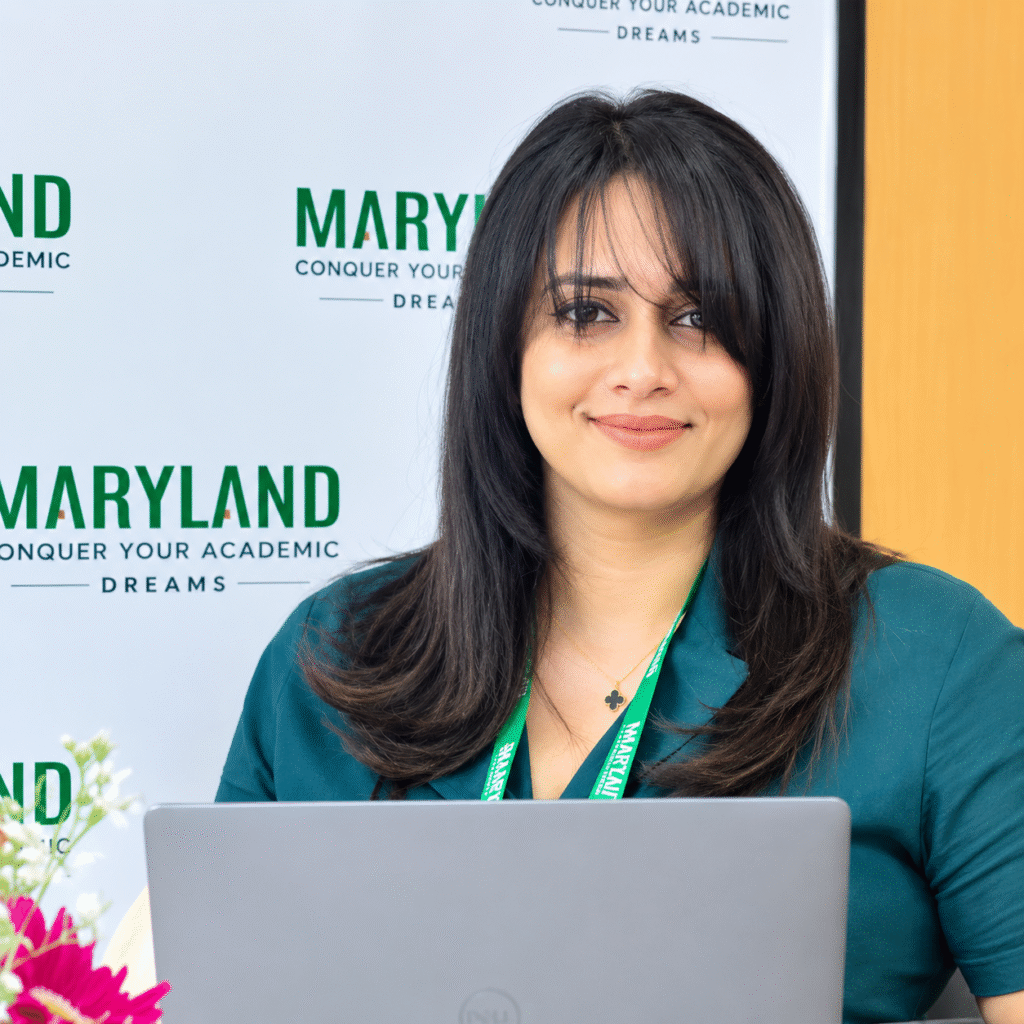
On an ordinary afternoon at Maryland Consultancy & Academy in Colombo, the questions arriving at Michelle Morris‘s desk can sound as if they belong to entirely different professions. A student is weighing a degree in Dublin against the realities of a family budget. A graduate is rehearsing answers for an embassy interview. A retail team wants to know what, exactly, to say when a customer’s patience has run out. Morris, known formally as Michelle Melani Morris Boudewyn and the firm’s Director of Admissions, has spent more than a decade arguing that these are, at heart, the same question, and her growing work in corporate training is built on the answer.
The answer is practical rather than theoretical. Across a career that has moved through international education, client service, student counselling, admissions, visa documentation, interview preparation, and the training of student consultants, Morris has watched the same handful of capabilities decide outcomes again and again: clear communication, sound judgement, preparation, confidence, problem-solving, and the ability to deal professionally with other people. The industries change. The audiences change. The skills, she has found, travel remarkably well.
That insight lands at a telling moment for Sri Lanka. Demand for higher education has long outpaced the state system, and of the roughly 160,000 students who become university ready each year, the country’s 20 public universities can admit only about 42,000. The overflow has fuelled private providers and overseas study alike, with more than 31,000 Sri Lankan students enrolled abroad in 2023, compared with 21,000 in 2017. Each of those journeys runs through conversations with advisers, admissions officers, and consular staff, which makes the quality of that guidance, and the composure of the people receiving it, matter more than ever.
Through Maryland Consultancy & Academy, Morris designs and delivers programmes for individuals, employees, customer-facing teams, and whole organisations. The curriculum spans customer service and frontline engagement, complaint handling, problem-solving, professional communication, sales and customer relationship skills, workplace confidence, career development, interview preparation, and service-industry training. What unites it is an insistence on real situations. Consider an employee facing an unhappy customer: within minutes, they must identify the actual problem, keep the conversation calm, decide what can reasonably be done, and explain that decision in a way that represents the organisation well. That single exchange is customer service, communication, decision-making, and problem-solving at once, which is precisely why Morris resists teaching them as separate subjects. The approach is built for places where tone is part of the product, from retail floors and hospitality to call centres, classrooms, administration, and sales.
Interview preparation sits close to the centre of her practice. Morris coaches students, graduates, job seekers, and professionals for employment, university, embassy, and visa-related interviews, and she is candid that a strong transcript does not automatically produce a strong candidate. Applicants must be able to articulate their experience, explain their goals, carry themselves with confidence, and answer clearly and honestly under pressure.
Her international education background gives that coaching unusual depth. Ireland remains one of her key areas of expertise, alongside Switzerland, Denmark, Austria, Spain, Italy, and Finland, and her work covers profile assessment, programme and institution selection, admissions guidance, documentation review, visa preparation, and interview readiness. She looks well beyond the application form, weighing academic history, finances, work experience, career goals, family circumstances, and long-term expectations before judging whether a pathway genuinely fits. It is also why she declines to present any outcome as guaranteed. Every profile is different, and so is every pathway.
That ethic shapes how she trains the next generation of advisers. Her programmes for student consultants cover education systems, counselling, university and programme selection, admissions procedures, documentation, visa awareness, client communication, relationship management, career counselling, and ethical consultancy practice. The aim is a consultant who understands the student as an individual rather than one who simply processes paperwork. Years of handling visit visa documentation, group visa coordination, and travel administration for families and organised groups have sharpened her sense of what professional service standards look like in practice, and she carries that into her lecturing on programmes linking academic learning with working life.
Beneath all of it runs one deceptively simple principle: people should leave a training session with skills they can actually use. For an employee, that might mean defusing a complaint instead of escalating it. For a salesperson, building a relationship rather than chasing a single close. For a job seeker, answering a hard question with structure and composure. For a student consultant, offering advice rooted in a client’s real circumstances instead of the easiest available option. It is a modest-sounding ambition and a quietly demanding one: training measured not by what was taught, but by how people think, speak, and perform when it counts.