
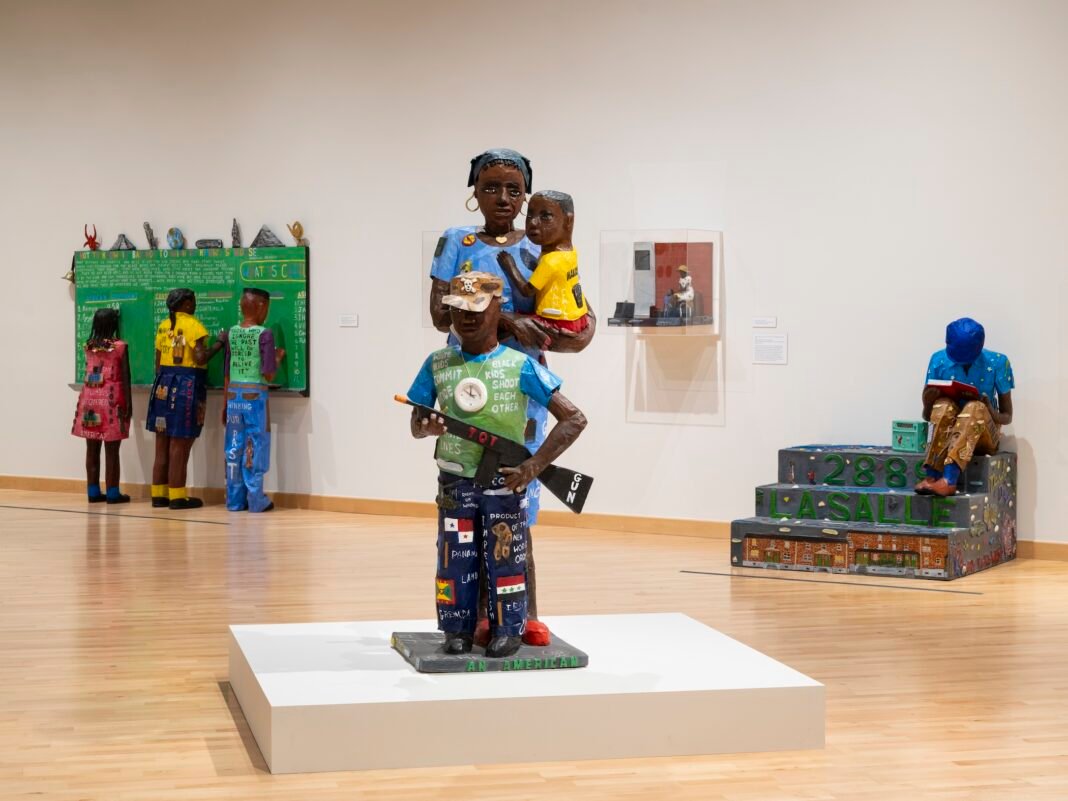
Willie Birch has spent nearly sixty years watching. Watching his neighbors in New Orleans play, work, mourn, and celebrate, then translating that attention into papier-mâché figures, monumental charcoal drawings, and canvases that refuse the easy sentimentality so often projected onto Black American life. Now, at 84, the artist receives his first career retrospective. Willie Birch: Stories to Tell opened this spring at the California African American Museum in Los Angeles, where it remains on view through October 21, gathering work from 1968 to the present into a single, sweeping argument for observation as a moral practice.
That the retrospective arrives this late in Birch’s career says less about the artist than about the institutions now catching up to him. Born in New Orleans in 1942 and trained in Europe, Baltimore, and New York, Birch built his reputation on an unwavering commitment to what he calls retentions: the enduring imprints of African traditions that persist within American music, art, and culture, transcending time, geography, and form. His work asks why certain things survive while others vanish, and what those survivals reveal about who we are. Content dictates process, Birch has said of his practice. I care about the story. The process I use for the work comes after I have a story to tell.
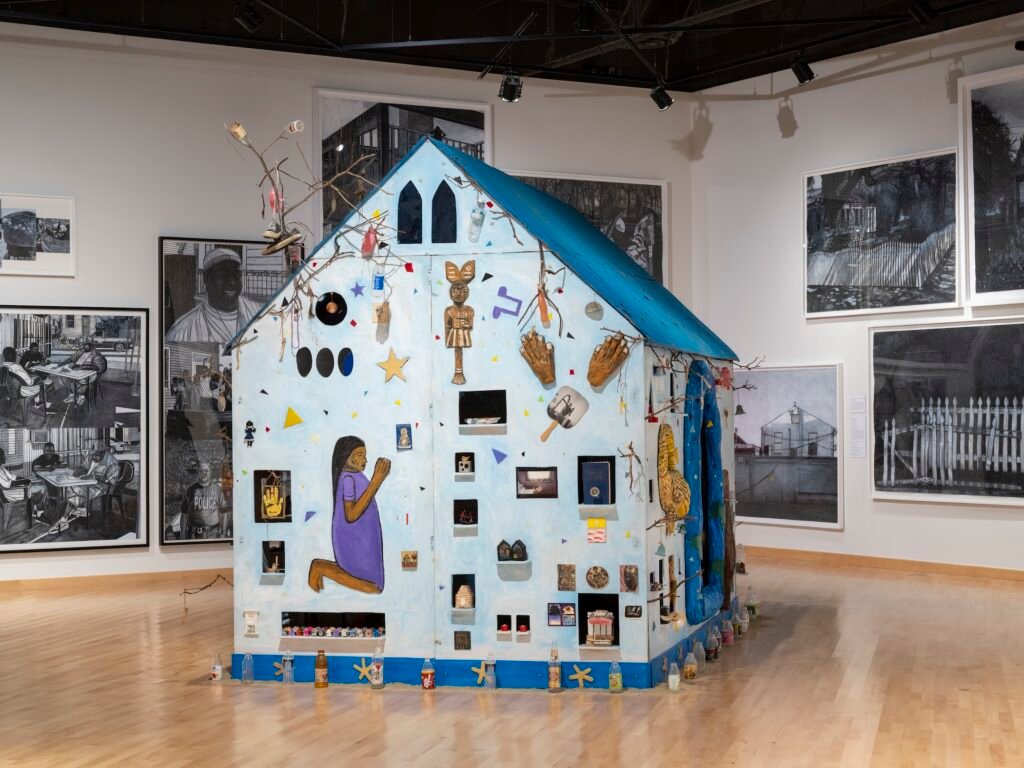
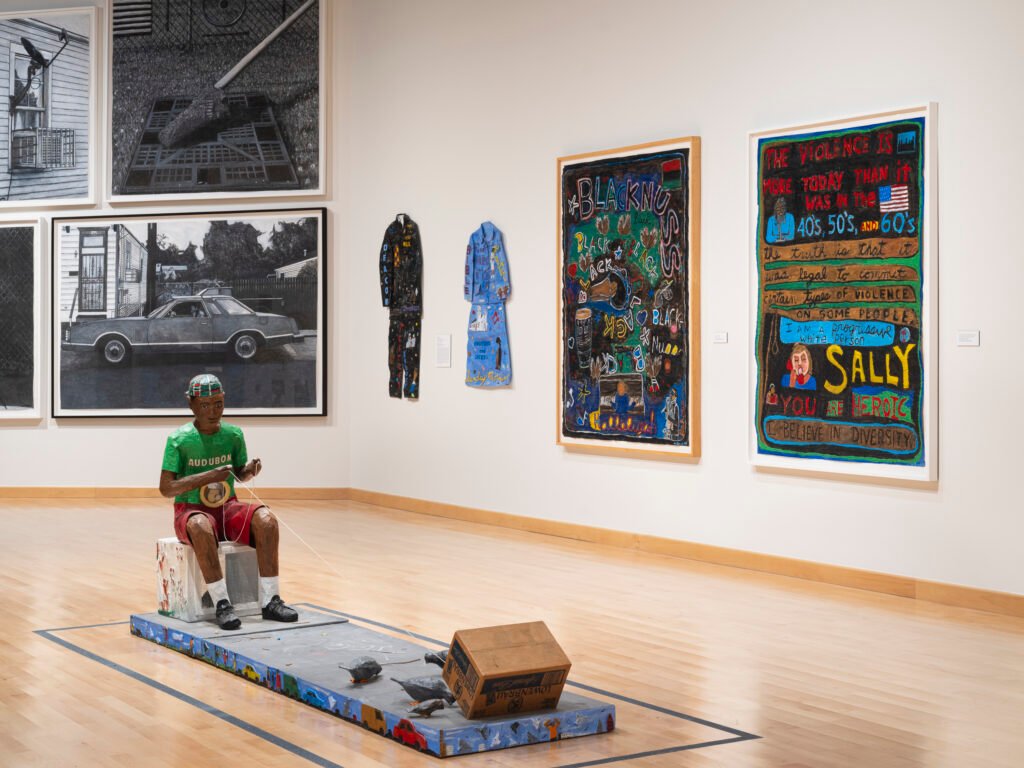
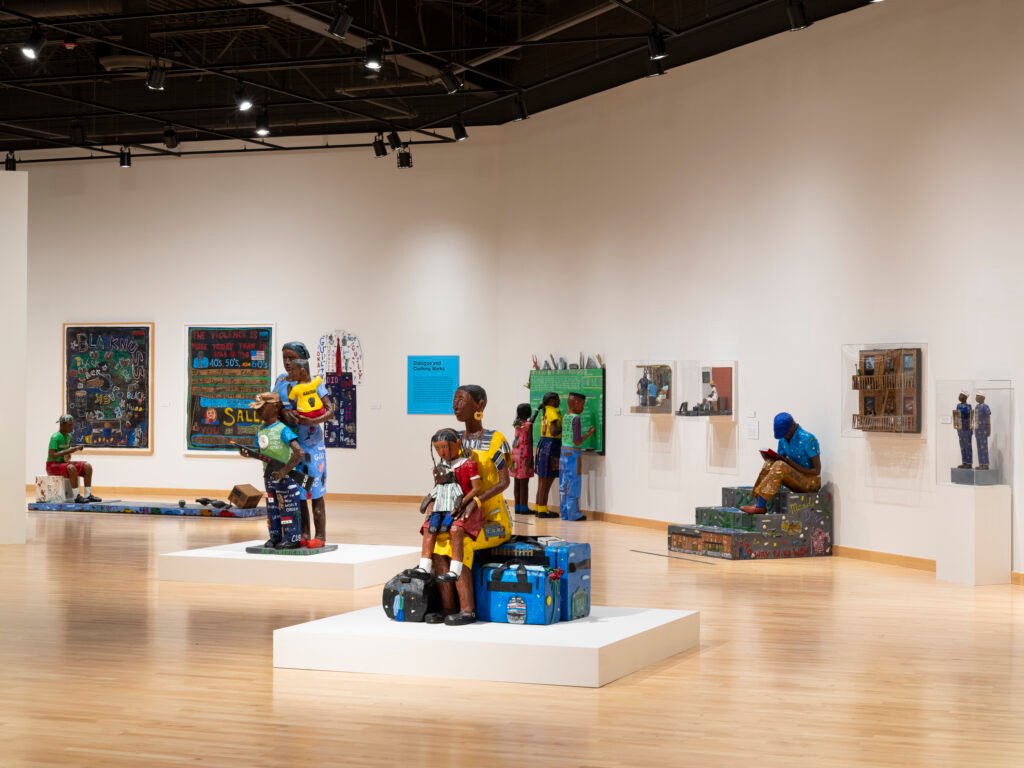
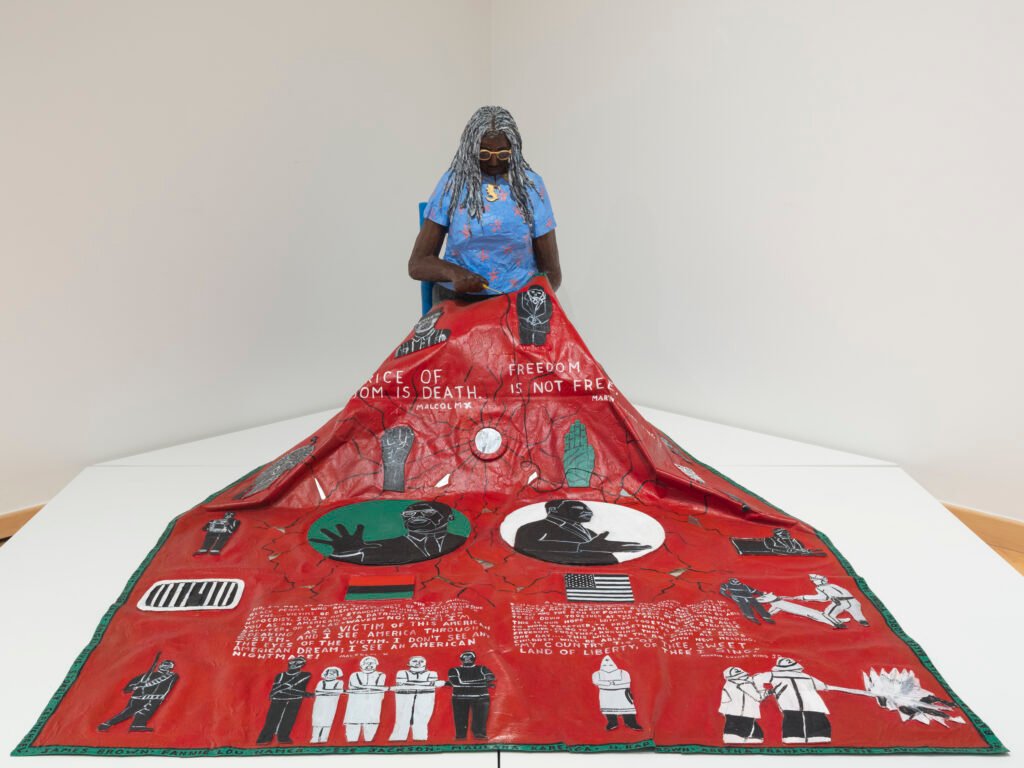
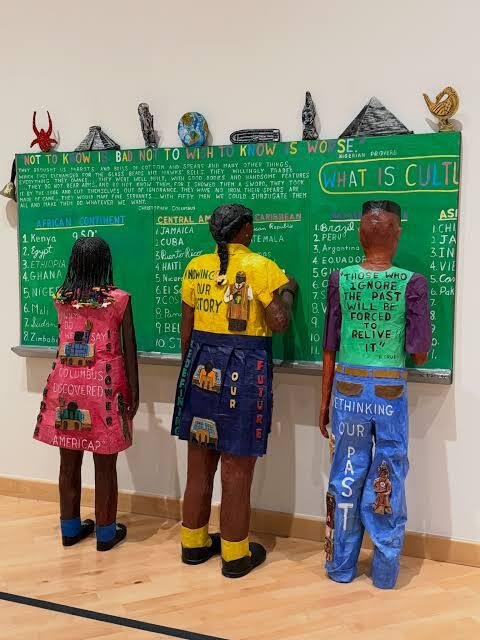
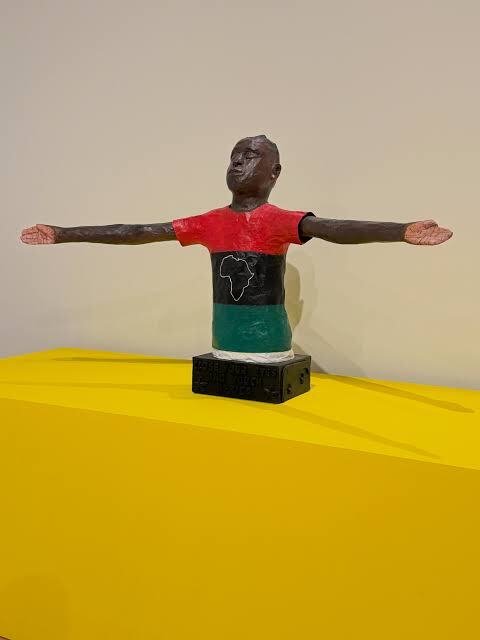
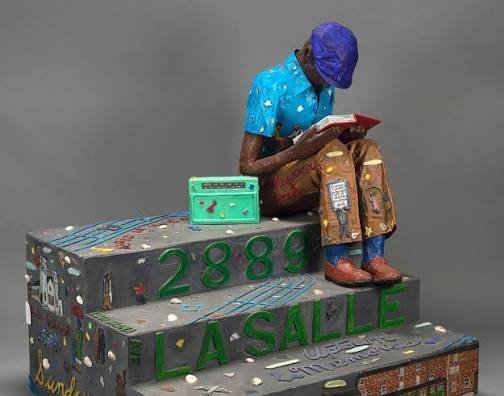
The exhibition, co-organized by the American Federation of Arts and the New Orleans Museum of Art and curated by Russell Lord, Chief of Curatorial Affairs at the Norman Rockwell Museum, unfolds chronologically across three major sections. It opens with Birch’s earliest work, moves through his pivotal shift toward papier-mâché in the 1980s, and closes with the large-scale charcoal and acrylic works on paper that have defined his recent decades. The transitions in medium are not restlessness but fidelity: as the world Birch observes changes, his visual language evolves to meet it. Vibrant color gives way to muted blacks, whites, and greys, and back again, each register tuned to what a particular moment demands.
Pauline Forlenza, Director and CEO of the AFA, locates the work’s power in its refusal to simplify. Birch’s art holds space for contradiction, she says: pain and joy, vulnerability and pride, endurance and resistance. His work does not shy away from the complexities of race, poverty, and systemic inequity, nor does it romanticize struggle. Whether rendering the quiet dignity of his neighbors or the layered history of African traditions in American culture, Forlenza notes, Birch’s eye remains unwavering and empathetic.
The retrospective lands squarely within CAAM’s spring programming, which Executive Director and Chief Curator Cameron Shaw has devoted to artists who illuminate meaning in the mundane, people who invite us to see the beauty and power in our everyday lives, in what we choose to create, where we train our attention, and who and how we love. In that context, Birch reads less like a rediscovery than a foundation, an artist who understood decades ago that the intimate routines of a neighborhood carry the full weight of the social and political landscape surrounding them.
After Los Angeles, the exhibition, sponsored by Bank of America, will travel to three more American museums. But its premiere here feels charged. Birch depicts people alone and together, and either way the work insists they belong to an interconnected ecosystem whose intimacy outlasts proximity. The show is poetic, textured, even spiritual, and its final claim is quietly radical: storytelling exists not merely to record and survive our realities, but to imagine better ones.