

On a block of lower Manhattan better known for trading floors than for acetate, Gentle Monster has turned 23 Wall Street into a gallery for the most closely watched launch the brand has ever staged. Through November 23, visitors who register online can walk through the full Intelligent Eyewear Collection, the Seoul house’s first line of wearable technology, developed with Google and Samsung and shown in its entirety to the public for the first time. The timing is pointed: the frames go on sale December 10, and Gentle Monster wants New York to try them on before anyone is asked to buy them.
The staging is the point. Gentle Monster has spent more than a decade treating retail as installation art, filling its flagships with kinetic sculpture and uncanny robotic figures, and it has declined to present these frames the way consumer electronics are usually shown, lined up on a demo table under clinical light. Here the 16 pieces sit inside an immersive, gallery-style showcase, closer to an exhibition than a product launch. It is a quiet argument about what smart glasses have lacked so far. The processing power exists. What has been missing is desire.





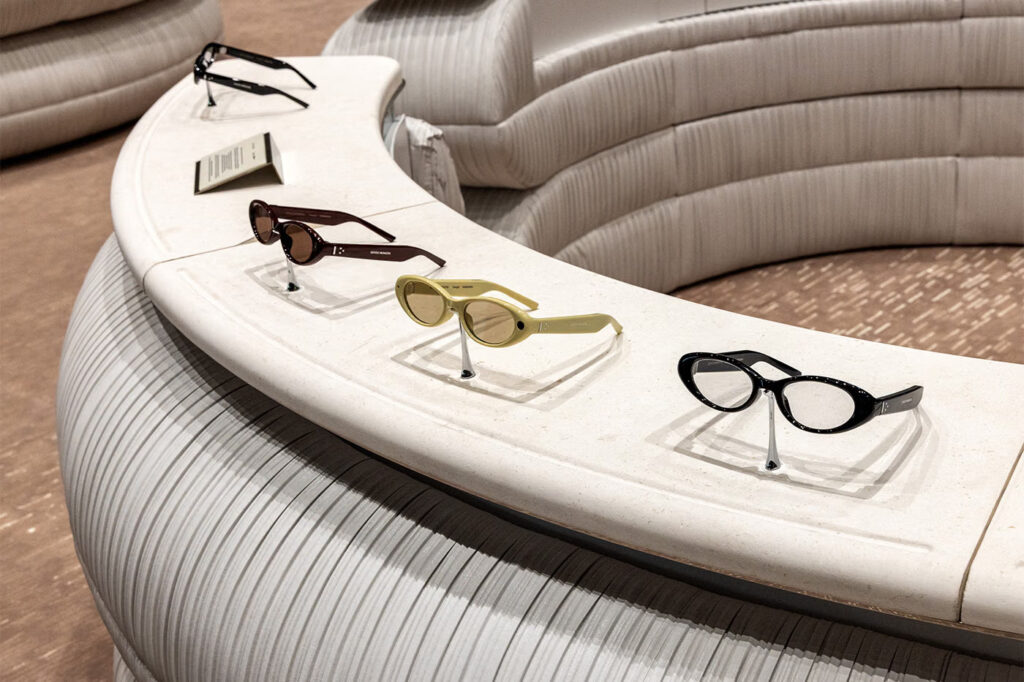
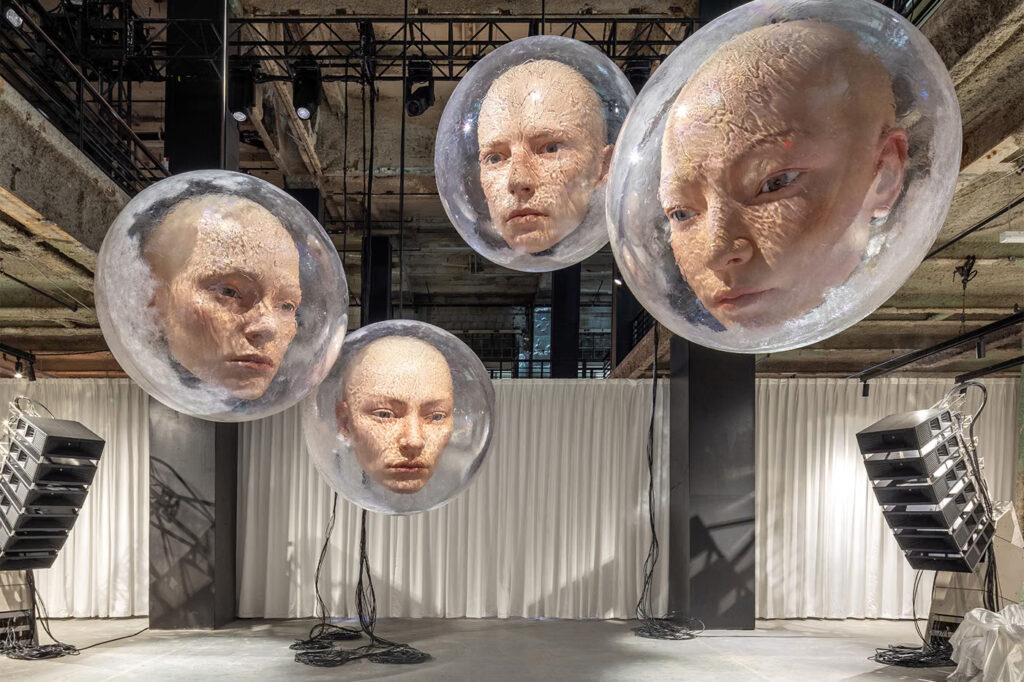



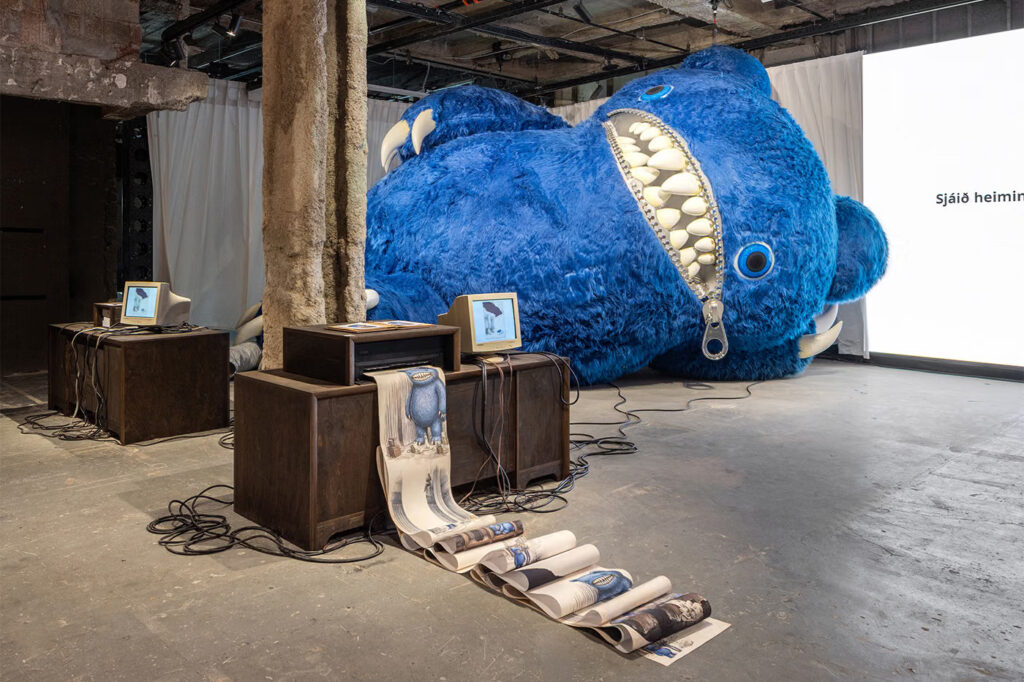

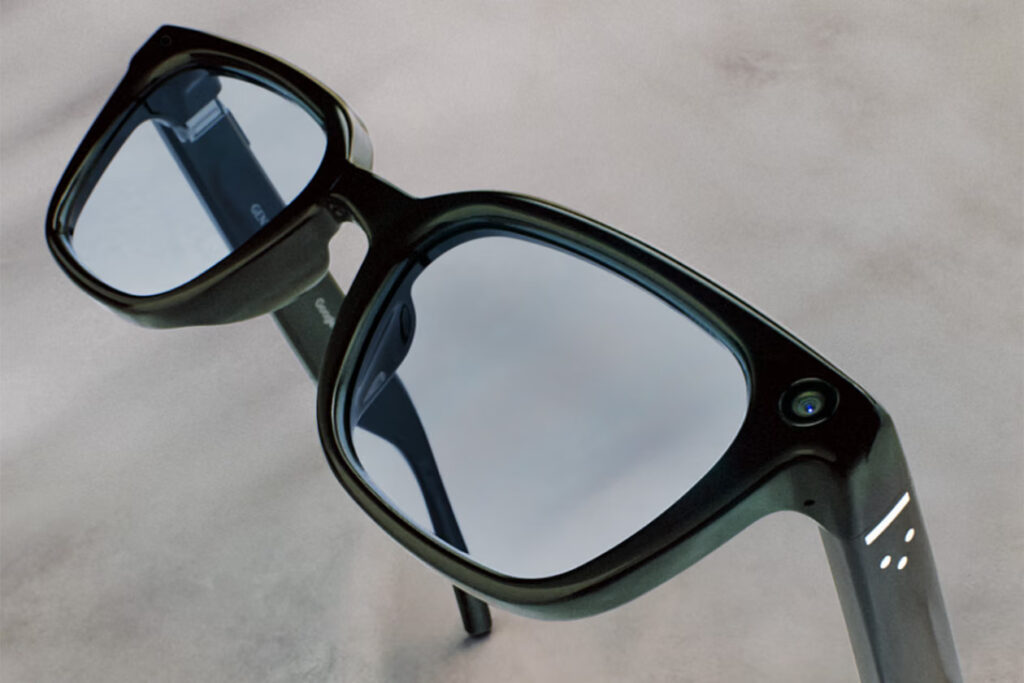
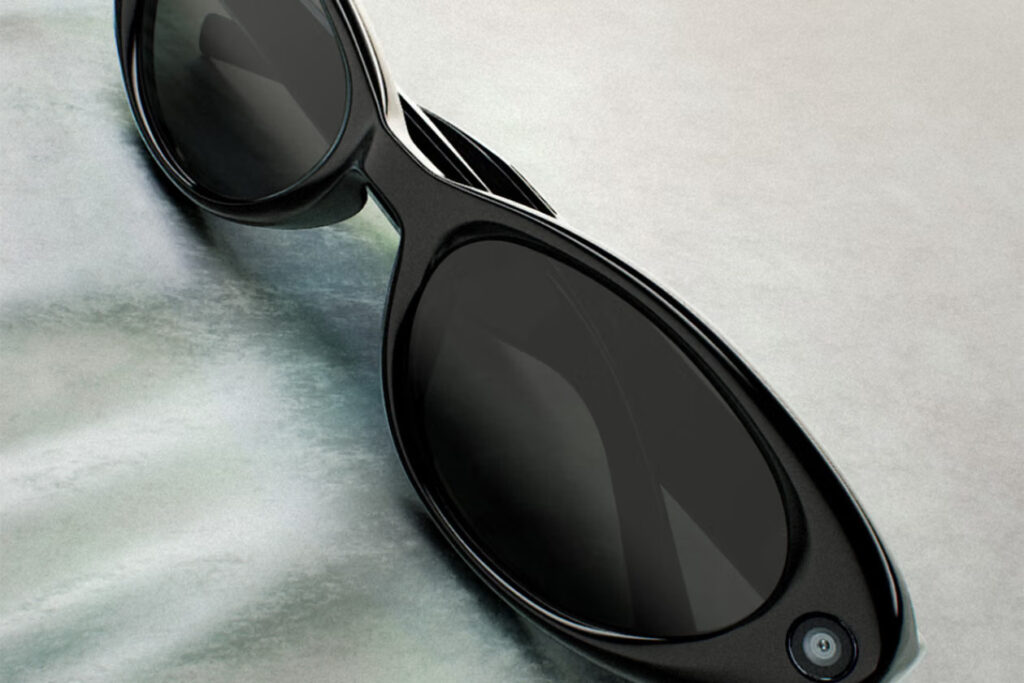
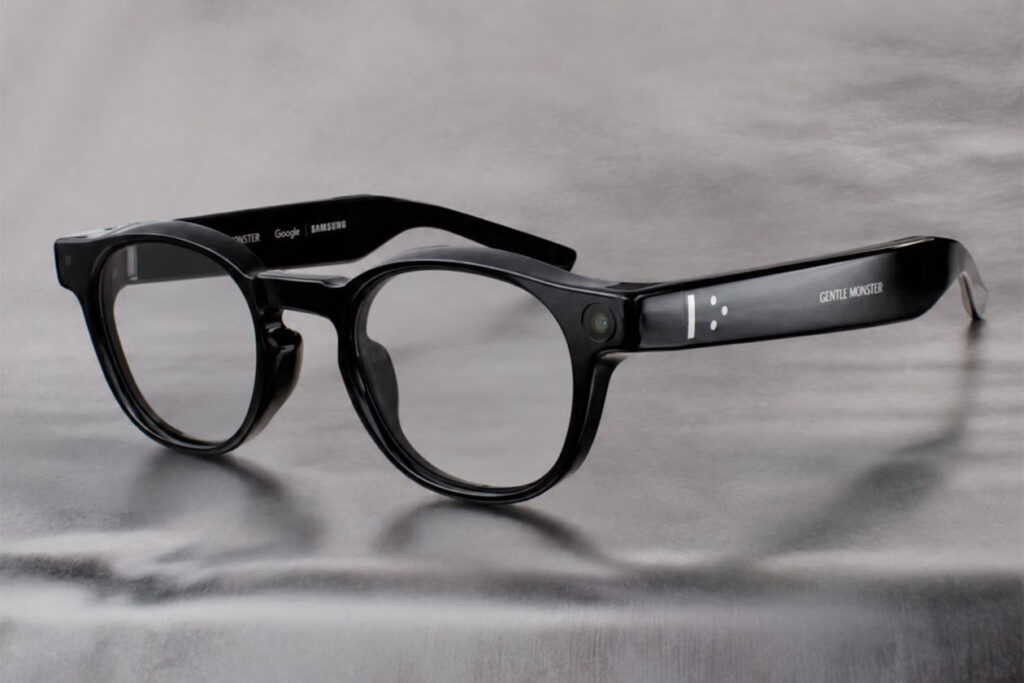
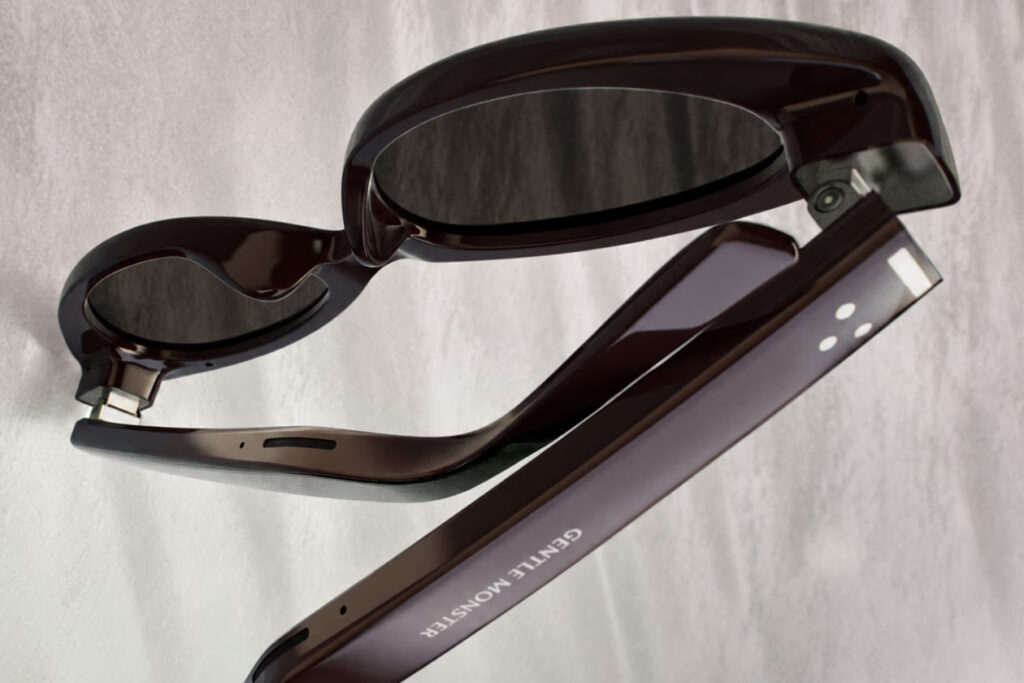
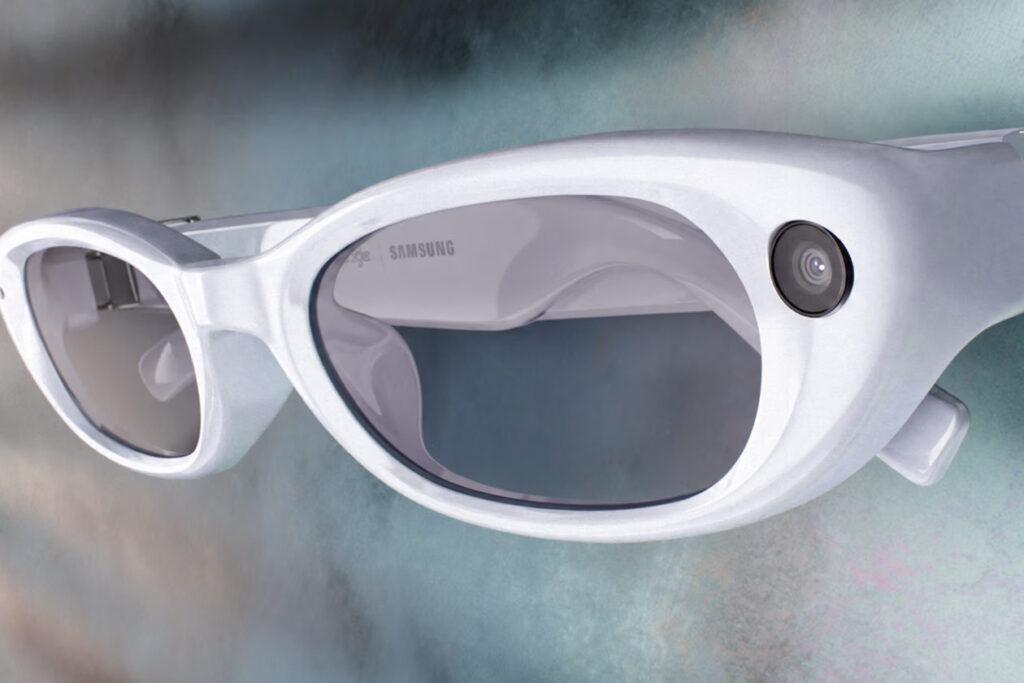
The collection itself is compact and exacting. There are six frames in total, two optical styles and four sunglasses, offered across 16 combinations of colorway and lens. The shapes speak the house’s sculptural language fluently: clean squares, fluid silhouettes, sharp linear builds, sweeping curves and the chunky ovals that have long been a Gentle Monster signature. Black acetate anchors the range, with gray, pink, dark red and yellow offered alongside it, a palette that moves from boardroom discretion to something closer to a nightclub after midnight.
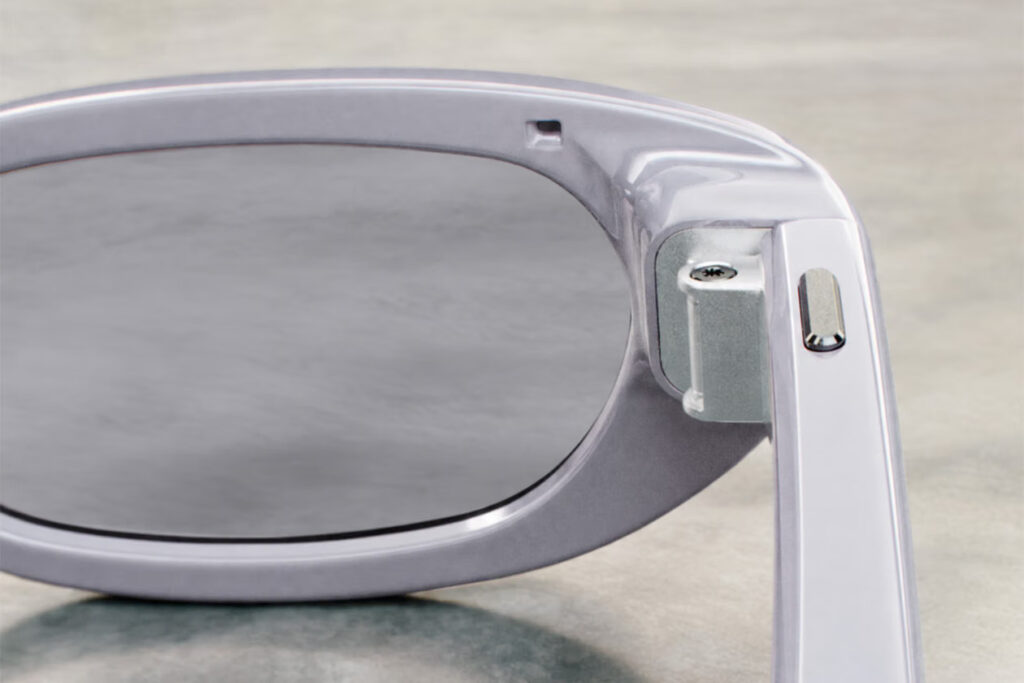
What you do not see is the technology, and that is by design. Wearers speak to Gemini, Google’s AI assistant, by voice, and the glasses pair with both Android and iOS phones, which keeps the collection from becoming a loyalty test for either camp. Each frame weighs about 40 grams and runs up to nine hours on a single charge, or up to 72 hours with its charging case, numbers that matter more than any feature list for something meant to live on the face from morning coffee to the last train home. The division of labor is clear: Samsung engineers the hardware, Google supplies the intelligence, and Gentle Monster decides how it all looks. Google’s commitment runs deeper than a licensing deal. In June 2025, the company bought a stake of roughly 4 percent in Gentle Monster for about $100 million, an investment tied directly to glasses built on its Android XR platform.
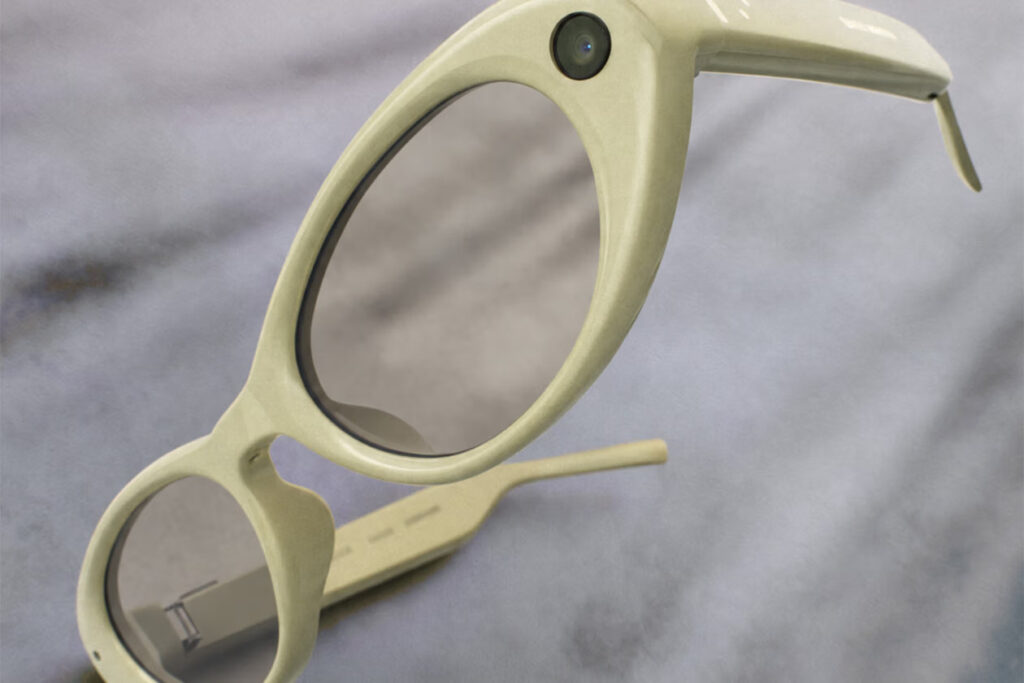
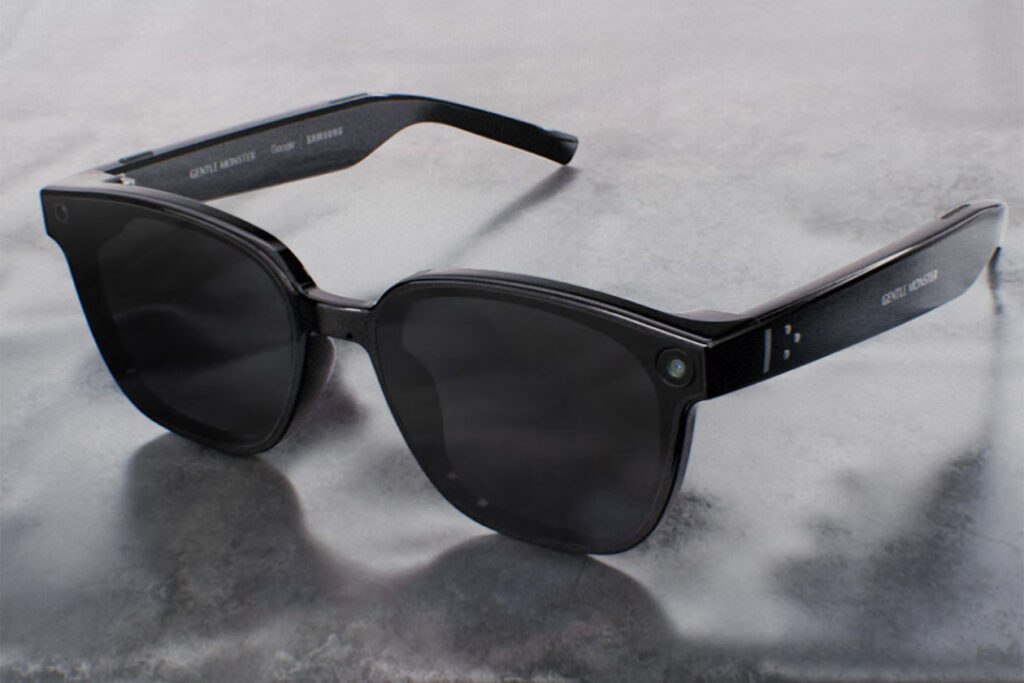
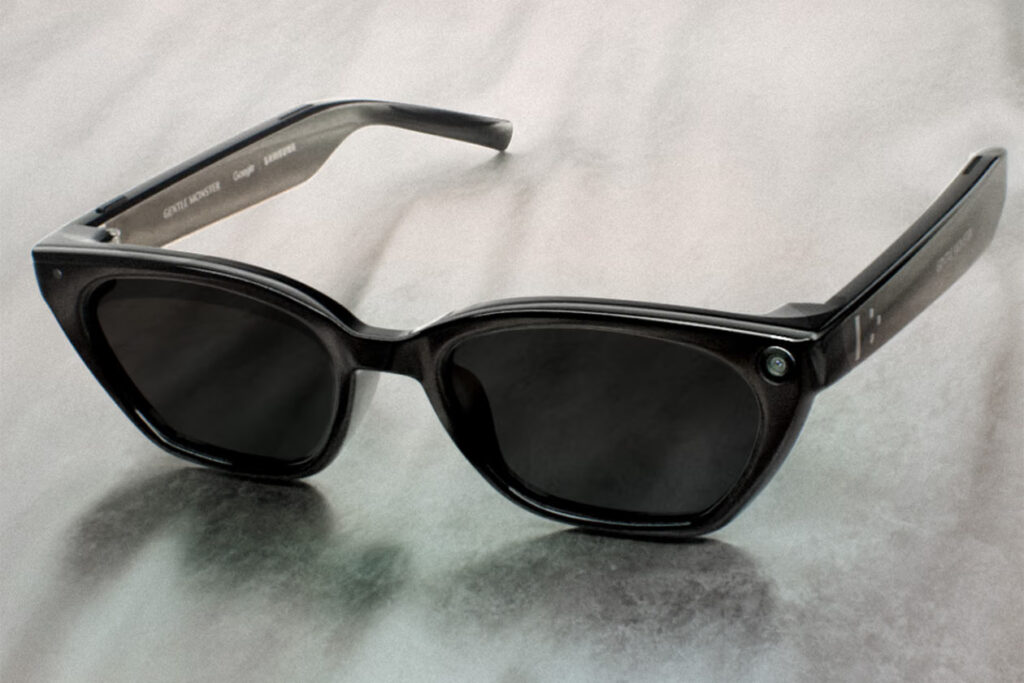
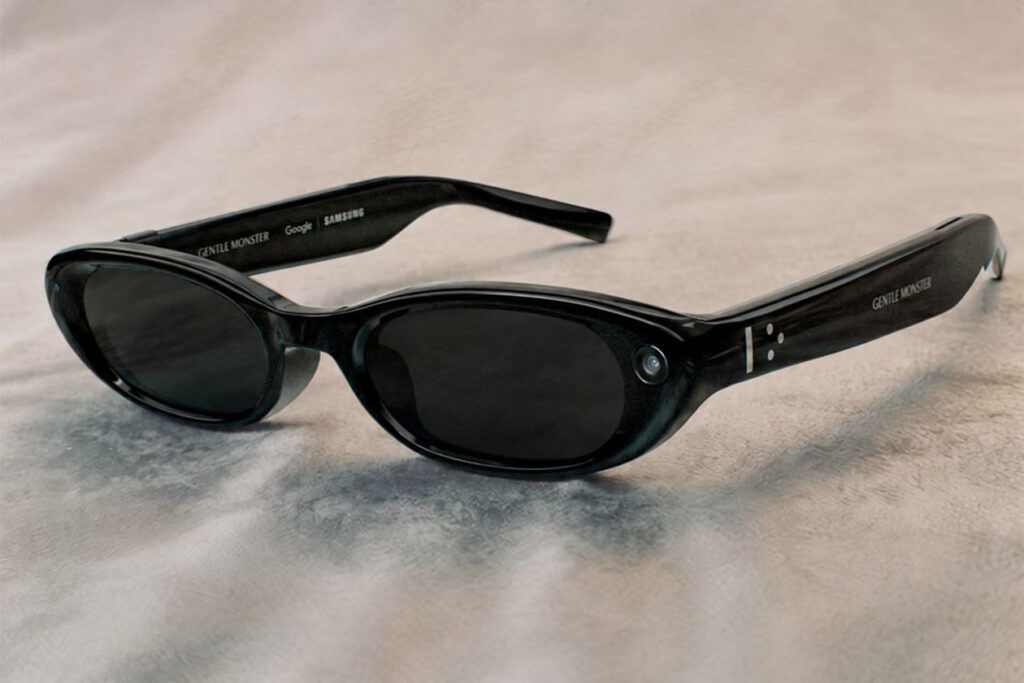
The campaign makes the same case in a different medium. Rather than a spec-driven explainer, Gentle Monster commissioned Jonathan Glazer, the director of Under the Skin and The Zone of Interest, to make a short film starring Joaquin Phoenix as a salesman drifting through a surreal hotel, where the eyewear becomes his means of communicating with the strange entities he meets. For an actor who once fell in love with an operating system in Her, the casting reads less like coincidence than like a knowing wink, and it frames the product as a story about perception rather than a gadget with a camera.
All of this arrives at a charged moment. Smart glasses have grown quickly as a category over the past year, and the field has been dominated by Meta, whose frames proved that people will wear a computer on their faces if it looks enough like ordinary eyewear. Google and Samsung’s answer has been to recruit fashion fluency from outside, working with Warby Parker on a more classic register and with Gentle Monster at the avant-garde end. For a label built on theatrical retail and cult sunglasses, the move into wearable tech is less a pivot than an extension: the face has always been its canvas, and now that canvas can listen.
The collection launches December 10, sold exclusively through Gentle Monster in the US and South Korea, at prices from $449 to $489. That places it squarely within reach of the shopper who already spends on designer frames, which may be the most telling detail of all. If smart glasses are ever going to become ordinary, they will first have to become something people want to be seen in. On Wall Street this month, Gentle Monster is making the case that sculpture, color and a little cinematic strangeness are how you get there.