
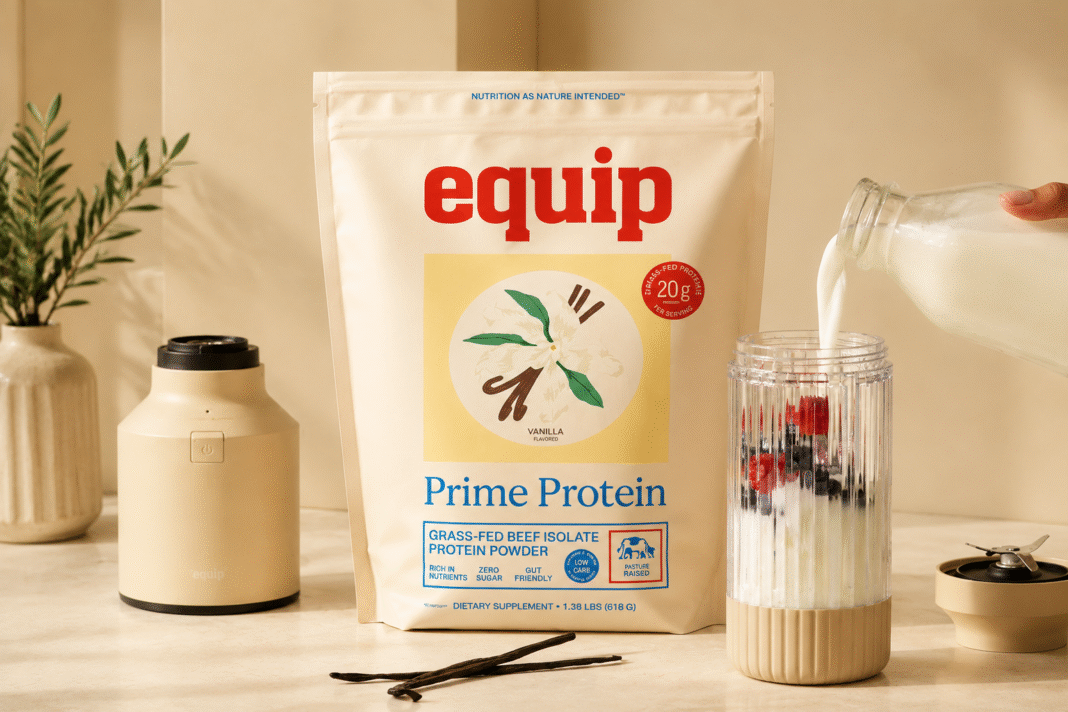
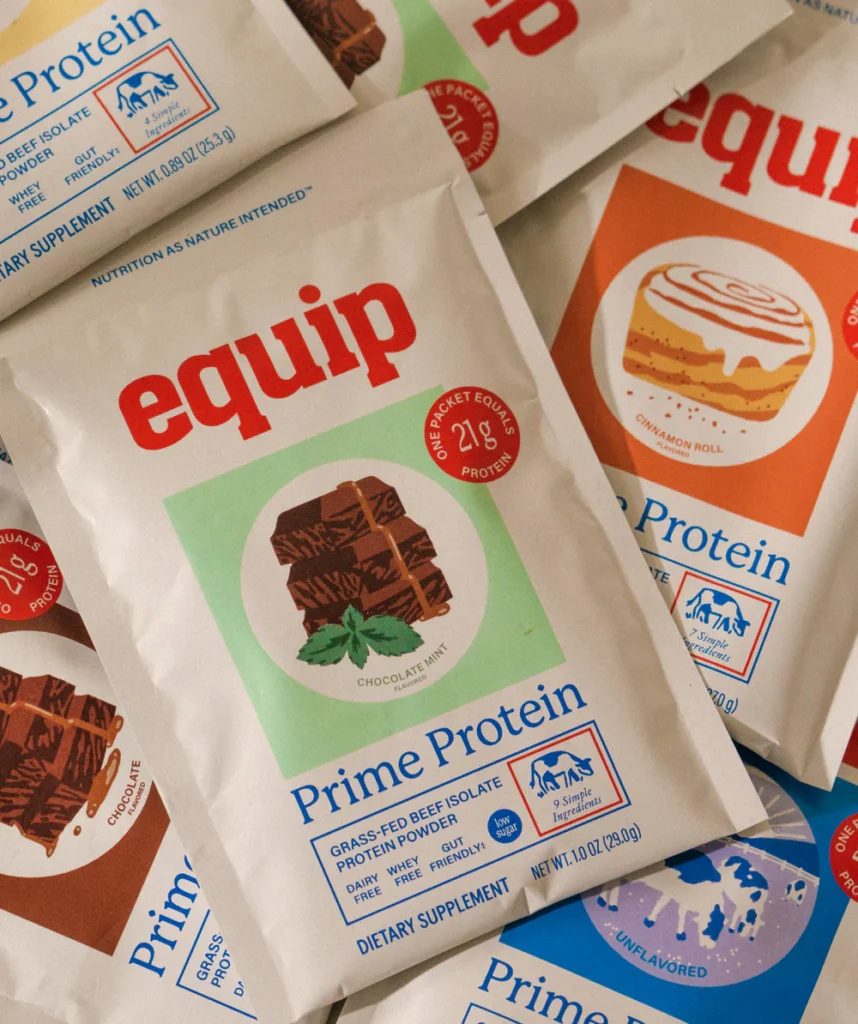
In Austin, Texas, a company built on the premise that protein powder had gotten needlessly complicated is making its case again. Equip Foods this month put renewed emphasis on Prime Protein, the grass-fed beef protein powder that has anchored its catalog since the brand’s founding, arriving at a moment when the supplement aisle has quietly reorganized itself around a single question: what, exactly, is in this.
That question has teeth now. The protein category has swelled into one of the fastest-growing corners of consumer packaged goods, with market analysts tracking global protein supplement sales past the $25 billion mark and projecting continued double-digit expansion through the decade. But growth has been shadowed by scrutiny. Consumer Reports’ 2010 heavy metals investigation into protein powders still circulates in wellness forums, and the Clean Label Project’s more recent testing found detectable levels of lead in a substantial majority of the powders it screened. The result is a shopper who reads the back of the tub before the front.
Prime Protein is engineered for that shopper. Each serving delivers 21 grams of complete protein containing all nine essential amino acids, alongside naturally occurring collagen, gelatin and glycine, a combination Equip positions as supporting not only muscle recovery but skin, joint, bone and gut health. The inclusion of glycine is quietly the most interesting part of the formula. It is the amino acid most abundant in collagen, and one that a growing body of sleep and metabolic research has taken seriously in recent years, though the evidence remains early rather than settled.
The processing story is the other half of the pitch. Equip makes the powder from grass-fed, pasture-raised beef using what the company describes as a slow-cooking method relying on heat, water and time rather than chemical solvents. It is dairy-free, gluten-free and soy-free, made without artificial flavors, fillers or preservatives. For anyone who has spent years bloated and bargaining with a whey isolate, the appeal is not abstract. Roughly two-thirds of the global population carries some degree of lactose malabsorption, a figure that makes the dominance of dairy-derived protein powders look less like consensus and more like inertia.
There is a version of this conversation that becomes evangelical, and it is worth resisting. Beef protein is not nutritionally superior to whey by default; whey remains among the most studied and most rapidly absorbed proteins available, with a leucine profile that has made it the reference standard in muscle protein synthesis research. What beef protein offers is a different set of tradeoffs, and for a meaningful subset of people, the tradeoffs land better. That is a modest claim, and modest claims tend to age well.