
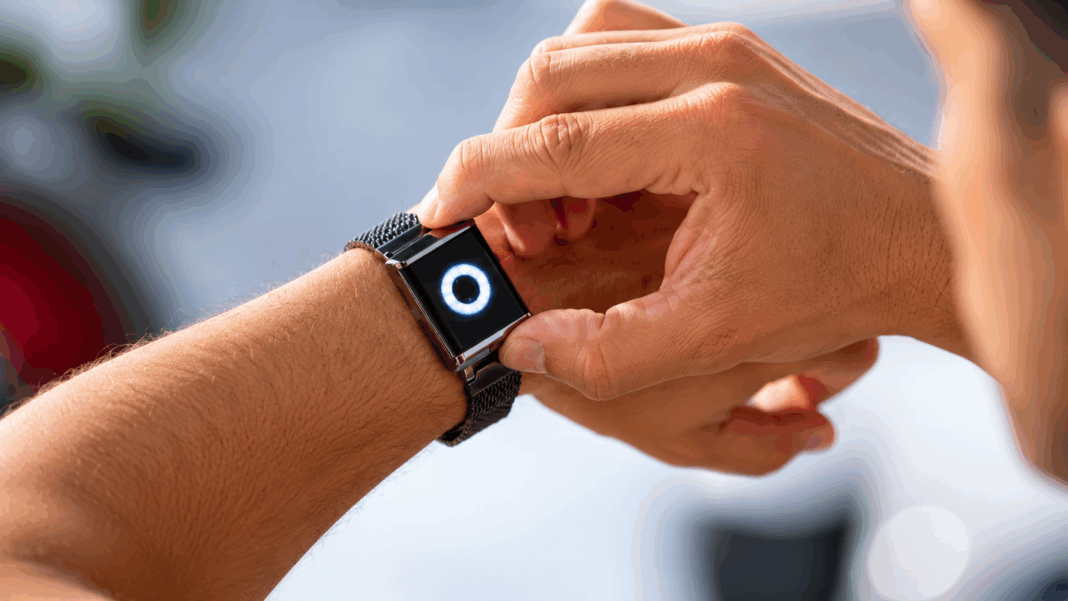
For a decade, the wellness wearable has asked us to choose: the wrist or the finger, the band that reads a workout or the ring that disappears into sleep. ALLOOP Trio, a modular health tracker unveiled in New York this October, declines the question altogether. Its premise is a single sensing core that travels between a wristband and a ring, paired with an AI health agent built to answer the question most of us are left holding at 7 a.m.: now that I have the data, what do I actually do with it?
That question is the company’s origin story. Before founding ALLOOP, Dr. Tony Wu worked at smart ring maker RingConn, where customers kept circling back to a version of the same query: “If I know my sleep score, what should I do next?” The search for a closed feedback loop gave the company its name, and it shapes nearly every design decision in Trio.
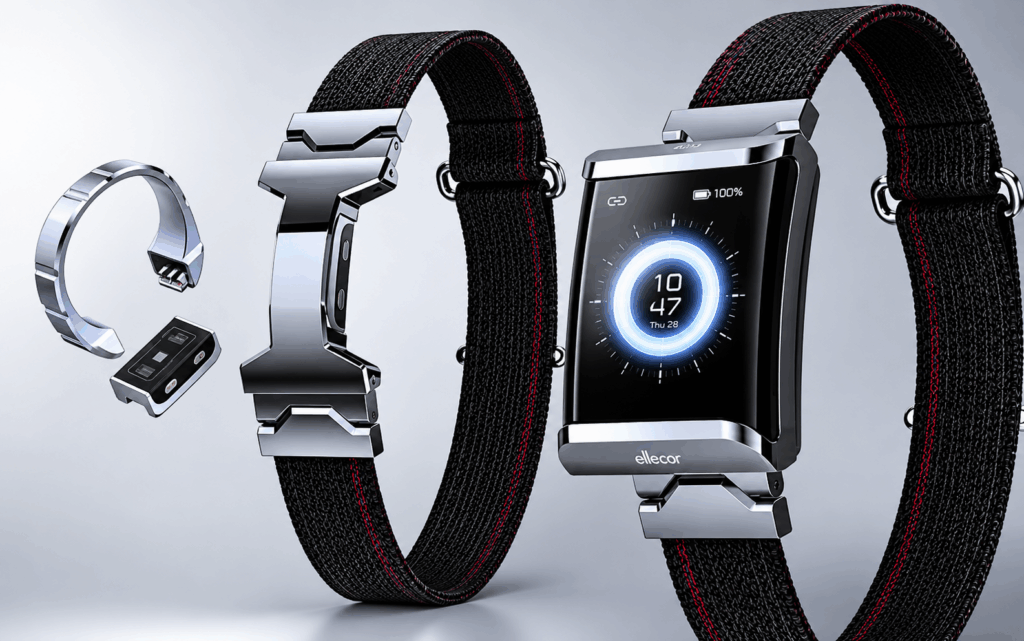
At the center sits the Cube, a sensing module weighing just 2.4 grams. Clipped into a breathable nylon band, it offers screenless, continuous monitoring through the day. Moved into a lightweight ring, it becomes something you can forget you are wearing overnight, precisely when much of the most revealing data is gathered. A third configuration adds Halo, an optional wrist module that layers on voice, haptics, and soft colored light. The Cube carries a 5 ATM water-resistance rating, and Halo is rated IP68.
Halo is where the product gets interesting, and where it departs from quantified-self orthodoxy. A double tap starts a voice recording, letting you log breakfast, a supplement, a run, or simply the sense that you feel unusually flat after a late dinner, without unlocking a phone. Those notes feed the ALLOOP platform alongside biometric readings, supplying context no sensor can capture on its own. Training zones are communicated through light; reminders arrive as a gentle buzz of adjustable intensity. For anyone who has watched a smartwatch face become one more demand on their attention, the absence of a screen is the point.
ALLOOP describes its approach as “agent-native,” meaning the AI was designed into hardware and software from the start rather than bolted on. Users can question the agent by voice, text, or photo about sleep, recovery, training, and nutrition. Someone trying to steady an erratic bedtime could ask for a plan; the agent weighs reported routines against available measurements, proposes a course, and schedules reminders or check-ins the user approves, adjusting as new information arrives. The dashboard tracks a now-familiar constellation of metrics (sleep, recovery, activity, heart rate variability, resting heart rate, blood oxygen, breathing rate, and temperature) and adds a Bio Age score that the company says draws on 18 personalized measurements across six health categories, nutrition among them.
Here, a measure of caution is warranted. Biological-age scores are having a cultural moment, seductive in their precision, but ALLOOP’s calculations have not been independently validated, and the company has yet to publish accuracy data for the Cube. A number that sounds clinical is not the same as a clinical number. The more durable value may lie in the scaffolding around it: the prompt, the check-in, the small nudge back toward a routine you chose for yourself.
ALLOOP’s other quiet ambition is consolidation. The app connects with Apple Health and Google Health, and the company’s broader plans extend to medical records, lab results, and continuous glucose monitors, positioning it as a hub rather than another silo. ALLOOP says personal health data is encrypted and remains under user control, with tools to review, export, and delete it.
Then there is money, increasingly central to how we feel about what we wear. As monthly fees have become part of owning a ring or a band, ALLOOP says its core app requires no subscription, with optional paid AI services layered on top. Trio carries a planned starting price of $299, with crowdfunding scheduled to open November 10 and backers promised units in early January 2027. Battery life is estimated at three to seven days depending on configuration, pending final specifications.
Whether Trio earns a permanent place on the wrist, or the finger, will depend on what remains unproven: accuracy, durability, and whether an AI agent can offer guidance that feels personal rather than generic. But its central argument lands. We have spent years being measured. What many of us want now is a device that helps us understand the measurement, and then quietly steps aside.