
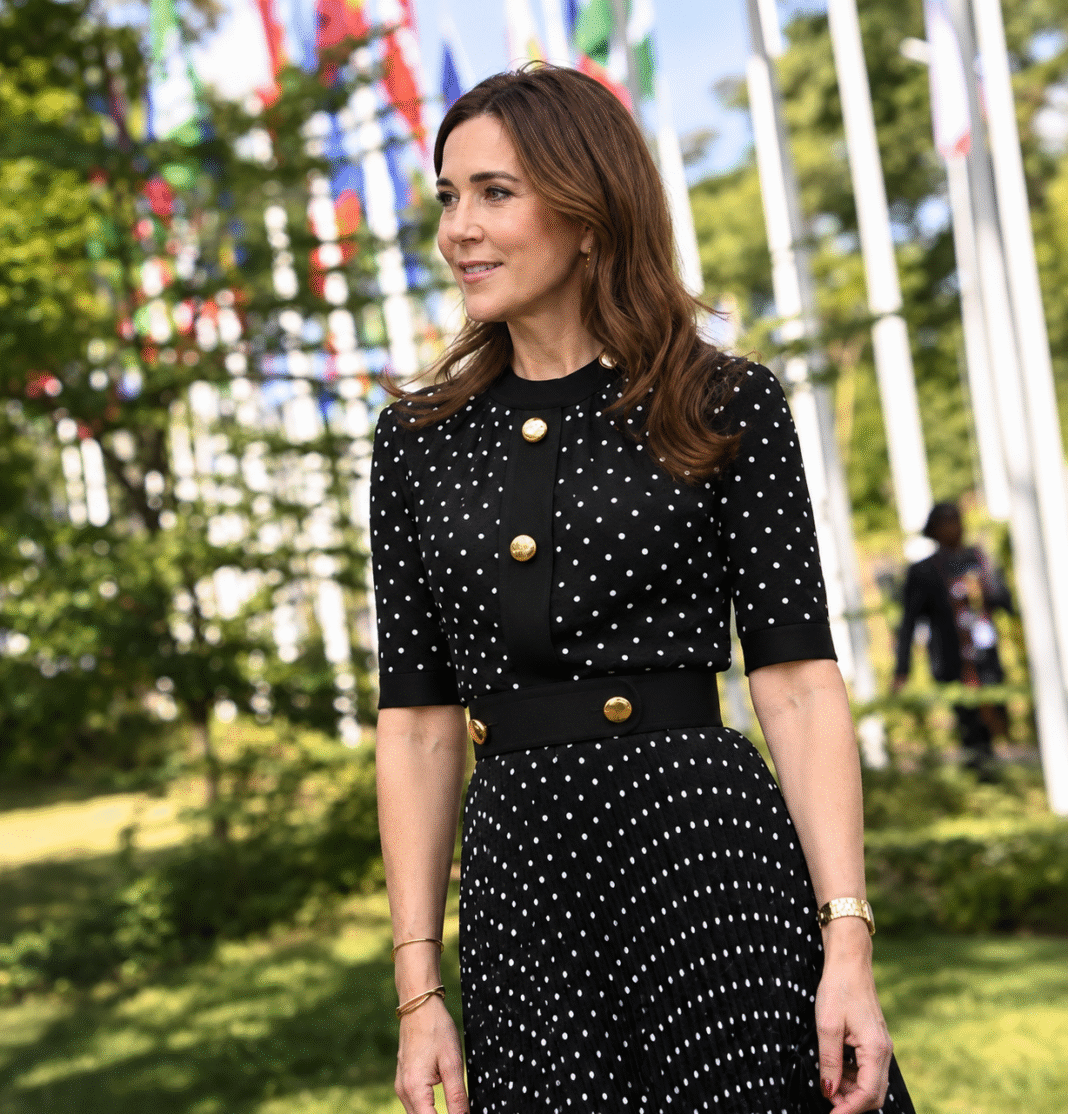
On a Tuesday evening in Copenhagen, Queen Mary of Denmark arrived at the Copenhagen Opera House in a black midi dress scattered with tiny white polka dots, a print so familiar it should have felt safe. Instead, on September 22, as she joined Research, Education and Digitalisation Minister Christina Egelund to present Denmark’s 2026 Teaching Prize, the dress read as a quiet thesis on how to wear the classics without surrendering to them. The difference was in the details, and the details were gold.
The construction did the heavy lifting. A fitted bodice sat above a pleated skirt that swung with each step of her arrival, while elbow-length sleeves and a round neckline kept the line composed. Then came the buttons: oversized, gold-tone, running down the front of the bodice and clustered at the waist, where they formed something close to a belt. On an otherwise monochrome canvas, they behaved less like hardware and more like jewelry, cinching the silhouette and catching the light.
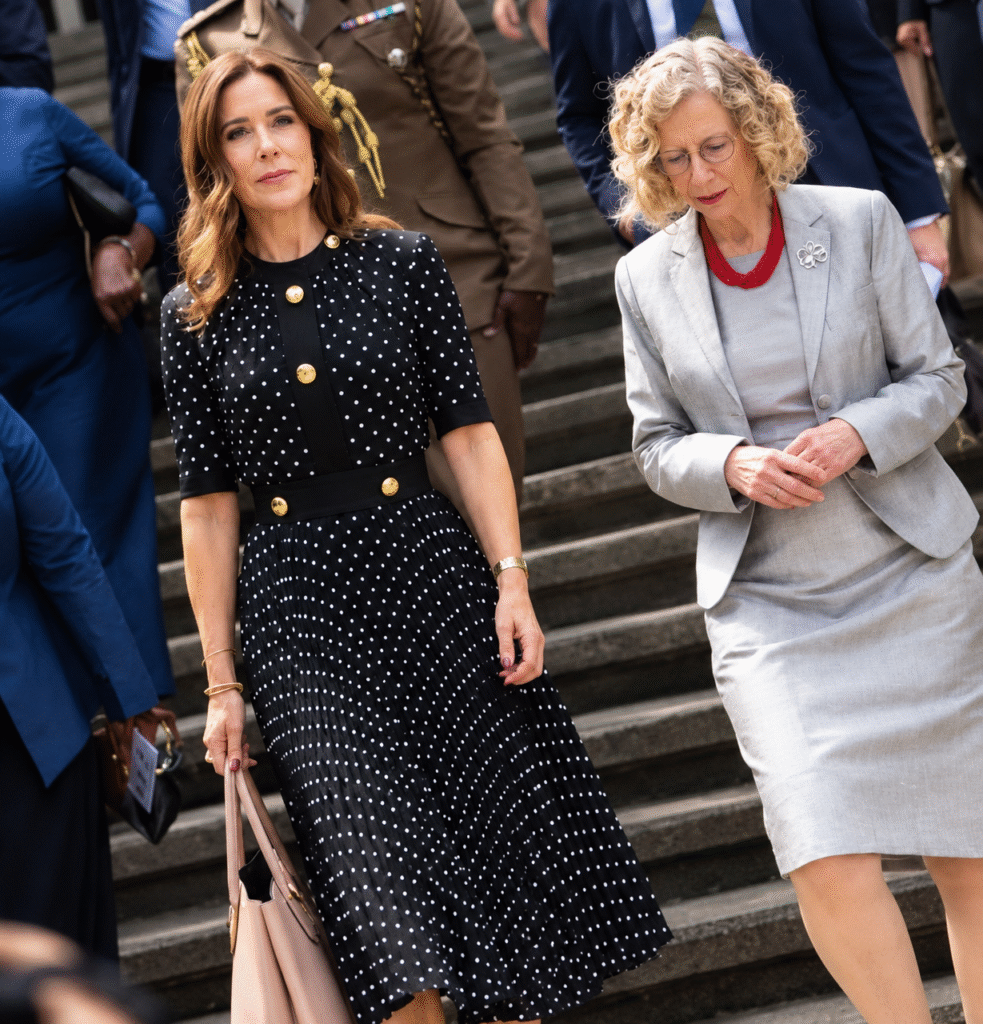
The reference point is unmistakable. A defined waist, a full midi skirt, a dot no larger than a fingertip: this is the vocabulary of the 1950s, the decade of the New Look and the tea dress. Yet nothing about the look tipped into costume. Mary kept the styling spare, choosing pointed nude pumps that extended the leg and let the print hold the room, a gold cuff stacked with bracelets, delicate earrings, and her rings. Her brunette hair fell loose in glossy, center-parted waves, and her makeup paired defined eyes with rosy cheeks and a soft pink lip. It was a beauty look calibrated to recede, so the dress could speak.
It was also not new. Royal watchers noted that the Queen has owned the dress since at least 2021, making the evening a rewear rather than a debut, and a telling one. At a moment when wardrobe longevity has become a measure of credibility for public figures, a dress returning to the spotlight after five years carries its own message. Polka dots, too, have become something of a signature: earlier this season she took the print into warmer territory with a caramel dotted gown at the opening of the 2026 FEI World Championships in Aachen, Germany.
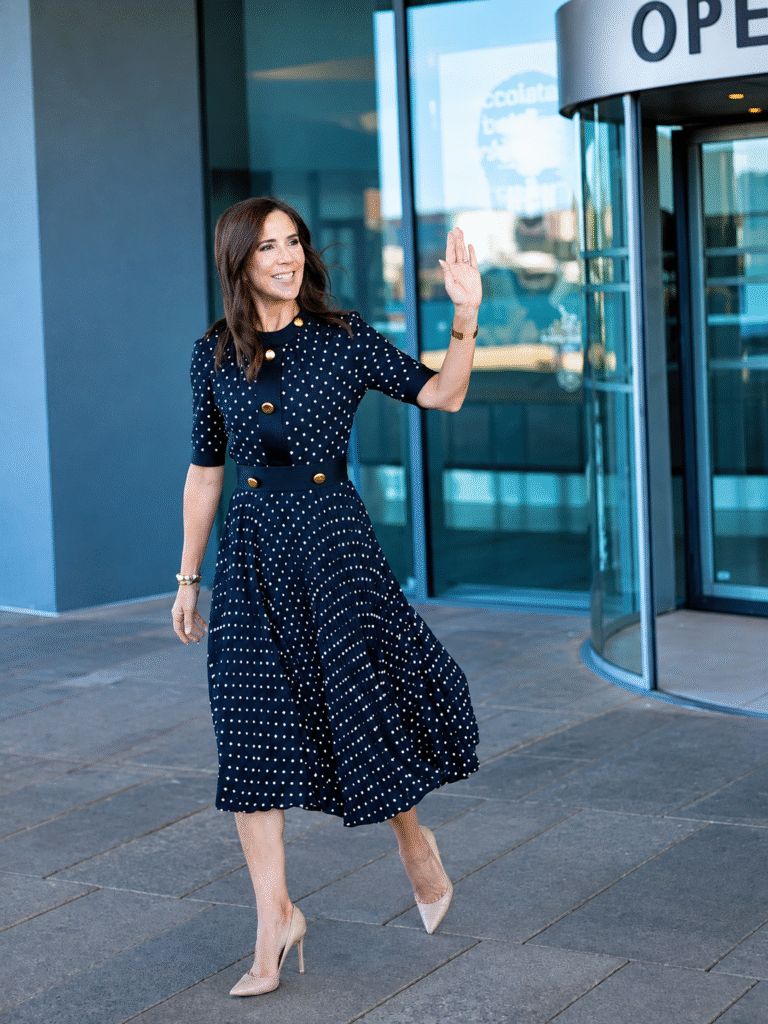
The occasion gave the outfit its meaning. The Teaching Prize, awarded each year by the Ministry, honored seven educators from Denmark’s higher-education institutions for building inspiring and engaging learning environments. This year’s recipients spanned sailing and navigation, rehabilitation, dementia and engineering, a breadth that suited an evening dedicated to the unglamorous, essential work of teaching. A queen in a reworn, impeccably tailored dress felt like the right register: celebratory without spectacle.
Mary has long made a practice of balancing contemporary pieces with timeless wardrobe staples, and this appearance distilled that approach to its essentials. Trend reports will keep declaring polka dots in or out, as they have for decades. On the Danish Queen, the print reads as neither. It simply reads as hers.