
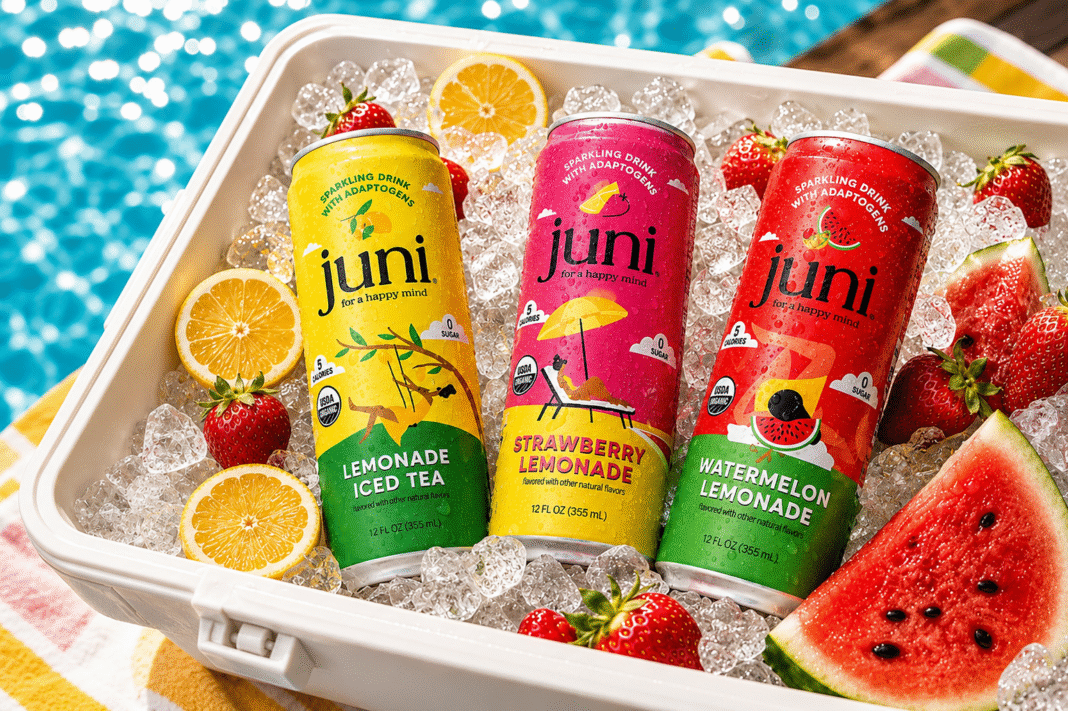
Lemonade has always been the least complicated drink in the American canon, which is precisely why the wellness industry has spent the past several years circling it. On July 1, Juni, the sparkling adaptogenic tea brand co-founded by Jay Shetty, Radhi Devlukia, and serial entrepreneur Kim Perell, made its move from Los Angeles: a Lemonade Trio that expands the line with Strawberry Lemonade and Watermelon Lemonade alongside the existing Lemonade Iced Tea, all of it zero sugar, all of it built on the brand’s organic green tea base. It is a launch timed to the exact week that lemonade stops being a beverage and becomes a season.
The three flavors are constructed with a clear logic. Lemonade Iced Tea is Juni’s reading of the Arnold Palmer, brewed tea cut with bright citrus and left mostly alone. Strawberry Lemonade leans ripe and sweet against a crisp lemon squeeze, the fruit doing the softening work that sugar usually does. Watermelon Lemonade is the lightest of the three, watery in the best sense, engineered for the kind of afternoon where you are not really thirsty but want something in your hand. Each is carbonated, each carries 30mg of caffeine, roughly a third of a cup of coffee, and each contains five calories and no sugar at all.
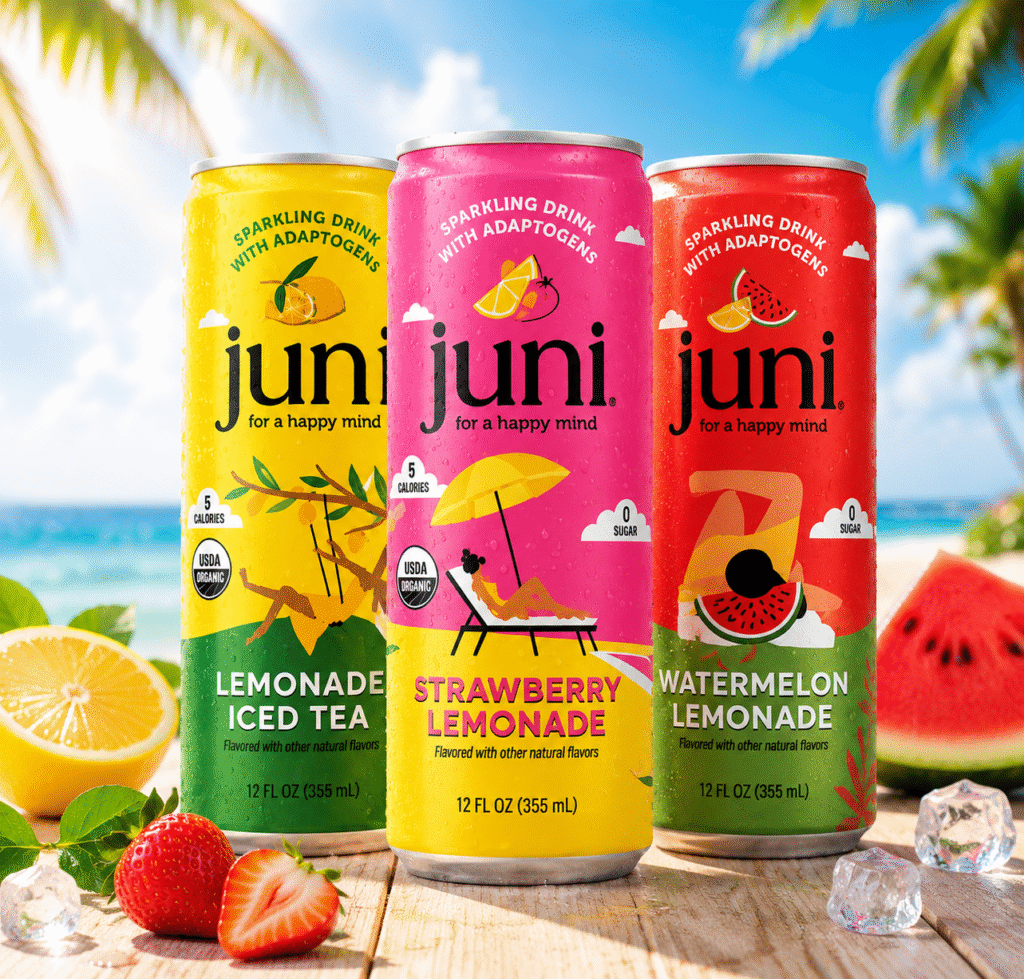
What separates these from the shelf around them is the Super-5 Blend, Juni’s proprietary combination of ashwagandha, lion’s mane, reishi mushroom, green tea, and acerola cherry. That roster is a fairly precise map of what the current consumer says she is looking for: ashwagandha for stress modulation, lion’s mane and reishi as the nootropic and calming end of the functional mushroom boom, acerola cherry as a natural vitamin C source. The research on adaptogens remains genuinely mixed, with the strongest evidence sitting around ashwagandha and cortisol response and considerably thinner ground elsewhere. Juni does not oversell this. The formulation is USDA Organic certified, non-GMO, vegan, and gluten free, and the brand’s language stays closer to mood and focus support than to promise.
The numbers behind the launch are the more revealing story. Juni is now in more than 8,000 stores, including Kroger banners, Sprouts, Whole Foods, Costco, Target, HEB, Wegmans, and Erewhon, and has posted ten consecutive quarters of triple-digit year-over-year growth. That is a rate of expansion that suggests the category is not a curiosity anymore. The functional beverage market has been forecast to move well past $200 billion globally by the end of the decade, and the non-alcoholic segment specifically has become the most reliable growth line in American drinks, driven substantially by consumers under 35 who are drinking less without wanting to drink nothing.
Perell frames the timing plainly. “We’re seeing a real resurgence of interest in nostalgic, better-for-you beverages, and lemonade is having a major moment,” she said, noting that consumers want flavors that are refreshing and recognizable but also align with how they want to live and feel. It is a shrewd observation about where this category actually wins. The early functional drinks asked people to acquire a taste. The successful ones now ask for nothing at all, arriving in flavors already loaded with memory.
Devlukia, an integrative nutritionist whose audience arrived through food rather than supplements, reaches for the ritual rather than the ingredient. “The best summer memories are often tied to simple rituals,” she said, describing the Trio as an invitation to slow down, connect, and savor the moment while feeling good about what is in the can. Coming from a co-founder whose brand is built on adaptogens and clinical studies, the emphasis on pleasure over performance is the more interesting positioning, and probably the correct one for a drink meant to be handed to someone across a picnic blanket.
The Lemonade Trio is available now on Amazon ahead of a nationwide retail rollout later this summer, which gives the brand a runway to read demand before the shelf space is committed. Whether functional lemonade holds past Labor Day is the open question. But the bet Juni is making is not really about adaptogens. It is that the drink you reach for at four in the afternoon has quietly become a decision people want to feel good about, and that nostalgia is the most efficient way to make that decision effortless.