
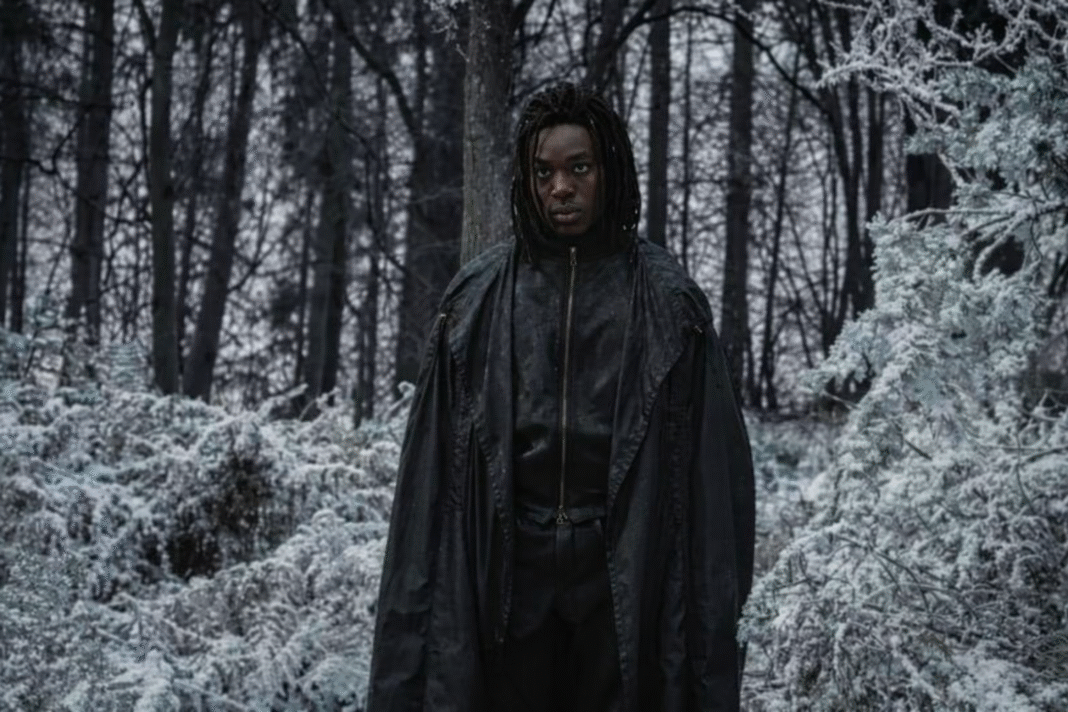
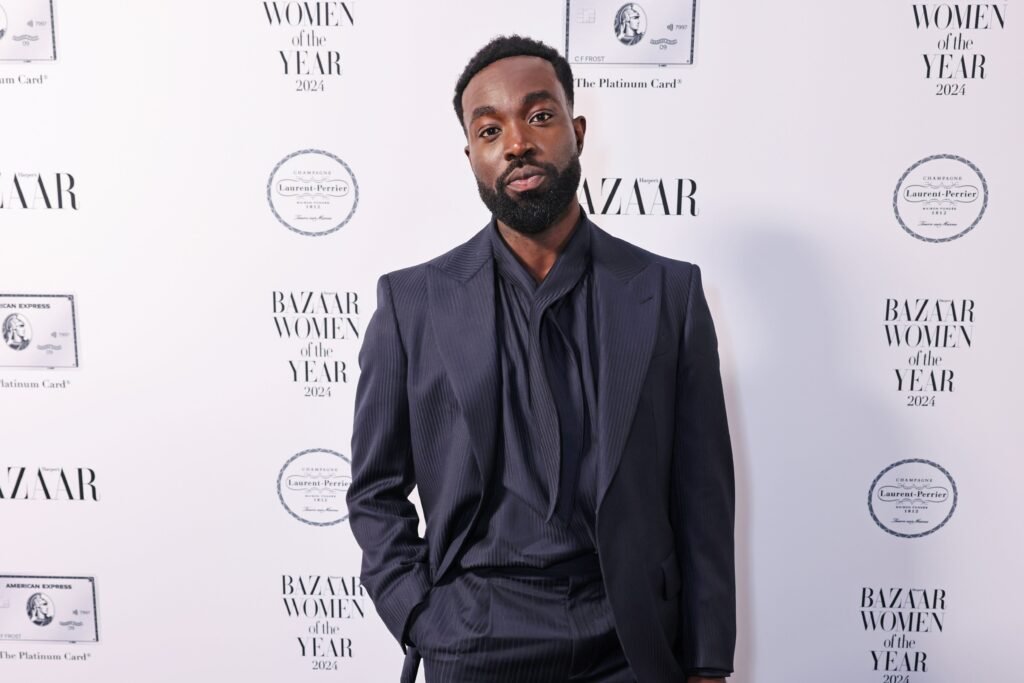
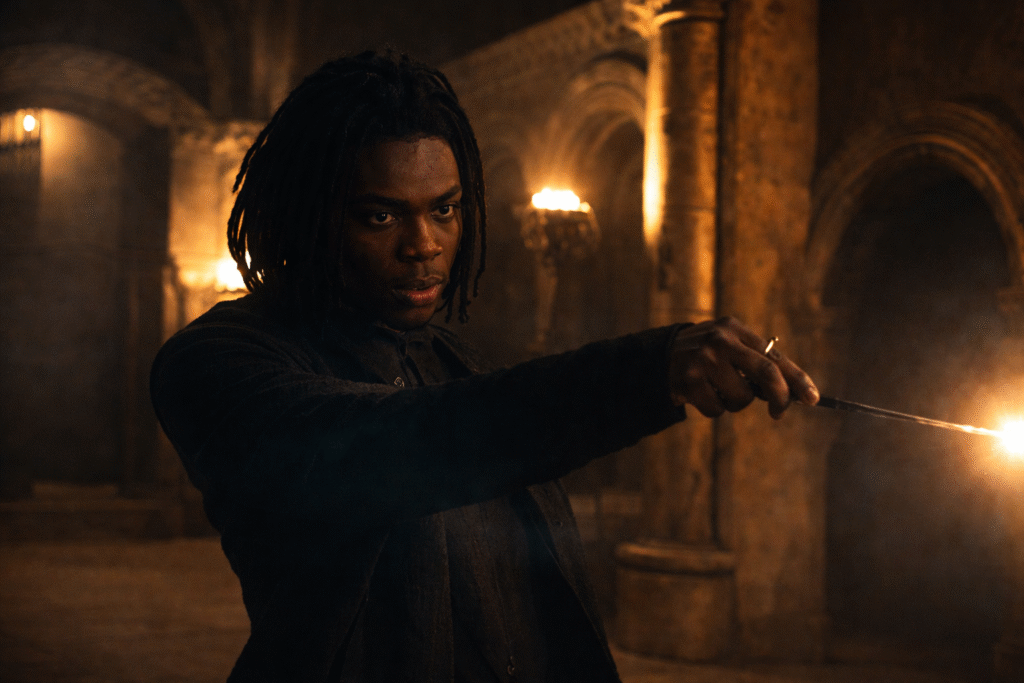
The message was explicit. I’m going to come to your house and kill you. Not a troll’s hyperbole buried in a comment thread — a direct threat, one of many that British actor Paapa Essiedu says appear when he opens Instagram. His offense: accepting a role in a television series. His role: a fictional wizard who teaches potions to fictional children.
When HBO unveiled the first trailer for its long-awaited Harry Potter adaptation this week, confirming Essiedu as Professor Severus Snape and announcing an accelerated Christmas 2026 premiere, the network was also quietly confirming something far more troubling. The casting of a Black actor in a role previously inhabited by the late Alan Rickman has required, in HBO boss Casey Bloys‘s own words, a “serious security team.”
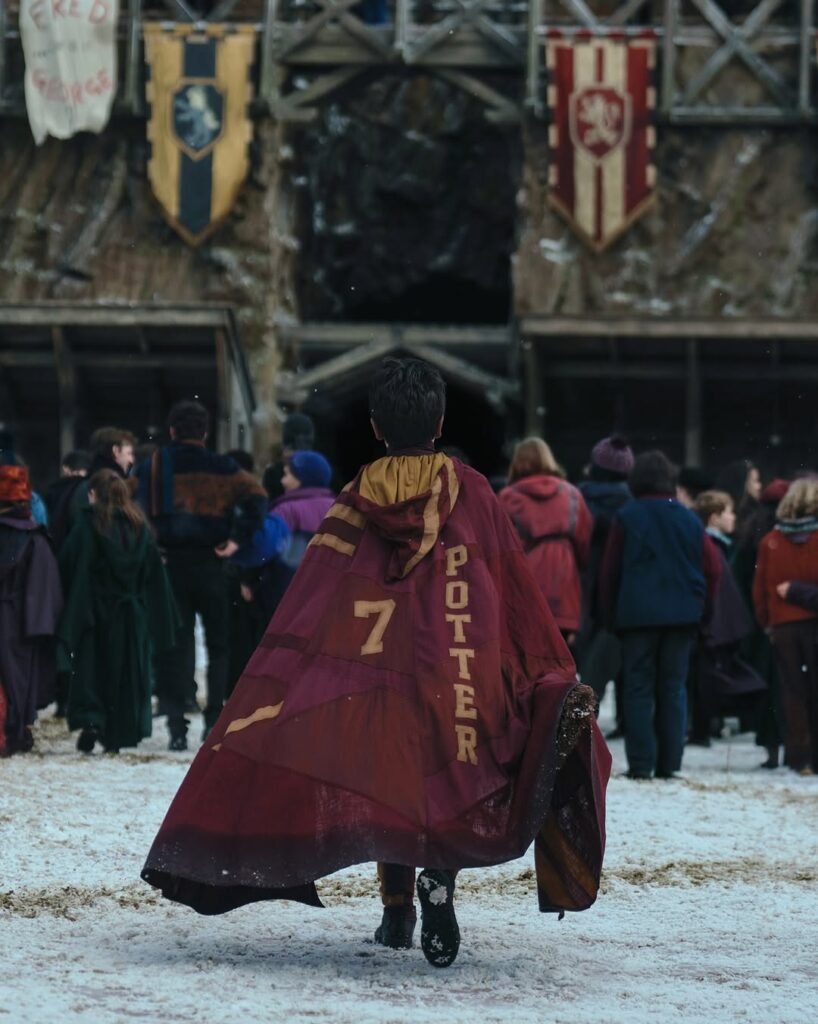
Somewhere between the nostalgia and the spectacle, franchise fandom has metastasized into something that demands a reckoning — and Hollywood can no longer look away.
It would be convenient for the entertainment industry to frame the threats against Essiedu as an isolated aberration — the work of a single disturbed individual, a regrettable anomaly in an otherwise enthusiastic fan community. The evidence does not support that framing.
The targeting of actors in rebooted or expanded franchise properties has become a documented, recurring phenomenon. When Halle Bailey was cast as Ariel in Disney’s live-action remake of The Little Mermaid, social media platforms were flooded with coordinated hostility, with organised groups sharing content under hashtags designed to flood search results with negative sentiment. When the cast of Amazon’s Rings of Power was announced, featuring Black and brown actors in roles set in Tolkien’s legendarium, several performers received harassment significant enough to be addressed in a cast-wide statement before the series had aired a single episode. John Boyega, reflecting publicly on his years playing Finn in the Star Wars sequel trilogy, has been candid about the racial abuse he endured across the franchise’s run — abuse he described as constant and psychologically taxing.
Essiedu’s situation is, by the metrics of documented physical threat, the most extreme version of this pattern yet. The specificity of the threats, referencing his home address, moves the phenomenon from the category of online abuse into what law enforcement agencies classify as credible intimidation. This is significant because it represents a threshold crossing: what once manifested as toxic comment sections has, in a meaningful number of cases, escalated into conduct that requires protective intervention.
Understanding why franchise casting has become a flashpoint requires examining both the psychology of parasocial attachment and the infrastructure that amplifies it.
Devoted fans of long-running literary or cinematic franchises often develop deep, formative relationships with the characters and performers who shaped their understanding of those properties. When Alan Rickman inhabited Snape across eight films over a decade, for many viewers he did not merely portray the character — he became the definitive physical and emotional embodiment of it. His death in 2016 added a layer of grief and protective sentiment around that legacy that any successor would inevitably encounter.
This psychological reality is not itself pathological. The pathology emerges at the intersection of that attachment and the algorithmic architecture of modern social media platforms, which reward outrage engagement over measured discourse. Industry analysts have consistently observed that controversy-driven content, particularly content framed around perceived cultural betrayal, generates substantially higher interaction rates than straightforward entertainment coverage. The result is an ecosystem in which bad-faith actors, whether motivated by racial animus, genuine but misdirected fandom, or simply the pursuit of engagement metrics, are structurally incentivised to escalate.
The specific charge against Essiedu’s casting, that it constitutes a betrayal of the source material, does not withstand scrutiny. J.K. Rowling’s original novels contain no description of Snape’s ethnicity. The character is defined by his moral complexity, his unrequited devotion, and his double-agent duplicity — none of which are properties of skin colour. The argument that Rickman’s portrayal should constrain all future casting is, by the same logic, an argument that no Shakespeare play should ever be performed by an actor different from those who first staged it in the 1590s.
The question that the entertainment industry must now confront directly is not whether harassment happens — it does, demonstrably — but whether studios are meeting their duty of care toward the talent they employ.
In most jurisdictions, the legal framework for employer obligations to protect workers from foreseeable harm is well established. When a studio casts an actor in a high-profile role in a beloved franchise, the historical pattern now makes harassment not merely foreseeable but near-certain. The question then becomes what constitutes reasonable mitigation. A security team, as HBO has provided Essiedu, is a reactive measure. It addresses the symptom rather than the cause.
More structural responses would include proactive monitoring and reporting of documented threats to law enforcement, coordinated pressure on social media platforms to enforce their own terms of service against credible physical threats, and the use of studios’ significant economic leverage to demand platform accountability. Warner Bros. Discovery, the parent company of HBO, is a global media conglomerate with substantial advertising relationships with the same platforms on which these threats circulate. The degree to which that leverage has been applied to the problem of actor harassment remains, at best, opaque.
Some studios have begun to address this gap. Disney has spoken publicly about the support structures it offered Bailey during the period surrounding The Little Mermaid’s release. But industry-wide standards remain absent. There is no equivalent of the Screen Actors Guild’s safety guidelines for physical production environments — no formalised protocol for what a studio must do when an actor receives credible threats as a direct consequence of their casting.
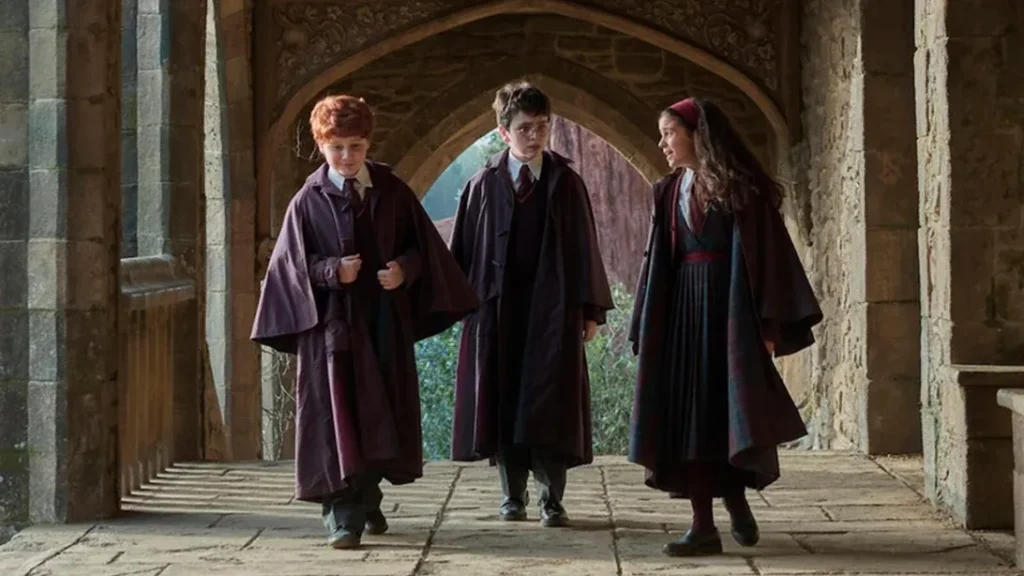
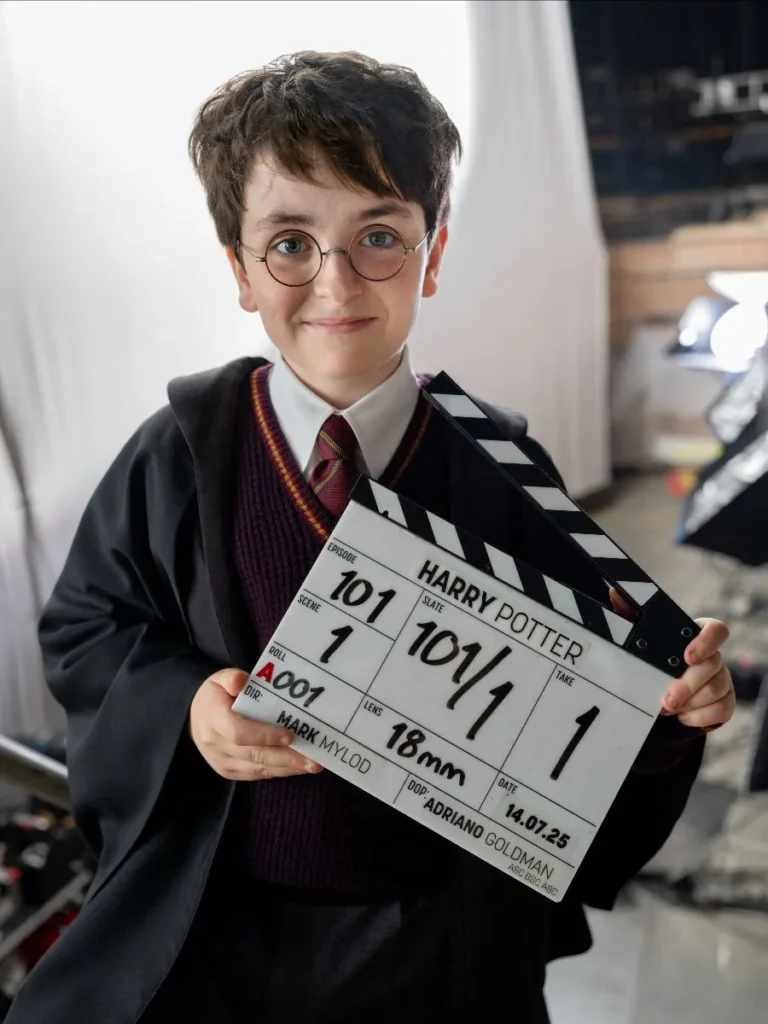
There is a particular irony in the calibre of the creative team HBO has assembled for this production. Francesca Gardiner, whose work on Succession represents some of the most critically lauded television writing of the past decade, serves as showrunner. Director Mark Mylod, whose filmography also includes significant Succession episodes alongside The Menu, brings a prestige-drama sensibility to material that could easily have defaulted to visual spectacle over psychological depth. The ensemble of adult cast members — John Lithgow as Dumbledore, Janet McTeer as McGonagall, Nick Frost as Hagrid — signals a production that is attempting something more ambitious than a straightforward translation of the films.
That ambition makes the circumstances surrounding Essiedu’s casting all the more pointed. Here is a production demonstrably committed to the highest standards of craft, surrounded by a discourse that has devolved into threats against one of its lead performers. The contrast illuminates a broader truth about prestige television in the current moment: the creative elevation of the medium has not been accompanied by an equivalent elevation of the culture in which it is received.
The Christmas 2026 premiere of HBO’s Harry Potter series will be, by virtually any measure, one of the most-watched television events in recent memory. Warner Bros. Discovery CEO JB Perrette‘s claim that it represents the biggest streaming event in the history of HBO Max was not hyperbole deployed carelessly — it reflects the genuine scale of the franchise’s global reach across age groups, markets, and generations. Six hundred million books sold does not merely represent a commercial record; it represents a cultural footprint of extraordinary depth.
That footprint means that how this production handles the moment surrounding Essiedu’s Snape — whether his performance is celebrated on its own terms, whether the security apparatus around him remains necessary throughout the series run, and whether the threats he has received are treated as a serious institutional matter — will be watched by every major studio making casting decisions for the next decade.
The precedent being set is not a creative one. It is a moral and institutional one. If an actor of Essiedu’s standing, attached to a production of this resource and prestige, still requires a security team simply to do his job, then the industry’s unofficial policy is one of tolerance: tolerance for harassment, tolerance for intimidation, and tolerance for the proposition that the demographic composition of a cast is a legitimate grievance to be pressed through fear.
That is not a precedent any studio should be comfortable allowing to stand. Playing a wizard should not require a security team. The fact that it currently does is a failure — not of casting, but of institutions.