
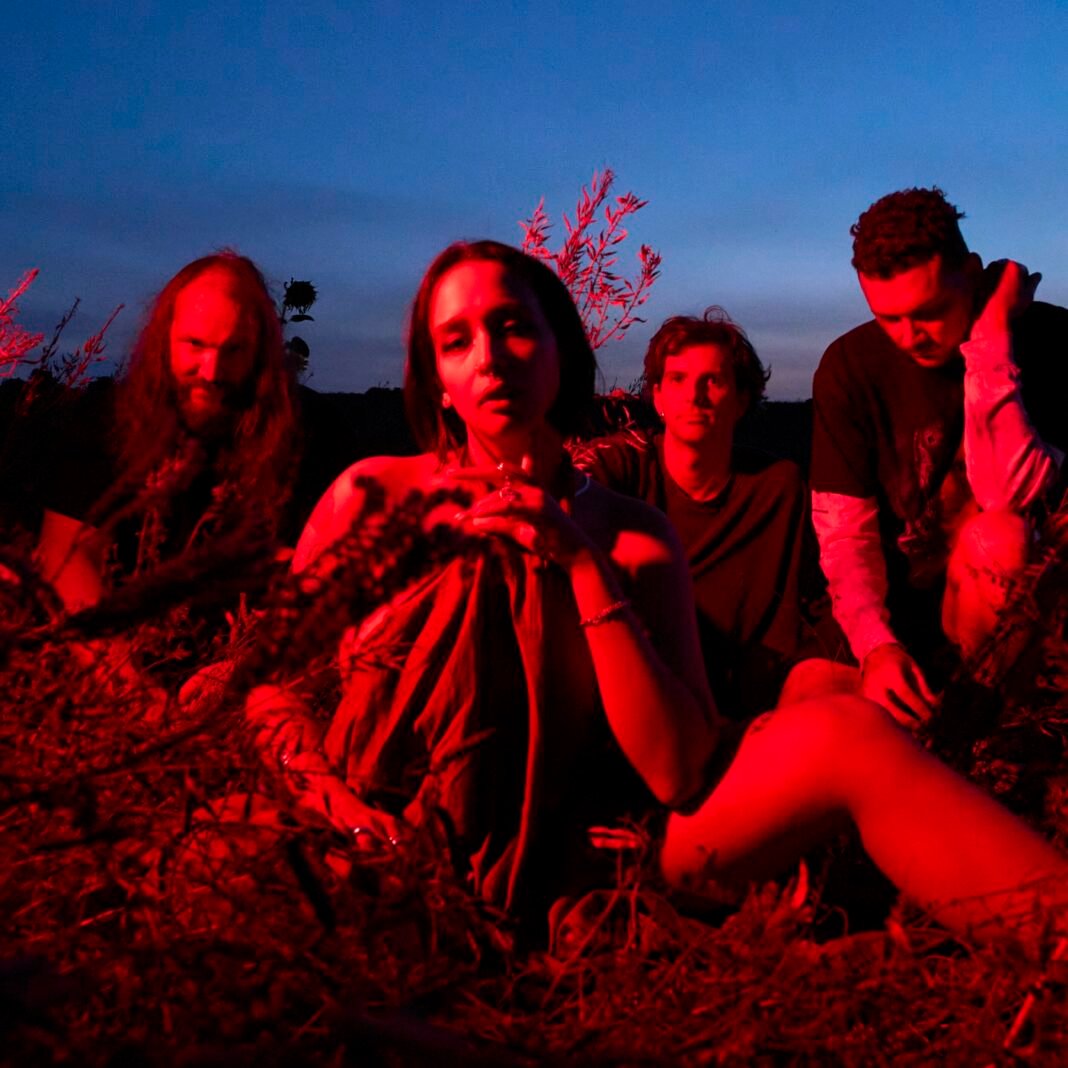
Valentine Caulfield spends her mornings staring at atrocities. By 9 AM at her Berlin desk, she’s already transformed genocide statistics into shareable infographics, distilled political executions into data points, made the unbearable digestible. Then she goes home and screams in French over industrial noise so crushing it could crack bone. This isn’t compartmentalization—it’s survival architecture.
URGH, the new album from Manchester/Berlin quartet Mandy, Indiana, arrives as music’s most unflinching answer to a question the creative class rarely admits asking: What happens when your day job is bearing witness, and your art becomes the only space where you’re allowed to feel it? As information overload reaches crisis levels and “staying informed” becomes indistinguishable from self-harm, Caulfield’s dual existence as journalist and vocalist exposes an uncomfortable truth: sometimes the most honest response to reality isn’t analysis, but a sound so visceral it bypasses language entirely.
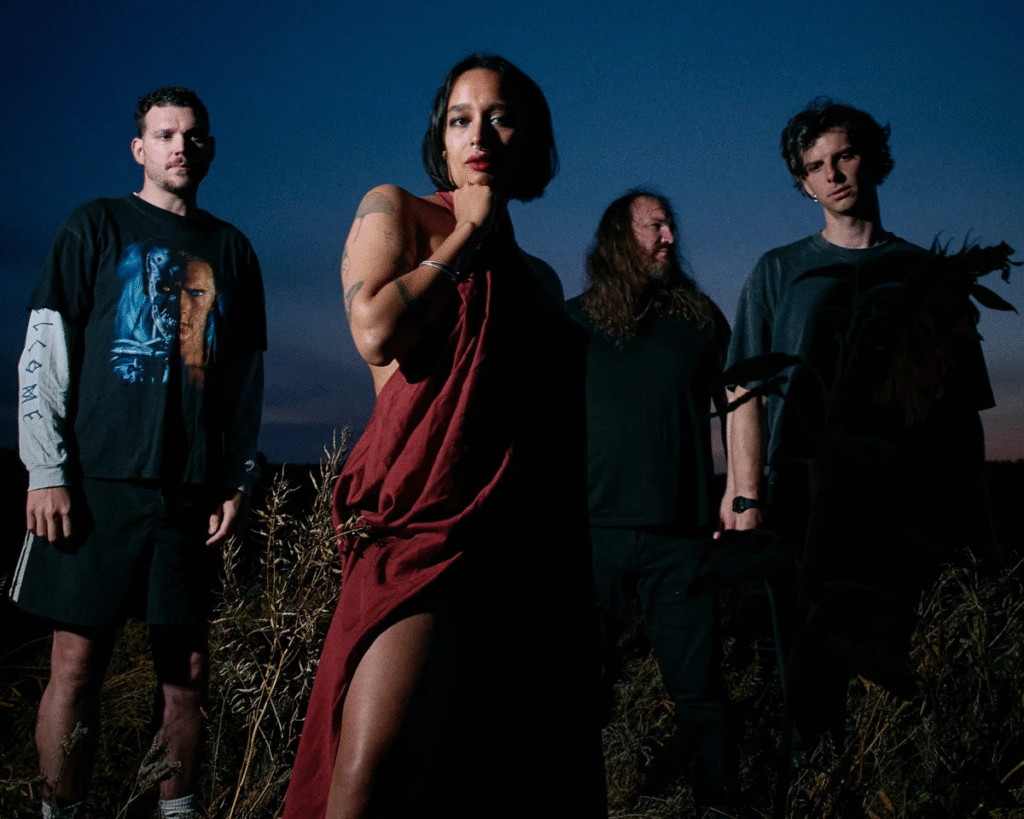
Released via Sacred Bones Records, URGH represents the second full-length from the industrial EBM quartet consisting of Caulfield, guitarist/producer Scott Fair, synth player Simon Catling, and drummer Alex Macdougall. But the album’s significance extends far beyond its sonic innovations. It exists as a document of what happens when professional proximity to global suffering collides with the human need to process trauma through creation.
The circumstances surrounding URGH’s creation only deepen this dynamic. The album was written and recorded while Caulfield underwent treatment for a rare eye disorder that severely impaired her vision, and Macdougall recovered from hernia removal and partial thyroidectomy. These aren’t minor biographical details; they’re central to understanding how physical vulnerability intersects with emotional exposure. When your body is failing and your workday consists of cataloging atrocities, where does the accumulated weight go?
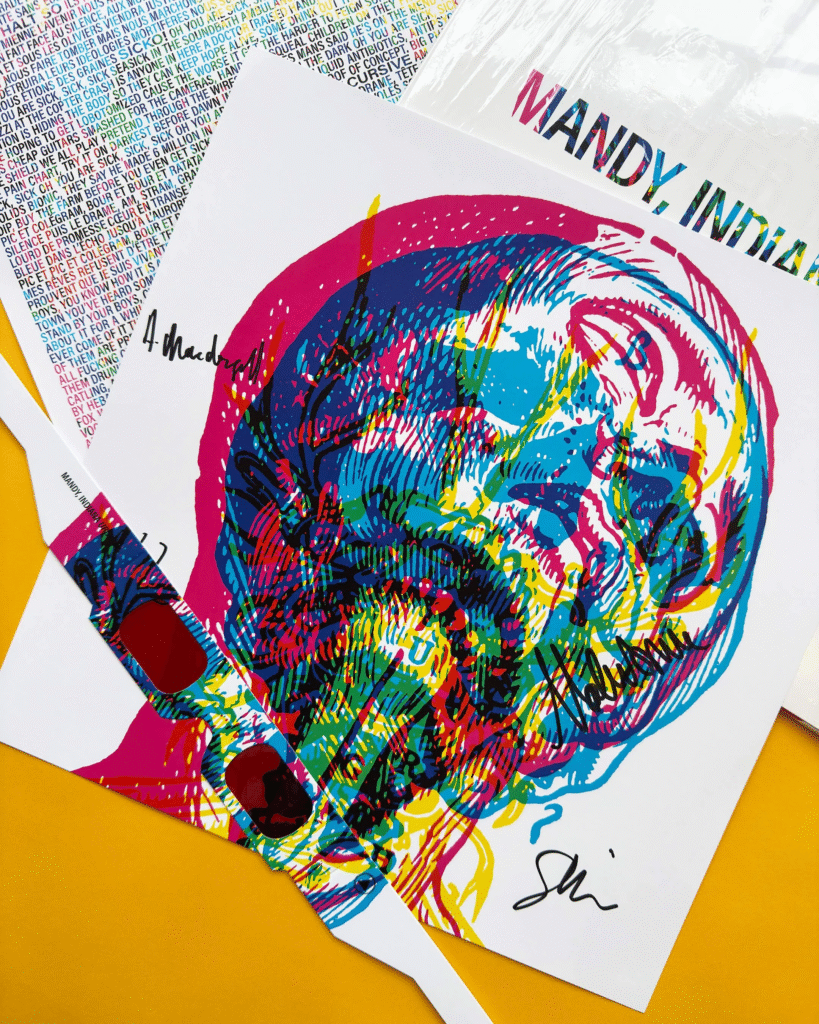
For Mandy, Indiana, it goes into nearly an entire album performed in French, Caulfield’s native language. This linguistic choice represents more than aesthetic preference. English has become the default language of industrial music, the expected medium for aggression and confrontation. By abandoning it, Caulfield creates a buffer between the trauma she processes professionally in English and the trauma she excavates personally in French. The lead single “Magazine,” which addresses sexual assault through the band’s distortion-as-language approach, demonstrates how linguistic displacement can paradoxically create intimacy. When comprehension isn’t guaranteed, the emotional truth embedded in delivery becomes primary.
This move signals a fundamental shift from the band’s 2023 debut, i’ve seen a way, which operated in observational mode. URGH pivots to direct confrontation. Tracks like “Magazine” and “I’ll Ask Her” don’t gesture toward trauma; they inhabit it. The latter examines institutional complicity with the unflinching clarity of someone who spends forty hours a week watching institutions fail in real time. When you produce infographics about injustice as your day job, your tolerance for artistic euphemism evaporates.
The album also grapples explicitly with political disillusionment, drawing from specific events like the execution of Marcellus Williams and ongoing global conflicts. This specificity matters. URGH isn’t vaguely “about” the state of the world; it’s about September 24, 2024, when Missouri executed Williams despite overwhelming evidence of his innocence. It’s about opening your laptop every morning knowing you’ll encounter fresh documentation of Gaza, of Sudan, of Myanmar. Caulfield’s professional requirement to remain current with global news means her creative work can’t retreat into abstraction or metaphor. The brutality she witnesses daily demands equally brutal sonic architecture.
Industry experts suggest this feedback loop between information consumption and creative output represents an emerging crisis among artists whose day jobs involve media production or journalism. The traditional boundary between work and art assumes these spheres operate independently. But for creators like Caulfield, the membrane has dissolved. Her job isn’t separate from her art; it’s the fuel source. This raises uncomfortable questions about sustainability. Can a creative practice built on processing collective trauma survive indefinitely? Or does it inevitably collapse under its own weight?
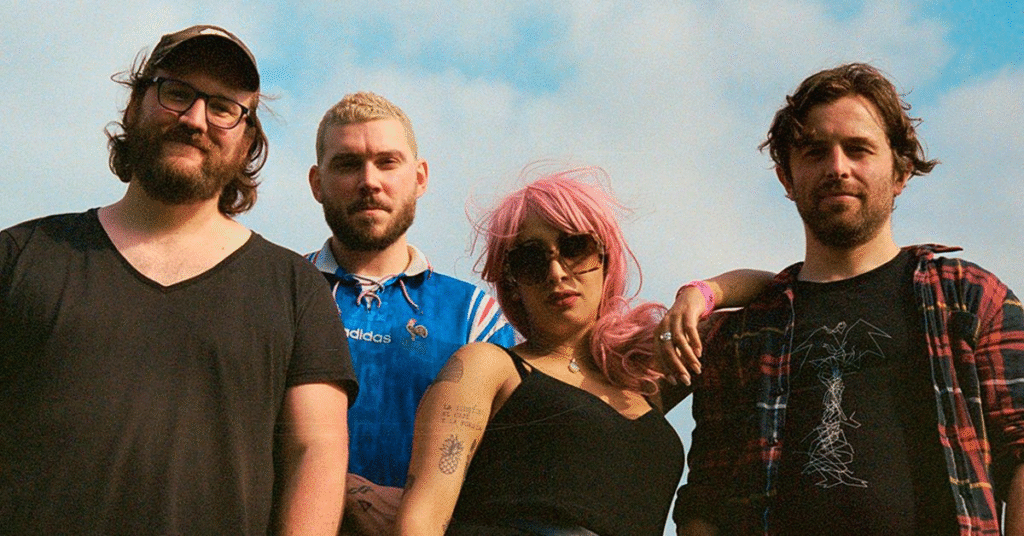
The financial implications of this model also deserve examination. Caulfield deliberately maintains her full-time position at the German data services company, describing music as a non-primary career outlet. The entire band collectively rejects full-time musicianship. This isn’t financial necessity presented as artistic choice; it’s a calculated decision about preservation. By refusing to monetize their music as a primary income source, Mandy, Indiana maintains control over their creative process. They’re not beholden to streaming algorithms, playlist placements, or label expectations about commercial viability. The industrial brutality of URGH exists because the band doesn’t need it to pay rent.
But this arrangement also reveals a privilege gap in experimental music. The ability to maintain art as “necessary rather than productive” requires financial stability elsewhere. Not every artist can afford to work a demanding full-time job while producing uncompromising music. Caulfield’s data services position likely provides health insurance that covered her eye disorder treatment, sick leave that allowed recovery time. The very safety net enabling URGH’s creation remains inaccessible to many musicians, particularly those from marginalized backgrounds who can’t risk the financial precarity of day jobs and night music.
This is significant because URGH arrives at a moment when the relationship between artists and their audiences around trauma has become increasingly fraught. Listeners now expect vulnerability as standard product. Albums come with trigger warnings and mental health resources. Artists are praised for “bravery” when discussing personal pain, creating an incentive structure that potentially exploits suffering. Mandy, Indiana sidesteps this dynamic by making trauma inseparable from their creative process rather than marketing it as confessional content. Caulfield isn’t sharing her pain for therapeutic purposes or audience connection; she’s channeling professional exposure to collective suffering into sonic form because she has no other choice.
The result is an album that feels less like artistic expression and more like emergency response. URGH doesn’t ask to be understood or appreciated. It exists because it had to exist, because looking directly at the world as it is requires an outlet that bypasses rational analysis. When comprehension fails, when infographics can’t capture the scope of horror, when staying informed means accepting daily psychic damage, distortion becomes language. Screaming becomes grammar.
What Mandy, Indiana has created with URGH isn’t just an album; it’s evidence of what happens when the professional demand to witness collides with the human capacity to process. In an era where media literacy often means trauma exposure and staying informed requires psychological fortification, Caulfield’s work as both journalist and musician exposes the real cost of remaining conscious. The album stands as testament to those who can’t look away, who spend their days making atrocities legible and their nights making that exposure survivable. It’s music for the moment when bearing witness becomes its own form of violence, and the only honest response is a sound so crushing it matches the weight of what we’re forced to carry.