
When Selena Gomez’s makeup empire decided to collaborate with Shay Mitchell’s travel brand, the partnership defied conventional celebrity-collab logic. Beauty brands typically join forces with fashion houses or wellness companies—safe, adjacent categories where audiences overlap neatly. But a liquid blush meeting a luggage line? That’s a different playbook entirely. The BÉIS x Rare Beauty limited-edition capsule, launched this month with three rose-hued travel accessories designed around Rare Beauty’s cult-favorite “Worth” blush shade, signals something more calculated than celebrity star power: it reveals how celebrity founders are pioneering cross-category convergence strategies that mirror the actual lives of their consumers. In an era where the same person books a spontaneous weekend trip, packs minimally, and expects their beauty routine to travel seamlessly, the boundaries between “travel brand” and “beauty brand” are dissolving. This collaboration isn’t just about selling $28 keychain cases—it’s a blueprint for how celebrity-founded companies can expand market reach without diluting brand identity.
The strategic architecture behind this partnership represents a fundamental departure from the predictable celebrity collaboration playbook that has dominated the market for the past decade. Traditional celebrity-brand partnerships have relied on category adjacency—the assumption that brand extensions must stay within closely related verticals to maintain credibility. Fashion brands collaborate with accessories lines. Beauty companies partner with skincare or fragrance labels. Wellness brands align with fitness or nutrition companies. This conservative approach has been driven by risk mitigation: stay close to your core competency, leverage obvious audience overlaps, and minimize the potential for brand confusion.
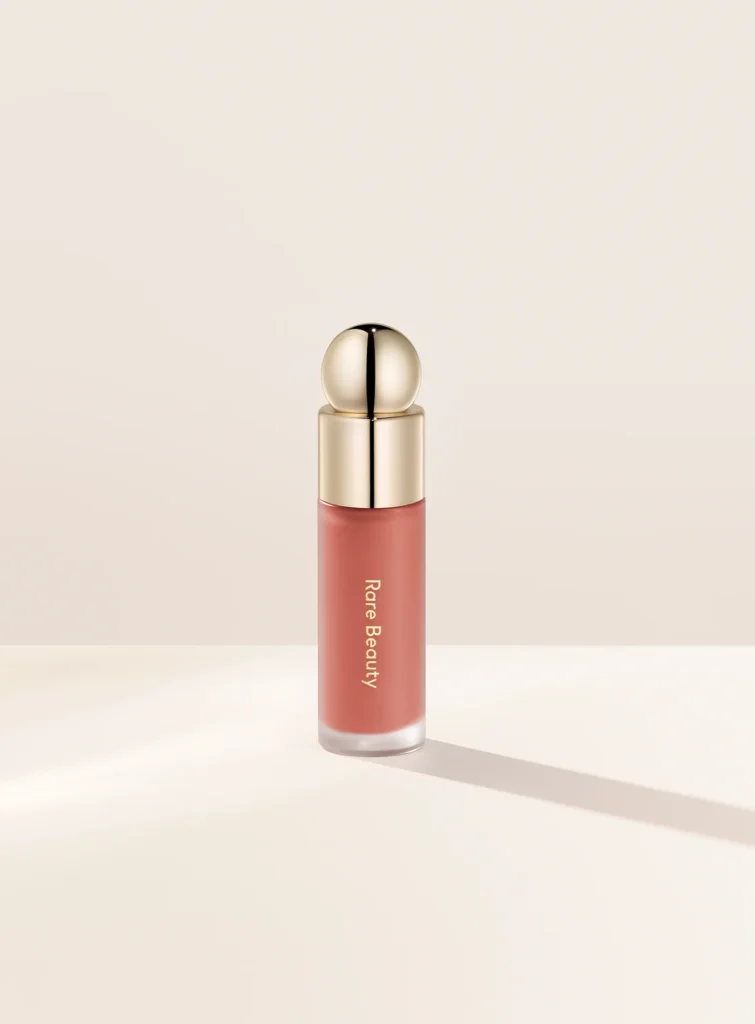
The BÉIS x Rare Beauty collaboration systematically dismantles this framework. By pairing a functional travel accessories brand with a high-performance makeup line, Mitchell and Gomez are testing a hypothesis that traditional brand strategists would have dismissed as misaligned. Yet the partnership’s underlying logic becomes evident when examined through the lens of contemporary consumer behavior. The modern beauty consumer doesn’t compartmentalize their life into discrete categories. They view beauty, travel, wellness, and self-care as integrated components of a cohesive lifestyle identity. The person purchasing Rare Beauty’s Soft Pinch Liquid Blush is statistically likely to be the same demographic booking weekend getaways, prioritizing compact and functional travel solutions, and seeking products that transition seamlessly between contexts.
This convergence strategy exploits what market analysts term “lifestyle intersection points”—moments where consumer needs span multiple traditional product categories simultaneously. The three-piece capsule collection, comprising a Blush Case at twenty-eight dollars, a Makeup Brush Pouch at twenty-four dollars, and a Large Cosmetic Pouch at seventy-four dollars, specifically targets these intersection points. These aren’t generic travel accessories with superficial beauty branding slapped on. The products are engineered around “Worth,” the specific rose-toned shade that has become Rare Beauty’s signature color and bestselling product identifier. This design specificity signals that the collaboration was conceived not as a marketing stunt but as a legitimate product development exercise addressing genuine consumer pain points: how to transport beauty products efficiently while maintaining the aesthetic and functional standards both brands have established.
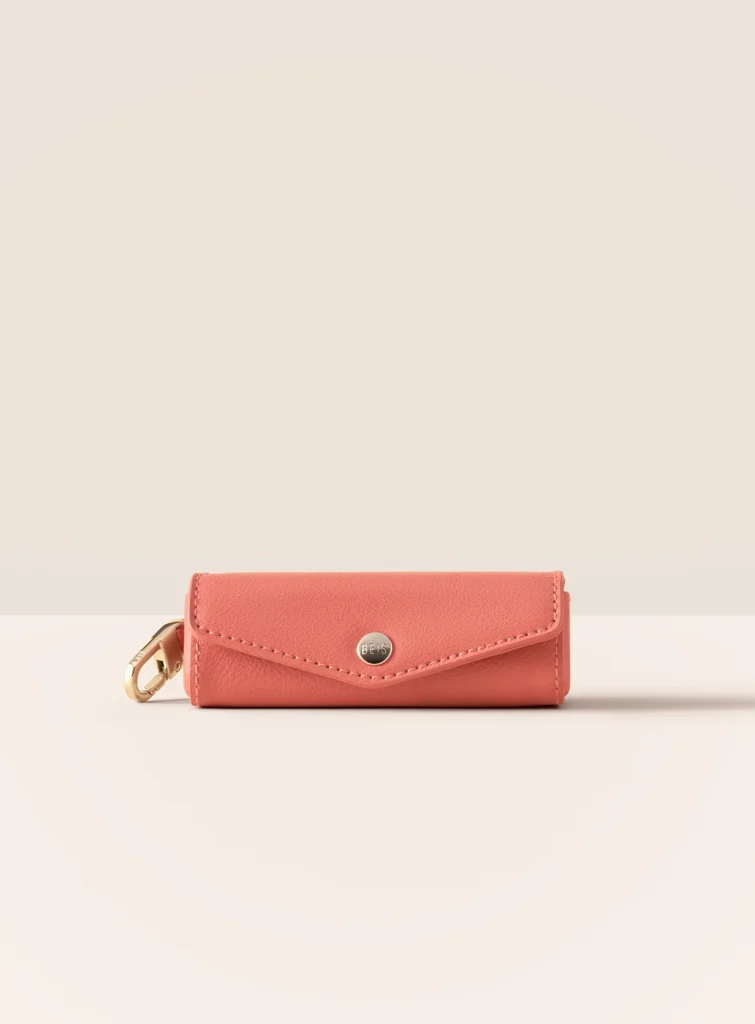
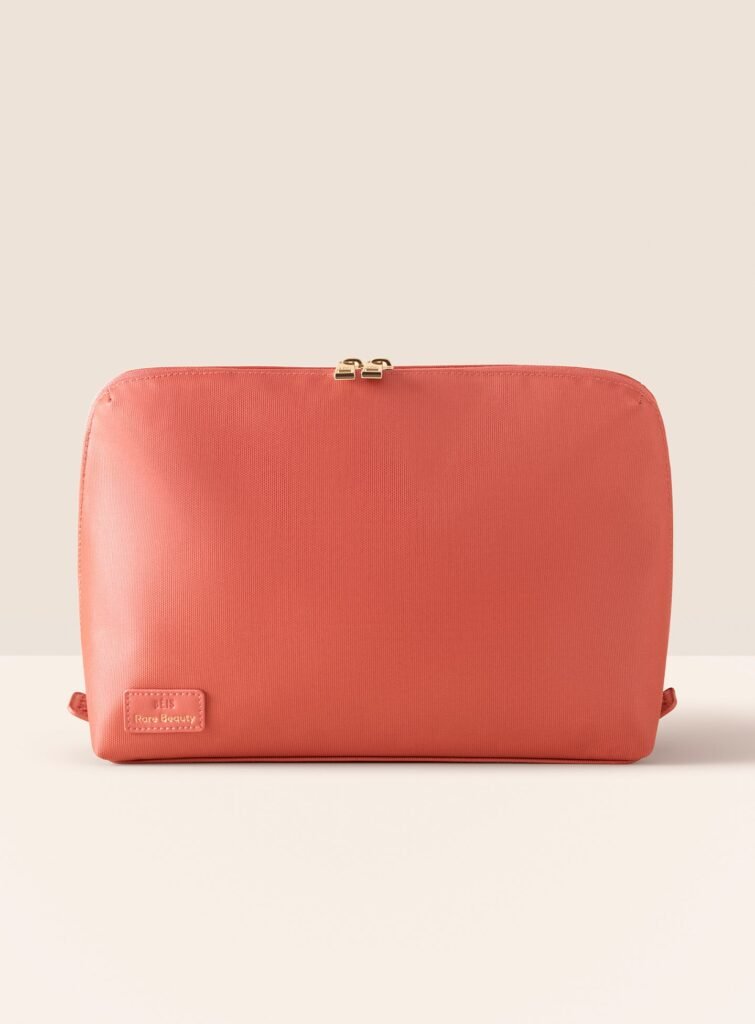
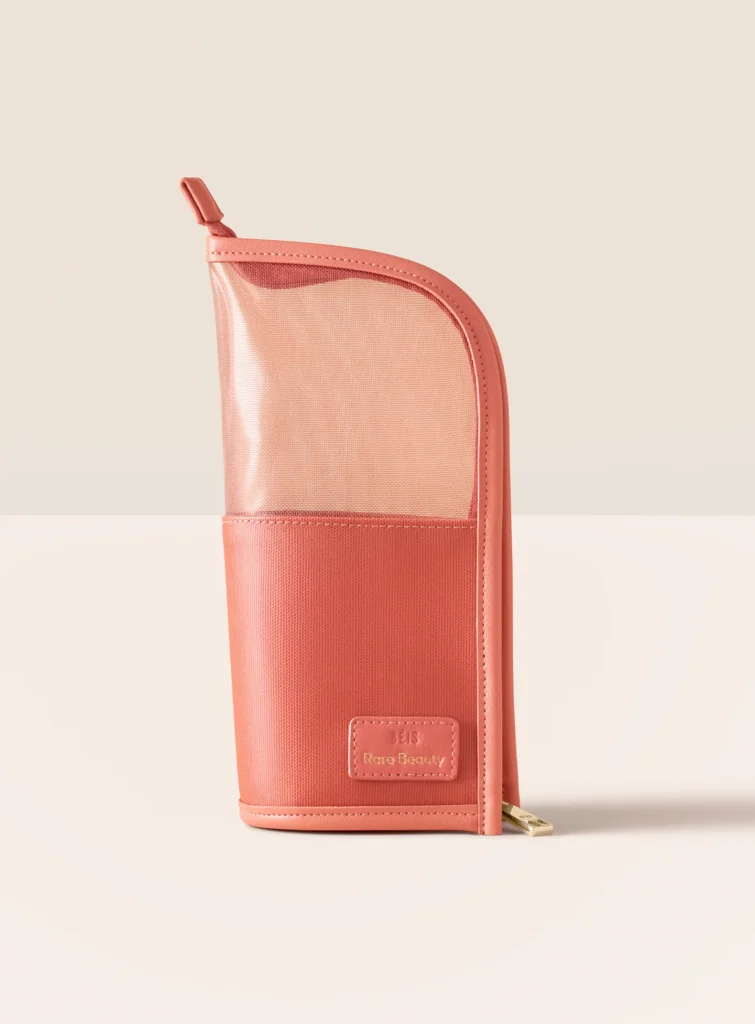
The financial implications of this cross-category approach are substantial. Both BÉIS and Rare Beauty have cultivated reputations for rapid sellouts and scarcity-driven demand. By creating an online-exclusive, limited-edition drop, the brands are leveraging the psychological drivers that have made drop culture so effective in streetwear and sneaker markets. However, applying these tactics to the intersection of beauty and travel represents an expansion of the scarcity model into new territory. The collaboration allows both brands to test new audience segments without the capital expenditure and inventory risk of launching entirely new product lines. If the drop succeeds, it validates the cross-category thesis and provides market data that can inform future product development. If it underperforms, the limited-edition framing contains the risk.
This move also signals a maturation in how celebrity founders approach business development. Mitchell and Gomez aren’t operating as traditional celebrity endorsers who license their names and collect royalty checks. They’ve built legitimate businesses with distinct brand identities, distribution networks, and product innovation pipelines. BÉIS has established itself as a solution for functional travel needs, moving beyond celebrity novelty to become a recognized player in the travel accessories market. Rare Beauty has achieved similar legitimacy in the beauty sector, with products that compete on performance and innovation rather than celebrity association alone. The collaboration represents a strategic partnership between two established brands, not a publicity stunt between two celebrities.


The partnership’s structure reveals sophisticated brand management. Rather than one brand absorbing the other or creating a co-branded entity that could confuse either brand’s positioning, the collaboration maintains clear boundaries. The products are BÉIS accessories designed in Rare Beauty’s aesthetic language. This preserves BÉIS’s authority in travel functionality while allowing Rare Beauty to extend its visual identity into adjacent contexts without diluting its core makeup expertise. The approach demonstrates an understanding that successful cross-category partnerships require careful brand architecture—each partner must contribute their core competency while respecting the other’s domain expertise.
The wider implications extend beyond these two brands. If this collaboration proves commercially successful, it establishes a template that other celebrity-founded brands will inevitably study and replicate. The model suggests that the next generation of celebrity brand partnerships won’t be confined to obvious category pairings. We may see athleisure brands collaborating with nutrition companies, skincare lines partnering with sleep technology brands, or wellness companies joining forces with home goods manufacturers. The logic is identical: identify where consumer lifestyles naturally intersect multiple categories, then create products that serve those intersection points more effectively than traditional single-category offerings.
This evolution also reflects broader shifts in how consumers discover and purchase products. Social media has eroded the traditional category boundaries that retail environments once reinforced. On Instagram or TikTok, a beauty tutorial can seamlessly transition into travel packing tips, which flows into wellness routines and outfit planning. Consumers increasingly expect brands to understand and serve these fluid lifestyle contexts rather than remaining confined to rigid product categories. Celebrity founders, who often built their audiences through exactly this kind of multi-dimensional content, are uniquely positioned to recognize and capitalize on these convergence opportunities.
The BÉIS x Rare Beauty collaboration ultimately represents something more significant than three travel pouches in a pretty color. It’s evidence that celebrity-founded brands have evolved beyond the celebrity endorsement model that defined an earlier era. These founders are now operating as legitimate business strategists, identifying white space opportunities that traditional corporate brand managers, constrained by organizational silos and category definitions, struggle to see. By demonstrating that travel and beauty can intersect productively, Mitchell and Gomez are expanding the strategic playbook available to all celebrity founders. The question is no longer whether celebrity brands can sustain themselves beyond initial hype cycles—many have already proven that capability. The question now is whether they can lead industry innovation by reimagining how product categories relate to each other in consumers’ actual lived experiences. This collaboration suggests the answer is yes.