

Last summer, Simon Porte Jacquemus stood on the Italian cliffside where Jean-Luc Godard once filmed Contempt, presenting a sun-drenched collection devoted entirely to Brigitte Bardot. Models channeled her languorous glamour; the fashion press swooned over the “perfect homage.” Ten months later, Bardot is dead at 91, and Jacquemus—along with Dior, Balmain, and every brand that has traded on her image—faces an uncomfortable reckoning. The woman who popularized the bikini and inspired generations of designers was also convicted six times for inciting racial hatred, most recently three years ago. Her death transforms a manageable PR complexity into an unavoidable moral referendum. As fashion enters its most diversity-conscious era, Bardot’s passing forces an industry question with high commercial stakes: Can brands continue profiting from the aesthetic legacy of an icon whose final decades were defined by criminal hate speech? The answer will reshape how fashion monetizes its past—and which parts of history it chooses to remember.
The announcement came from the Brigitte Bardot Foundation on December 28, 2025: the French actress and animal rights activist had died at her home in southern France. Within hours, the fashion industry confronted a predicament that has been building for years but could no longer be deferred. Bardot’s aesthetic influence on contemporary fashion remains almost immeasurable—the off-shoulder “Bardot” neckline appears in collections every season, her signature tousled hairstyle continues to inspire editorial shoots, and her 1960s seaside style serves as shorthand for effortless French glamour. Yet this commercial goldmine is now inseparably linked to a woman who spent her final three decades aligned with France’s far-right movement and repeatedly convicted in French courts for statements deemed to incite racial hatred.
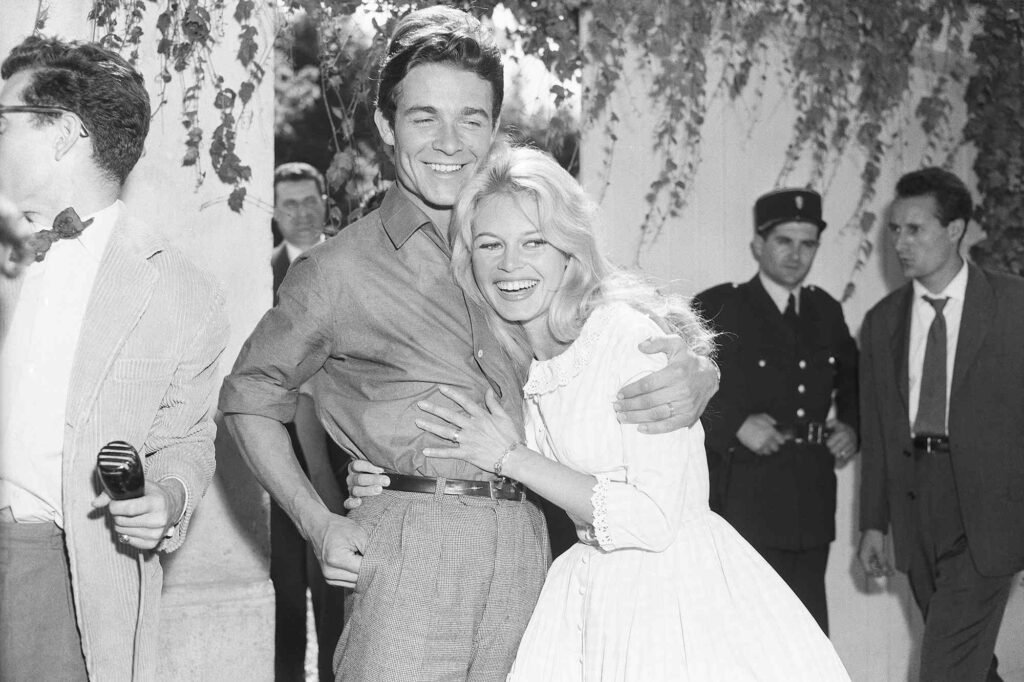
The financial implications are substantial. Heritage brands have long understood that nostalgia sells, and Bardot has been among the most bankable references in fashion’s historical canon. When she achieved international stardom with And God Created Woman in 1956, she became what President Charles de Gaulle would later declare a French export “as important as Renault cars.” That export value never fully diminished. Major fashion houses including Dior, Balmain, and Pierre Cardin built collections around her influence. She popularized the bikini in the United States, transforming it from scandalous swimwear into a fashion staple. The economic impact of her image—reproduced in campaigns, referenced in runway shows, and invoked in brand storytelling—has generated millions in revenue for decades.
This move signals a fundamental tension in fashion’s business model. The industry has increasingly committed to diversity and inclusion initiatives, issuing public statements about representation, hiring diversity officers, and pledging to create more equitable systems. Yet these same brands have simultaneously profited from celebrating figures whose later lives directly contradict these stated values. Bardot’s trajectory makes this contradiction impossible to ignore. After retiring from film in 1973 and founding the Brigitte Bardot Foundation in 1986, she dedicated herself to animal protection—a cause that earned widespread respect. But following her 1992 marriage to far-right advisor Bernard d’Ormale, she aligned with Front National and began making public statements that resulted in six criminal convictions for inciting racial hatred, with the most recent conviction occurring in 2022.
The Jacquemus collection exemplifies the industry’s predicament. Presented to critical acclaim and commercial success, it demonstrated fashion’s continued appetite for Bardot’s aesthetic. Yet that collection appeared just three years after her final conviction, when her political positions were fully documented and legally adjudicated. This is significant because it reveals that fashion has operated under an implicit agreement: aesthetic contributions could be separated from personal conduct, allowing brands to harvest the commercial benefits of Bardot’s image while maintaining plausible distance from her politics. Her death collapses that distance.
Industry strategists now face three distinct pathways, each carrying substantial risk. The first option is continued celebration—treating Bardot as a pure style icon and ignoring her criminal record. This approach preserves the economic value of her aesthetic legacy but exposes brands to accusations of hypocrisy, particularly from younger consumers who increasingly reject the separation of art from artist. The second option is selective acknowledgment—celebrating her 1950s and 1960s contributions while condemning her later politics. This middle path attempts to have both the commercial benefits and the moral high ground, but it requires brands to convincingly explain why they can profit from someone’s image while disavowing their values. The third option is complete distancing—removing Bardot references from collections, archives, and brand narratives. This protects against reputational damage but sacrifices significant commercial value and raises questions about whether fashion is prepared to similarly reassess other problematic historical figures.
The broader implications extend beyond Bardot to fashion’s entire relationship with its history. The industry has built substantial portions of its cultural capital on references to past icons, many of whom held views or engaged in behavior that would be commercially radioactive today. Bardot’s case is particularly stark because her transgressions were legally documented—six convictions leave no room for ambiguity or historical reinterpretation. If brands cannot reconcile their diversity commitments with celebrating a convicted hate speech offender, the precedent applies to numerous other figures whose legacies contain similar contradictions.
This is not merely an academic debate about historical memory; it represents a material threat to fashion’s heritage business model. Brands invest heavily in archival collections, museum exhibitions, and historical storytelling because these investments generate contemporary commercial returns. When Dior references past decades, when Balmain mines its archives, when independent designers like Jacquemus build collections around cultural icons, they are converting history into profit. Bardot’s aesthetic contributions—the neckline, the hairstyle, the bikini, the entire visual vocabulary of French Riviera style—constitute valuable intellectual property. Walking away from this property has real costs.
Yet retaining it may prove more expensive. The fashion industry has spent recent years responding to consumer pressure and internal reckoning by making unprecedented commitments to equity and inclusion. These commitments were not merely performative; they involved structural changes, financial investments, and public promises. Continuing to profit from Bardot’s image would effectively communicate that these commitments have limits—that commercial considerations ultimately override moral ones when sufficient money is at stake. For an industry already facing skepticism about the sincerity of its diversity initiatives, this would represent a devastating credibility failure.

The test will come in the months ahead. Fashion’s immediate response to Bardot’s death—the language used in statements, the imagery chosen for memorial posts, the decisions about whether to reference her in upcoming collections—will reveal where the industry’s priorities truly lie. Some brands may attempt silence, hoping to avoid the question entirely. But silence itself constitutes an answer, suggesting either moral cowardice or continued complicity. Others may offer carefully crafted statements that attempt the selective acknowledgment approach, praising her aesthetic contributions while noting her “controversial later life.” The effectiveness of this strategy will depend on whether consumers accept the premise that aesthetic and moral legacies can be meaningfully separated.
What remains clear is that fashion’s nostalgia economy—the lucrative practice of converting historical figures into contemporary commercial assets—has reached a critical juncture. Bardot’s death forces a question the industry has successfully deferred: whose history deserves to be preserved, celebrated, and monetized? The answer will determine not only how brands treat Bardot’s legacy but how they approach the dozens of other complicated figures who populate fashion’s archives. In an industry that has built its cultural authority on the claim that it reflects and shapes social values, the decisions made in response to Bardot’s death will reveal which values actually govern when commercial and moral imperatives collide.
The Bardot paradox—immense aesthetic influence combined with documented hatred—cannot be resolved without sacrifice. Fashion must now choose what it is willing to lose.