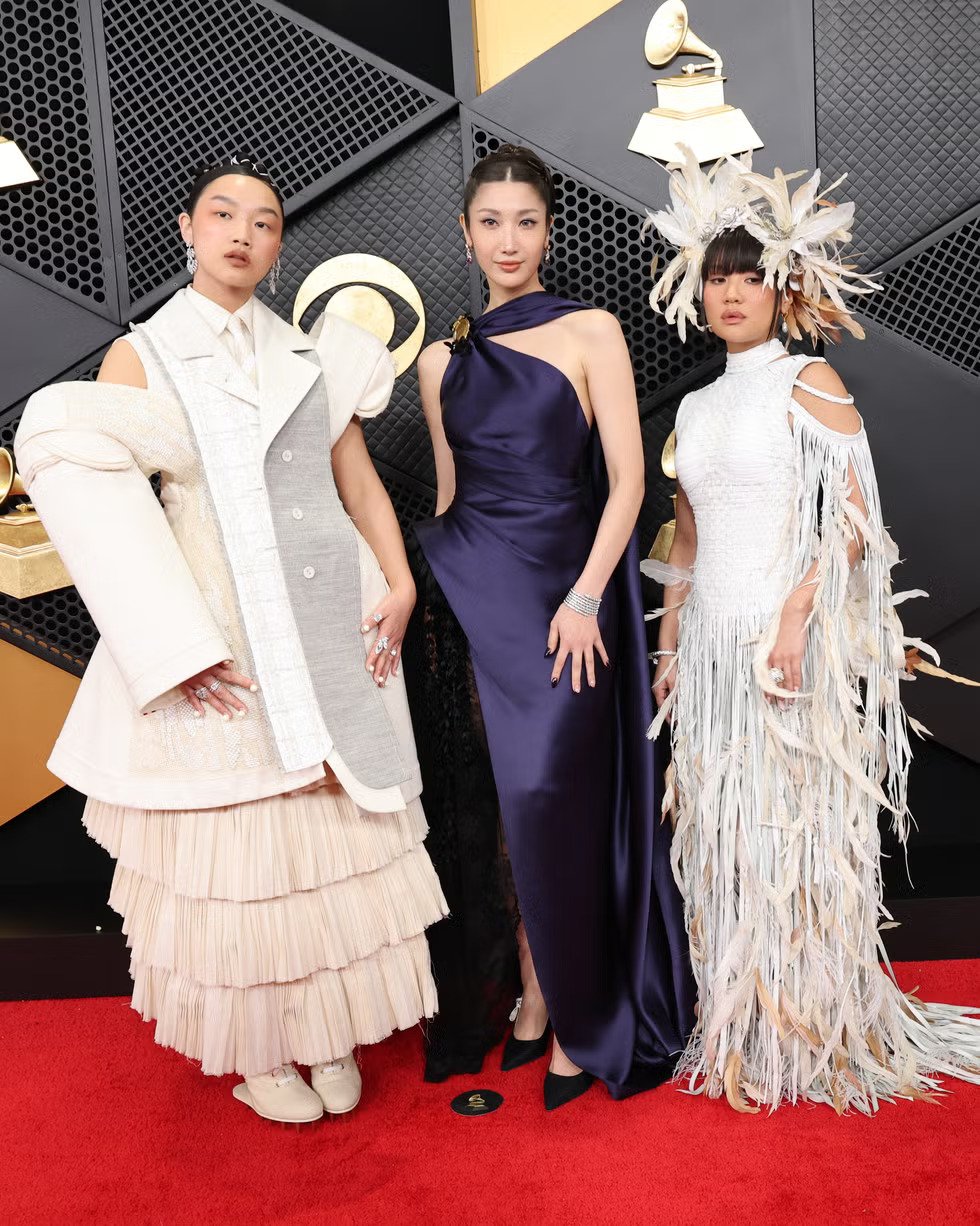
When Audrey Nuna stepped onto the Grammys red carpet in Thom Browne, most viewers saw elegant tailoring. What they couldn’t see was her grandfather, who spent decades in a Los Angeles garment factory, cutting and stitching the clothes that built an immigrant family’s American dream. That invisible labor, now made visible through a single styling choice, represents something seismic happening in celebrity fashion. The 2026 Grammys red carpet wasn’t just a parade of beautiful clothes; it was a generational manifesto. From Rei Ami’s gown embroidered with Korea’s national flower to Chappell Roan’s deliberately transgressive Mugler moment, a new cohort of artists is treating fashion as identity documentation, not decoration. This shift carries profound implications for an industry built on dictating aesthetics from the top down. For the first time, luxury brands aren’t just dressing celebrities; they’re being enlisted as collaborators in deeply personal storytelling. The question facing fashion’s power brokers: Can they adapt to artists who refuse to be mannequins?
This transformation represents a fundamental power shift in celebrity-designer relationships. Historically, red carpet fashion operated as a promotional exchange: designers gained visibility and cultural cachet, while celebrities accessed craftsmanship and status. The designer held creative authority. The celebrity provided the canvas. That hierarchy is collapsing.

Rei Ami’s choice to feature Korea’s national flower, the mugunghwa, on her Grammys gown exemplifies the new paradigm. This wasn’t about wearing a beautiful dress. It was about claiming space for Korean heritage at music’s most visible American ceremony, a deliberate act of cultural assertion that transforms fashion into political statement. The designer becomes not the author of the look, but the technical executor of the artist’s vision. Industry experts suggest this represents a maturation of celebrity influence that goes beyond mere collaboration, it signals a redefinition of who controls the narrative.
The financial implications are significant. When artists approach fashion as storytelling rather than decoration, they demand bespoke work that cannot be replicated for commercial purposes. Audrey Nuna’s Thom Browne ensemble, chosen specifically to honor her grandfather’s garment industry legacy, holds no resale marketing value for the brand. There are no “inspired by” collections to launch, no direct-to-consumer opportunities to capitalize on viral moments. This move signals that younger artists are willing to sacrifice commercial partnership opportunities in exchange for authentic self-expression, a calculation that challenges fashion houses to choose between short-term ROI and long-term cultural relevance.


This generational approach to red carpet dressing reflects broader shifts in how younger artists conceptualize fame itself. Unlike previous generations who used fashion to signal arrival into establishment spaces, Gen Z and millennial artists increasingly view red carpets as platforms for origin stories. The clothes become vessels for family history, cultural identity, and political positioning. This is significant because it reframes luxury fashion’s role from status marker to storytelling tool, a transformation that requires brands to develop entirely new skill sets around cultural sensitivity and collaborative design processes.
The traditional luxury fashion model depended on creative directors establishing aesthetic vision that celebrities would adopt, conferring prestige through association. Brands like Valentino, which dressed Sabrina Carpenter in couture for the ceremony, and Schiaparelli, which created Bad Bunny’s waist-nipped ensemble, now find themselves in more complex negotiations. Artists arrive with mood boards, family photographs, and political objectives. The design process becomes anthropological research as much as aesthetic creation.
Fashion historians note parallels to earlier disruptions in the celebrity-fashion ecosystem. When hip-hop artists began rejecting traditional red carpet formalwear in the 1990s, luxury brands initially resisted, then adapted, ultimately creating entire streetwear divisions. The current shift differs in scale and sophistication. Rather than rejecting fashion’s language entirely, these artists are appropriating its grammar to write their own sentences. They understand luxury craftsmanship; they simply refuse to surrender authorship.

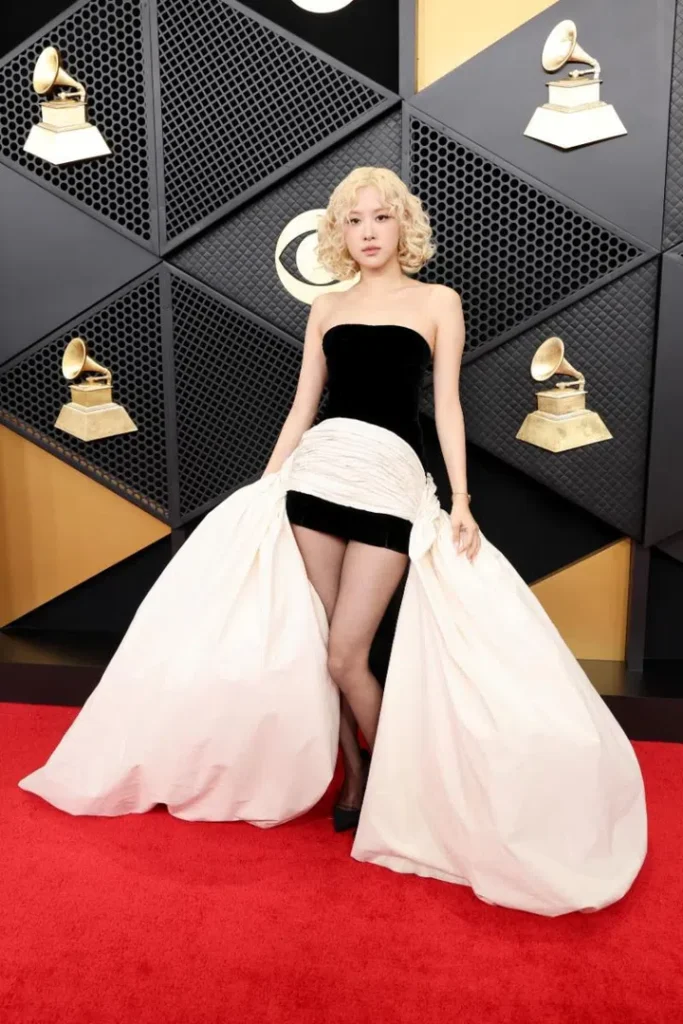
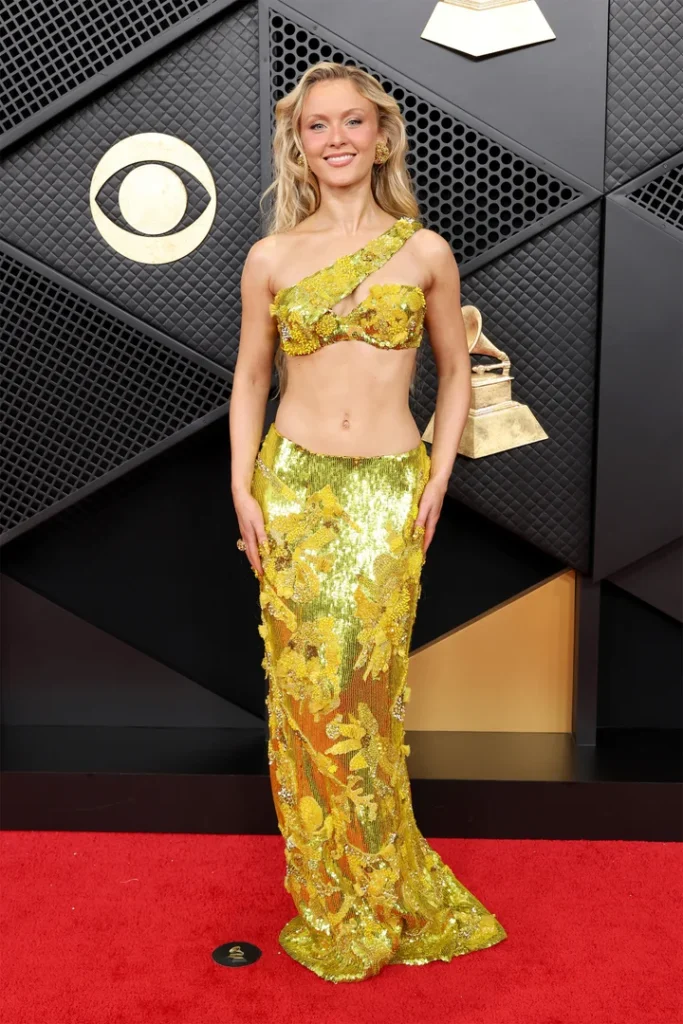


The implications extend beyond individual styling choices to structural changes in how fashion houses approach celebrity partnerships. Several major luxury brands have quietly reorganized their celebrity relations departments, hiring cultural consultants and identity specialists alongside traditional stylists. These teams now conduct extensive background research on artists before proposing collaborations, recognizing that a poorly considered partnership can generate backlash that far outweighs any publicity benefit.
This evolution also challenges fashion criticism itself. When Rei Ami walks the red carpet in a heritage tribute, traditional aesthetic evaluation becomes inadequate. Is the dress beautiful? Perhaps less relevant than: Does it successfully communicate her intended narrative? Did the designer understand and honor the cultural significance of the mugunghwa? Fashion journalists increasingly find themselves writing cultural criticism rather than style coverage, a shift that requires different analytical frameworks and expertise.
The 2026 Grammys crystallized a trend that has been building across award shows, festival appearances, and magazine covers. Artists who came of age in the social media era understand that every public appearance generates permanent documentation. They approach fashion accordingly, not as momentary glamour but as archived personal history. The red carpet becomes a form of memoir, written in fabric and silhouette rather than prose.
Luxury brands now face a crucial decision point. They can resist this shift, maintaining traditional creative authority and risking irrelevance among the generation that will define fashion consumption for the next three decades. Or they can embrace a more collaborative model, accepting reduced creative control in exchange for authentic partnerships with culture’s most influential voices. The brands that thrive will be those that recognize this isn’t about losing power, but about sharing it with artists who have learned to speak fashion’s language fluently enough to write their own stories. The 2026 Grammys made clear: the future of red carpet fashion belongs to those willing to make space for identity, heritage, and narrative intentionality over simple decoration.