When Ermenegildo Zegna planted the first trees of what would become Oasi Zegna in the 1930s — a sprawling reforestation project across 100 kilometers of Piedmontese alpine landscape — he could not have anticipated that, nearly a century later, the scent of that forest floor would be bottled, priced at $349, and sold in boutiques from Milan to Manhattan. Yet that is precisely the alchemy ZEGNA is attempting with MEMORIE, its most strategically audacious fragrance launch to date.
Fragrance has quietly become luxury fashion‘s most reliable revenue lever, high-margin, democratically accessible, and immune to the sizing and seasonality constraints of ready-to-wear. ZEGNA, publicly listed since 2021 and navigating a luxury sector under mounting pressure, has responded not with a celebrity endorsement or a flanker scent, but with something far more calculated: a six-chapter olfactory memoir, assembled by three master perfumers, filmed by Roman Coppola, and fronted by Mads Mikkelsen. The poetry, in this case, is the strategy.
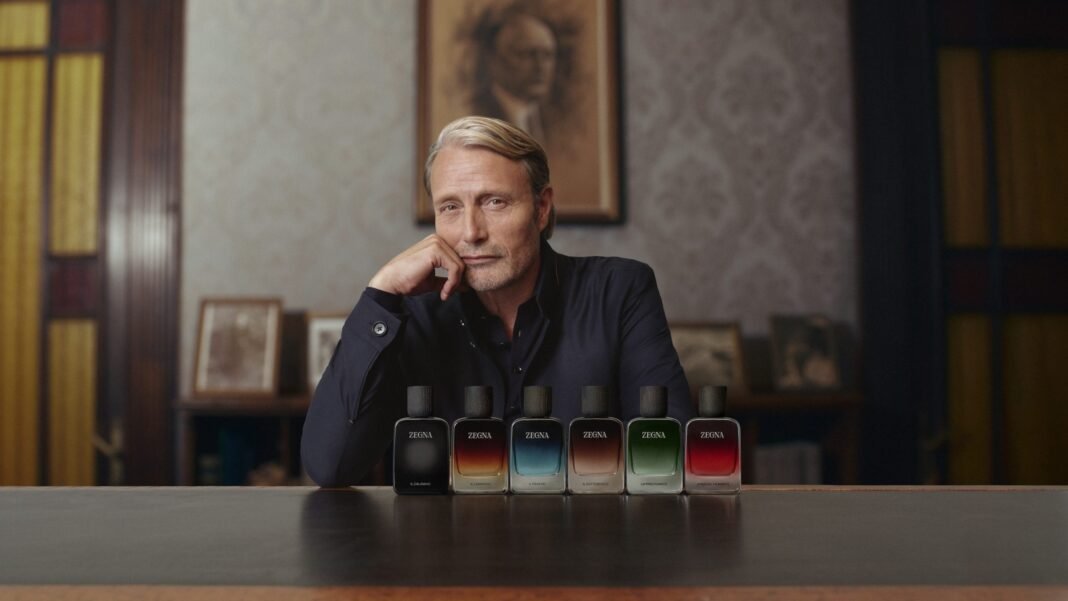
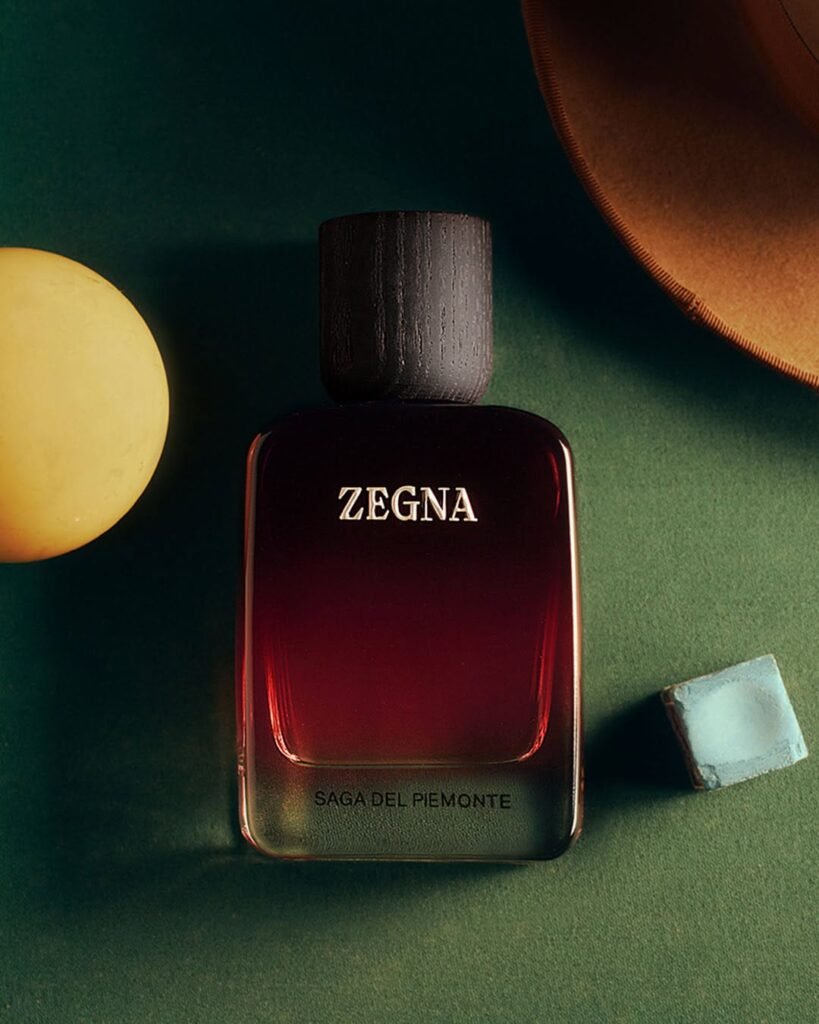
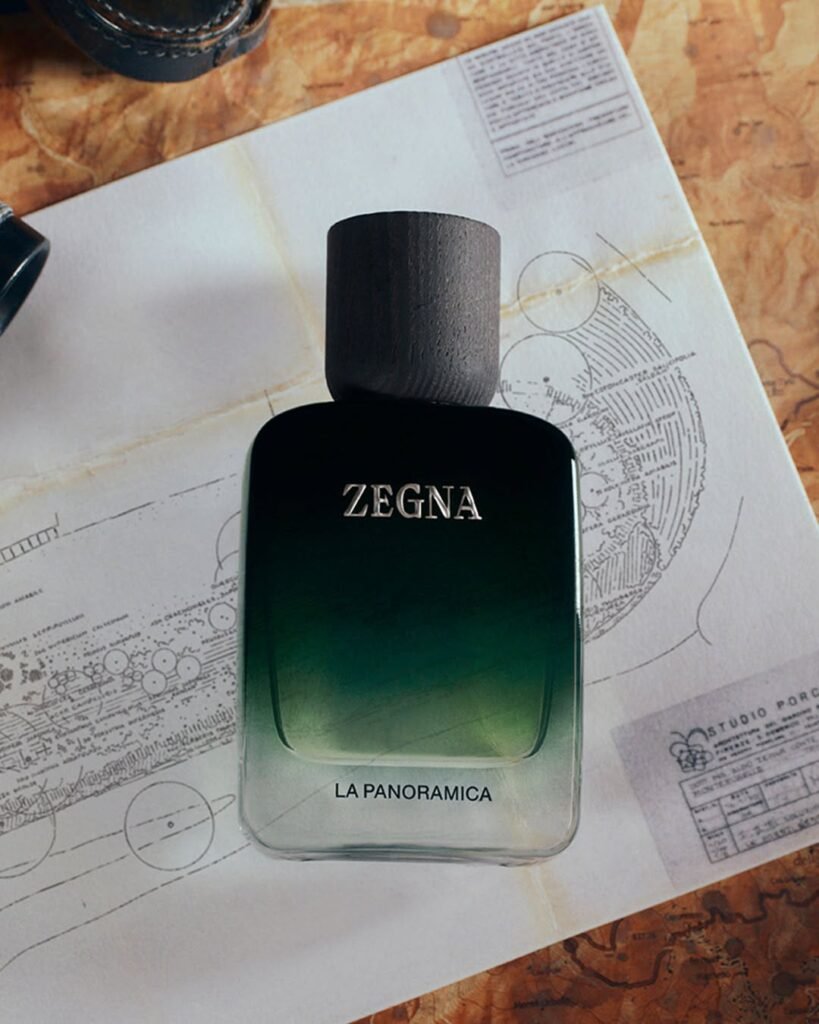
To understand why MEMORIE is a commercial document as much as a creative one, it helps to read the collection’s structure not as an artistic gesture but as a financial thesis. Each of the six fragrances is named after a specific location or object drawn from founder Ermenegildo Zegna’s biography, from the alpine town of Trivero, where the house was established in 1910, to the Oasi Zegna itself. The color-coded bottles, the literary “chapter” framing, the deliberate narrative sequencing — all of it constructs a closed universe of provenance that cannot be replicated, licensed, or approximated.
This is significant because it addresses one of the central vulnerabilities of the modern luxury fragrance market: commodification. When a prestige house launches a perfume without an anchoring narrative, it competes on scent alone, a fragile proposition in a market saturated with technically accomplished fragrances. ZEGNA’s solution is to make the story inseparable from the product. You are not simply purchasing a 100ml bottle of fine perfume; you are purchasing a chapter in a century-long family chronicle. That is an entirely different value proposition, and one that justifies the $349 price point with a clarity that pure olfactory marketing rarely achieves.
The creative assembly behind MEMORIE warrants careful examination, because the choices are neither accidental nor purely aesthetic. Commissioning Dominique Ropion, Fabrice Pellegrin, and Quentin Bisch, three of the most decorated and sought-after noses working in contemporary perfumery, represents a deliberate positioning statement. These are not names known to the mass consumer, but they are names that resonate with extraordinary authority among the fragrance cognoscenti, the tastemakers, the editors, and the collectors whose opinions ripple outward and validate a launch in the ecosystem where MEMORIE intends to compete.
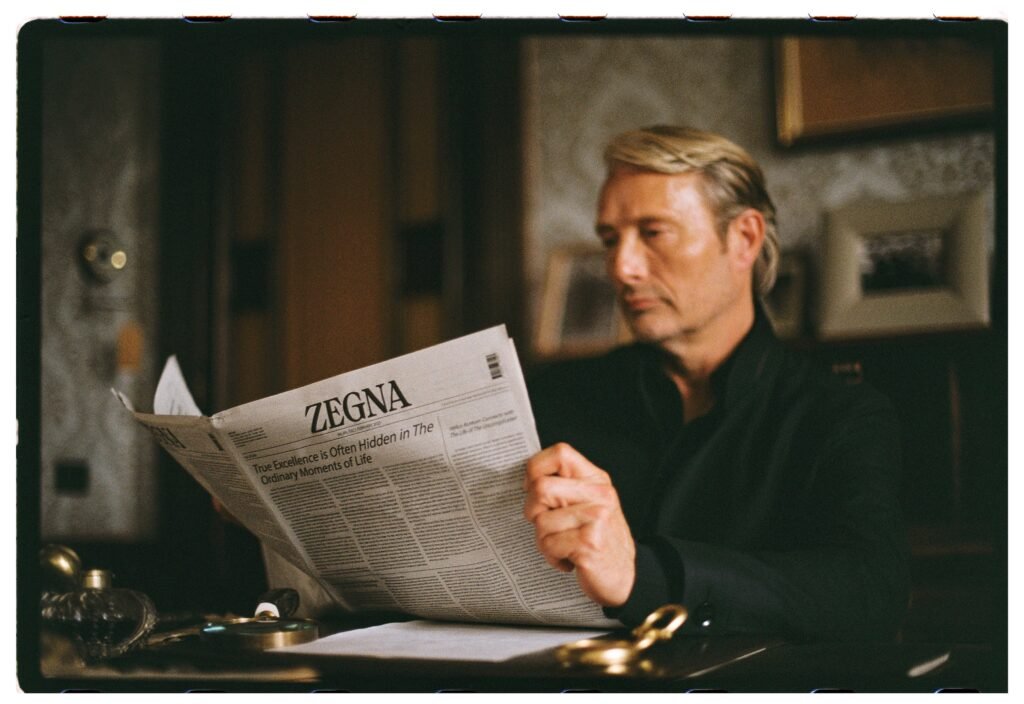
The campaign’s creative team operates on a parallel logic. Roman Coppola, as screenwriter, brings a lineage and a cinematic sensibility that frames the entire enterprise within a tradition of serious storytelling. Director Boramy Viguier, known for his considered and visually distinctive work, provides the aesthetic integrity. And Mads Mikkelsen, as the campaign’s face, is perhaps the most precisely calibrated choice of all. He is not a celebrity in the traditional fragrance ambassador sense; he is a performer associated with cerebral restraint, old-world European authority, and a kind of weathered, masculine intellectualism that maps perfectly onto the archival, heritage-forward world MEMORIE is constructing. His presence communicates the collection’s intended audience without a single word of copy.
Industry experts note that this kind of talent aggregation, at this cost level, signals a brand making a statement beyond a single product cycle. It is an investment in positioning, in cultural real estate, in the kind of editorial coverage and critical legitimacy that cannot be purchased through advertising alone.
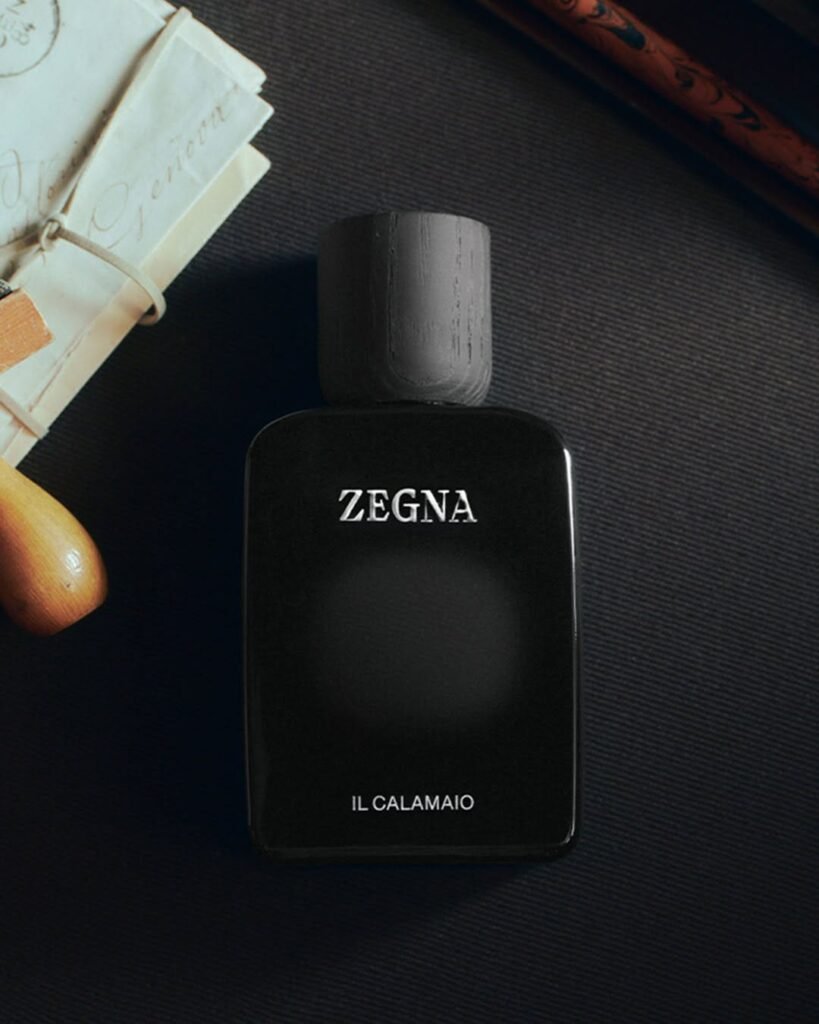
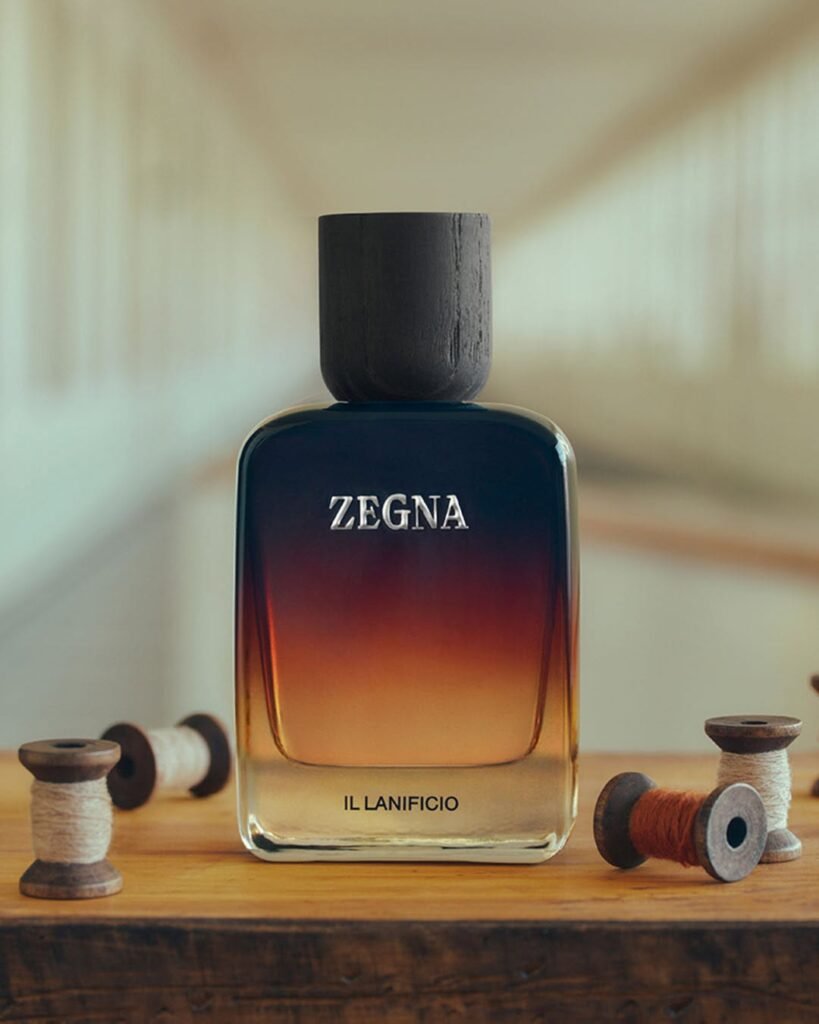
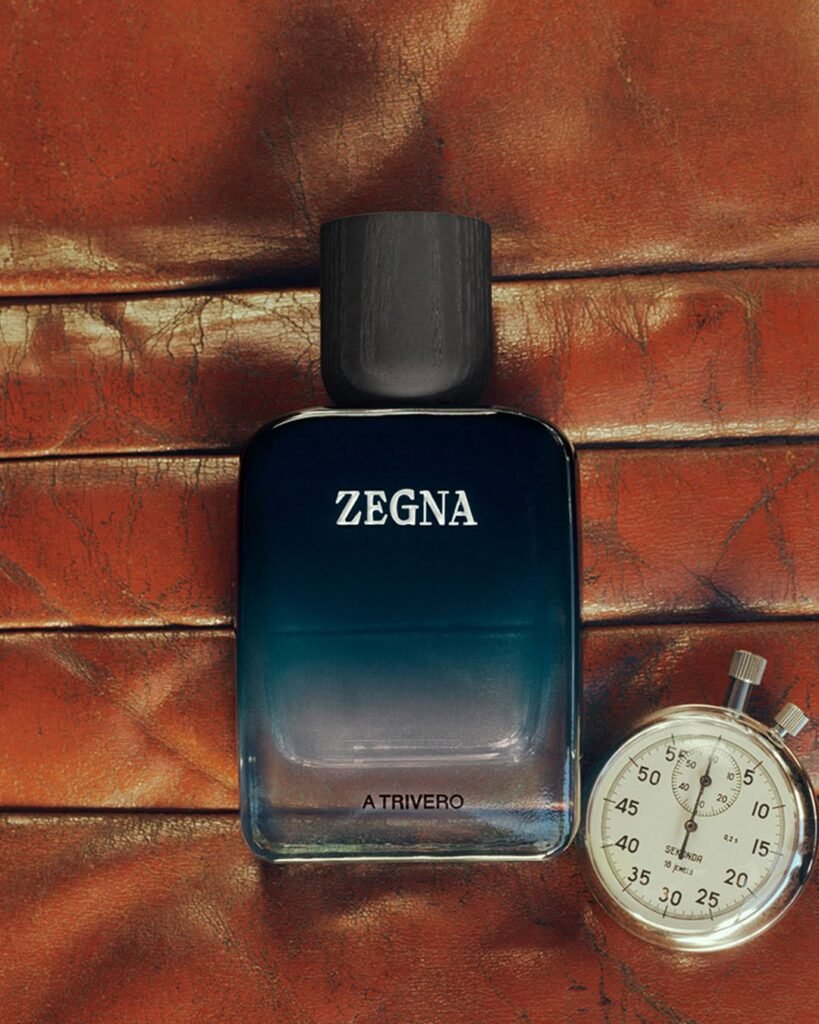
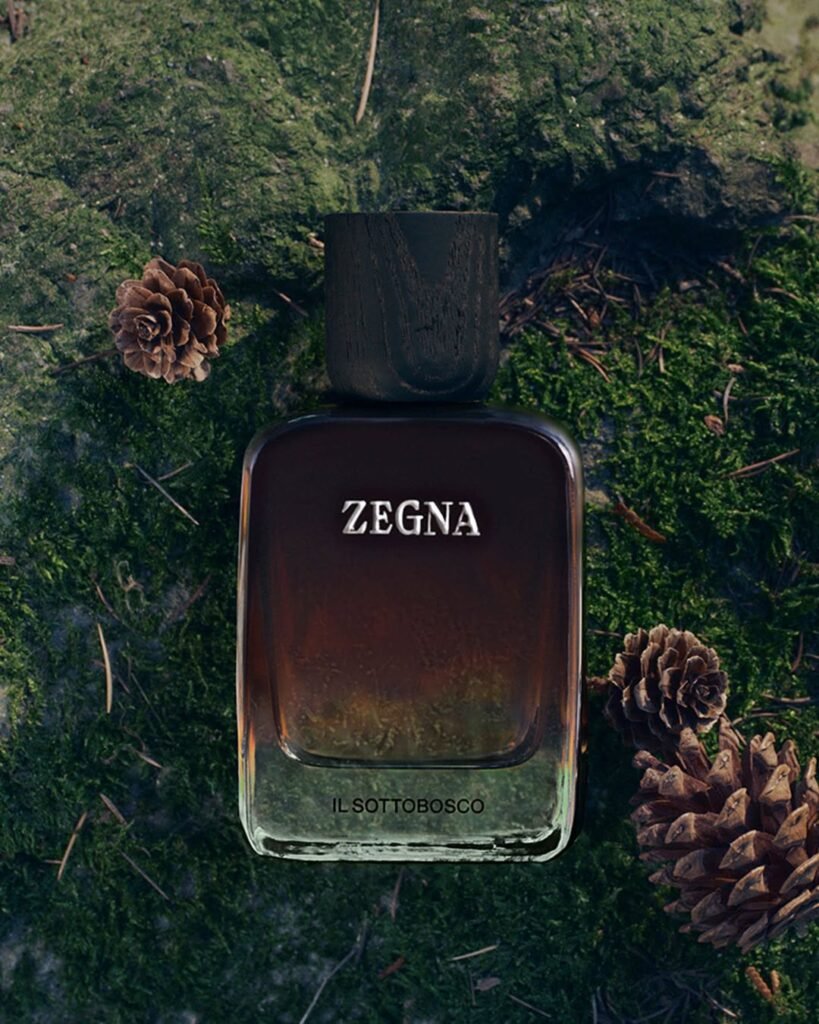
Context is everything here. ZEGNA went public on the New York Stock Exchange in December 2021 through a SPAC merger, a move that transformed the company from a privately held Italian family business into a publicly accountable entity with shareholders, quarterly reporting obligations, and the attendant pressure to demonstrate growth vectors. The fragrance category, long a secondary consideration for houses whose identity is rooted in tailoring and textiles, represents exactly the kind of high-margin, high-growth opportunity that analysts reward.
The financial logic is straightforward. Fragrance operates at significantly higher gross margins than ready-to-wear, requires no fitting, generates no returns from sizing issues, and travels across price points that allow a brand to extend its reach without diluting its core positioning. A $349 fragrance sits comfortably within the luxury tier without approaching the inaccessibility of bespoke tailoring. It is, in the language of investor relations, an attractive category.
ZEGNA is not alone in recognizing this. Across the Italian and French luxury landscape, heritage menswear houses have been accelerating their fragrance ambitions with notable urgency. The broader industry pivot toward what analysts have termed “quiet luxury” fragrance, characterized by anti-hype positioning, intellectual storytelling, and premium pricing without mass-market visibility, has created a white space that MEMORIE is designed to occupy with authority.
What distinguishes MEMORIE from the broader trend it inhabits is the specific nature of the narrative asset it deploys. Many brands invoke “heritage.” Far fewer possess a heritage with the specificity, the ecological dimension, and the century-long continuity that ZEGNA can legitimately claim. Oasi Zegna is not a marketing construct; it is a functioning, documented reforestation project that predates the modern luxury industry’s discovery of sustainability as a brand value by decades. Trivero is not a romanticized abstraction; it is a real town whose relationship with the Zegna family has shaped its economy and landscape across generations.
This authenticity matters commercially because it is, by definition, inimitable. A competitor cannot launch a rival “founder memoir” fragrance collection and claim the same ground. The specificity of the biographical anchoring creates a moat that generic luxury storytelling simply cannot replicate. This is the founder mythology strategy at its most sophisticated: not nostalgia for its own sake, but provenance deployed as a durable competitive differentiator.
The timing of MEMORIE’s launch is also worth interrogating against the macroeconomic backdrop. The luxury sector entered 2024 and 2025 navigating meaningful headwinds: softer Chinese consumer demand, inflationary pressure on aspirational spending in Western markets, and a post-pandemic correction in the exceptional growth rates that defined the prior cycle. In this environment, heritage houses face a strategic choice: defend existing categories or expand into adjacent ones with more favorable dynamics.
Fragrance represents the clearest such adjacency, and ZEGNA’s investment in MEMORIE, given the caliber of its creative and commercial execution, suggests a conviction that the fragrance division can become a meaningful revenue contributor rather than a peripheral line extension. The collection is structured to generate ongoing commercial momentum; six fragrances create six purchase occasions, and the memoir architecture invites collection behavior, the desire to own the complete narrative, among engaged consumers.
What MEMORIE ultimately represents is less a fragrance launch in the conventional sense and more a blueprint for how a publicly listed heritage house transforms its archive into an annuity. The founder’s story becomes intellectual property. The landscape becomes a sensory library. The biography becomes a content engine that can be translated across categories, from fragrance to film to experiential retail, with each iteration reinforcing the others.
Whether the collection achieves the commercial returns its investment implies remains to be seen. But the sophistication of its conception, the precision of its creative assembly, and the clarity of its strategic logic suggest that ZEGNA is not testing the fragrance market so much as making a considered and confident bid to own a significant portion of it. In that ambition, the poetry and the profit motive are, for once, entirely indistinguishable.