
When does a wrinkle become a statement? At Louis Vuitton’s Fall/Winter 2026 presentation in Paris, Pharrell Williams answered that question definitively: the moment it walks down a runway at one of fashion’s most historically pristine heritage houses. The “artfully undone” tops that dominated the show—intentionally creased, deliberately imperfect—weren’t styling accidents but calculated provocations from a creative director who understands that luxury’s language is changing. For 130 years, Louis Vuitton has built its empire on craftsmanship synonymous with flawless execution, the kind of meticulous perfection that separates the elite from everyone else. Yet here was Williams, in the brand’s anniversary year no less, suggesting that true luxury might actually lie in looking like you haven’t tried too hard. It’s a philosophy that would have been commercial suicide a decade ago. Today, it might be the only way forward.
The timing of this aesthetic pivot is no coincidence. Williams unveiled this collection at the Fondation Louis Vuitton to mark the beginning of the label’s 130th monogram anniversary celebrations, a moment when heritage brands typically double down on their archives and reaffirm their founding principles. Instead, he chose to question the very foundation of luxury aspiration: the idea that wealth must be performed through visible effort and immaculate presentation. The deliberately wrinkled fabrics that opened the show weren’t simply a styling choice but a philosophical repositioning of what luxury menswear can signify in 2026.
This move signals a fundamental shift in how fashion’s most powerful houses understand their relationship with affluent consumers. For decades, the luxury industry operated on a premise of aspiration—the belief that customers purchased not just products but the promise of a more polished, more controlled, more perfect version of themselves. The suit without a crease. The shirt pressed to military precision. The aesthetic of someone whose life was so well-managed that even their clothing reflected total mastery. Louis Vuitton itself built a multi-billion dollar empire on this premise, with its monogrammed luggage serving as the ultimate symbol of refined travel and meticulous preparation.
Williams’ “artfully undone” approach fundamentally challenges this decades-old equation. The financial implications are significant: if luxury no longer needs to signal effort, then the traditional markers of premium craftsmanship—the invisible stitching, the razor-sharp tailoring, the time-intensive finishing—become less central to the value proposition. Instead, the value shifts to something harder to quantify: authenticity, ease, the appearance of effortlessness. This is luxury refashioned for an era that increasingly views visible striving as gauche rather than admirable.
The broader collection reinforced this philosophy through its approach to silhouette diversity. Williams presented everything from skin-tight pieces to oversized volumes, offering a range that stood in deliberate contrast to the Fall/Winter 2026 season’s dominant trend toward slim-fit silhouettes. While competitors from Milan to Paris showed collections built around a singular body ideal and a narrow aesthetic vision, Louis Vuitton acknowledged that modern masculinity—and modern luxury consumption—cannot be contained within a single template. This is significant because it represents luxury fashion finally catching up to cultural conversations that have been happening for years around body inclusivity and the rejection of monolithic identity standards.
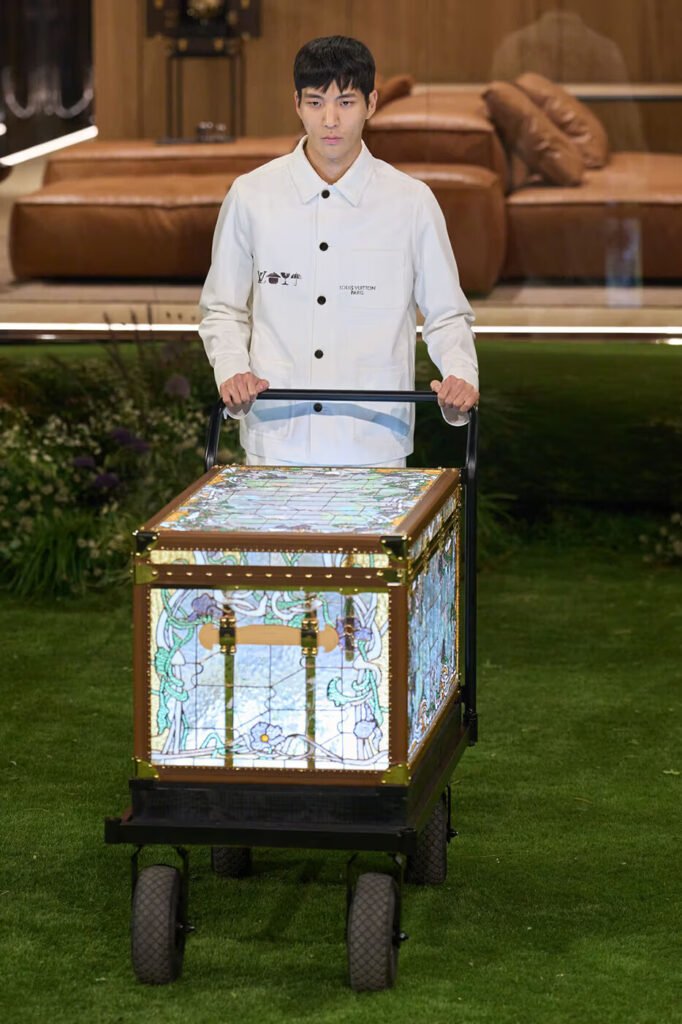
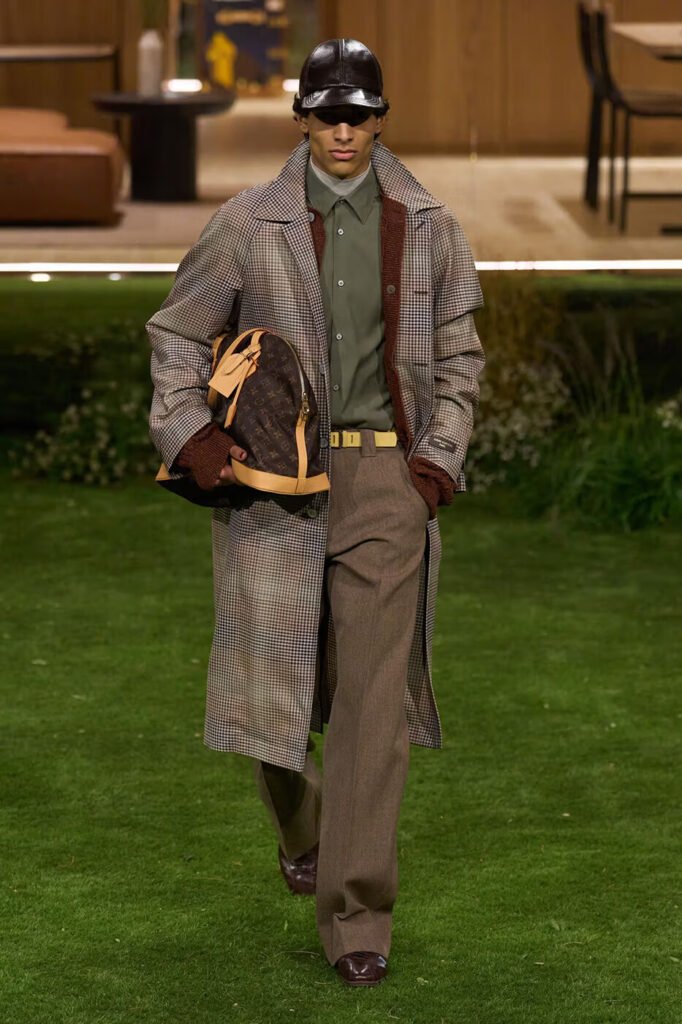
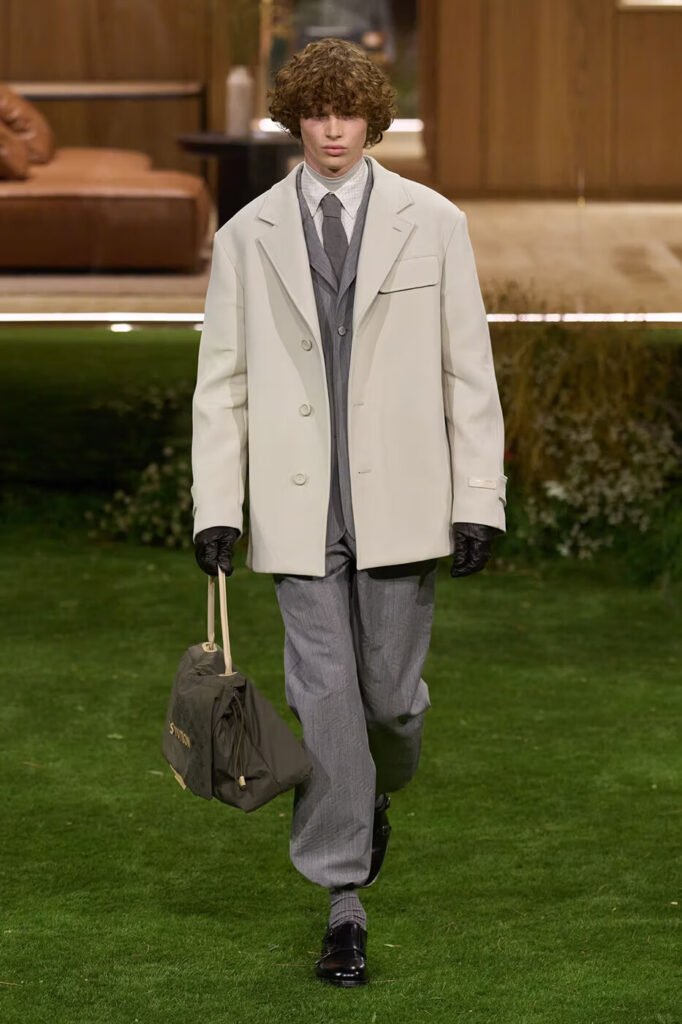
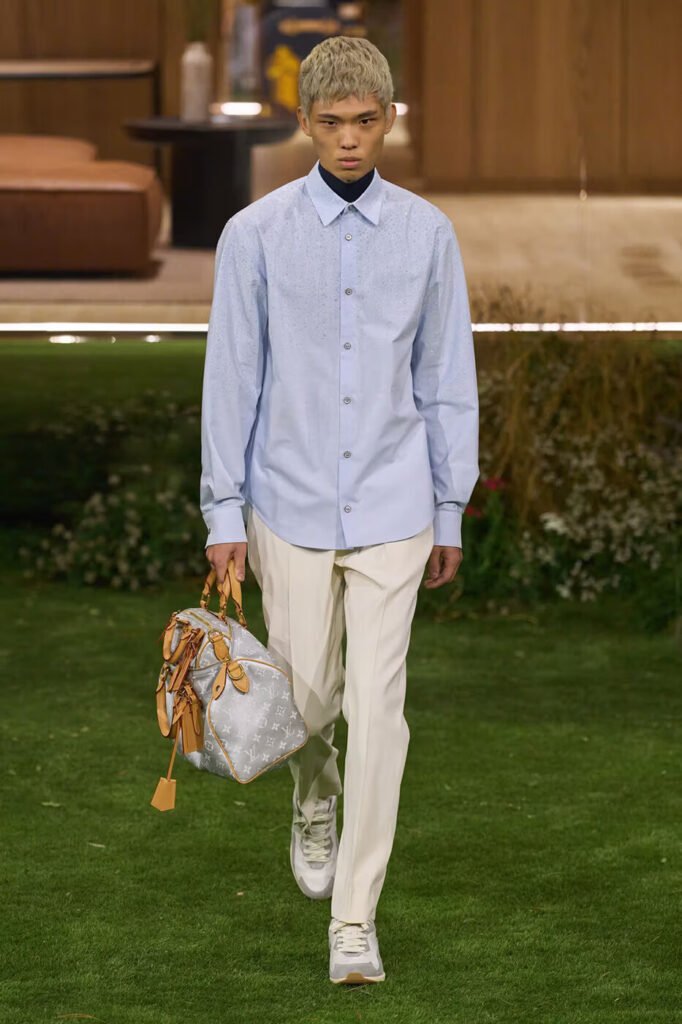
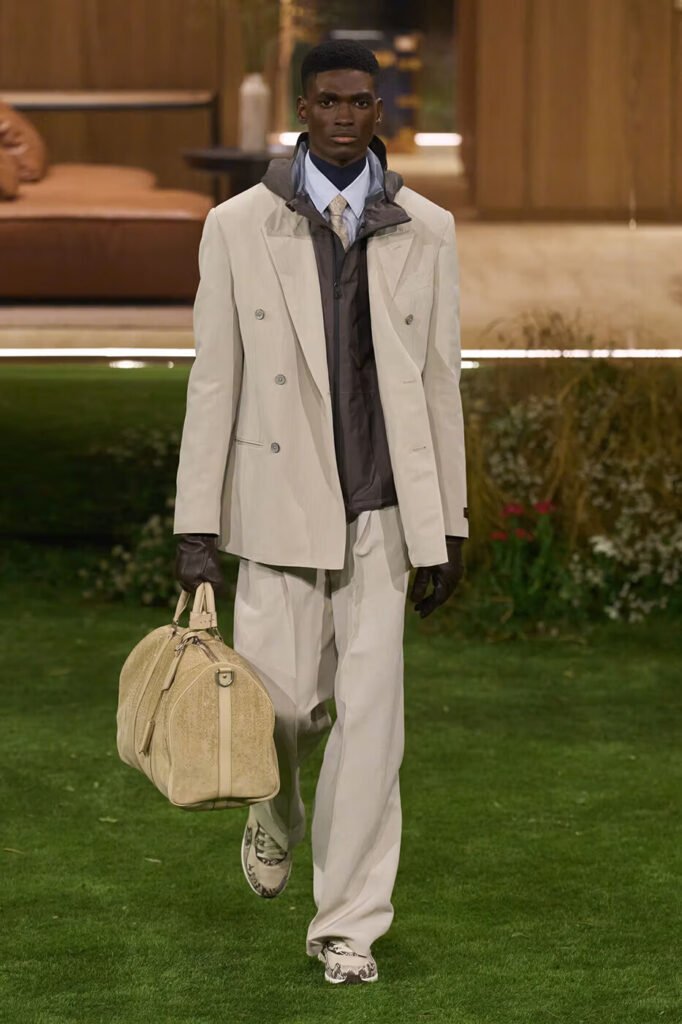
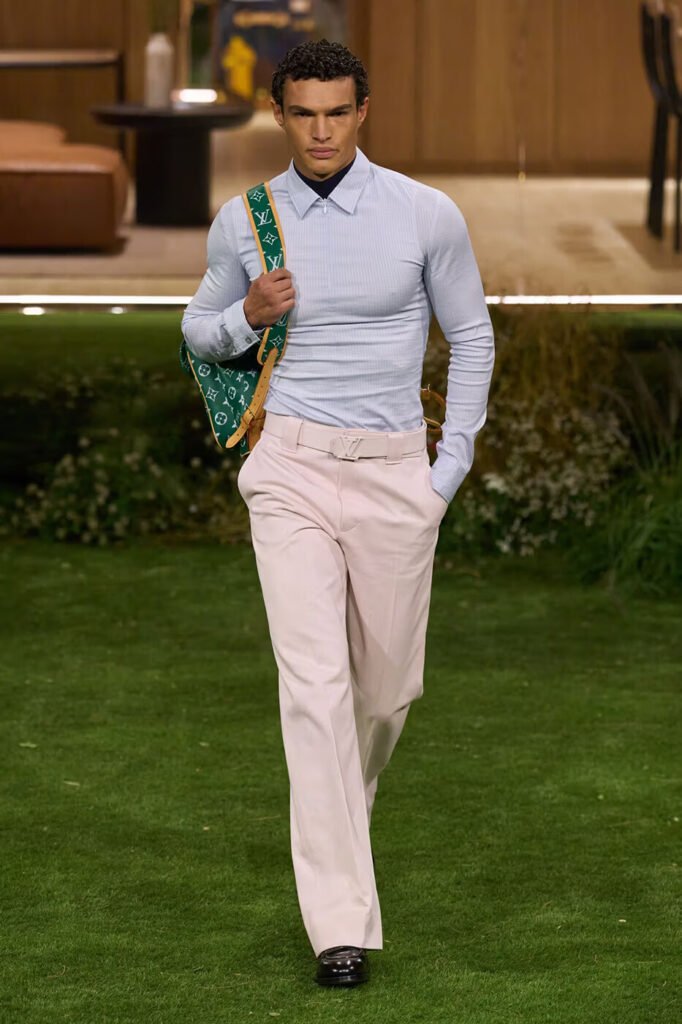
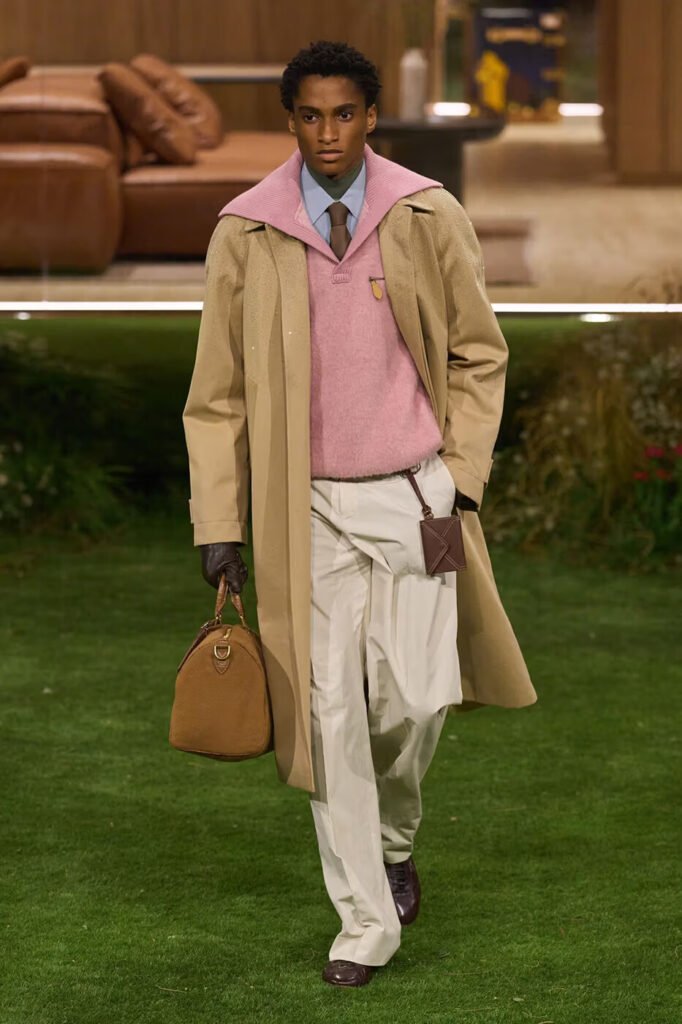
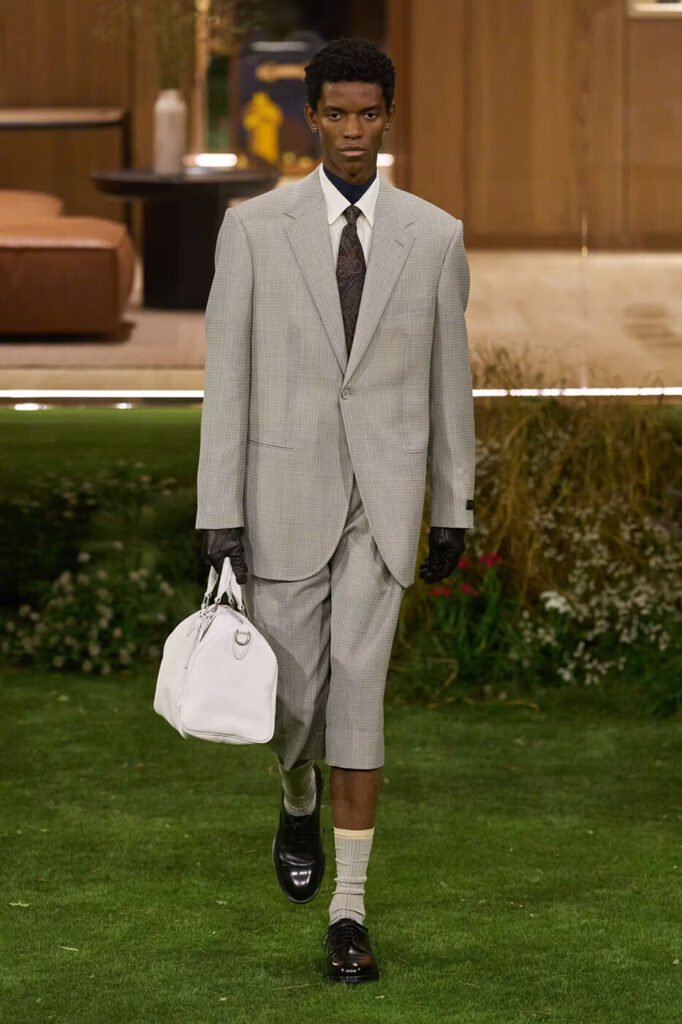
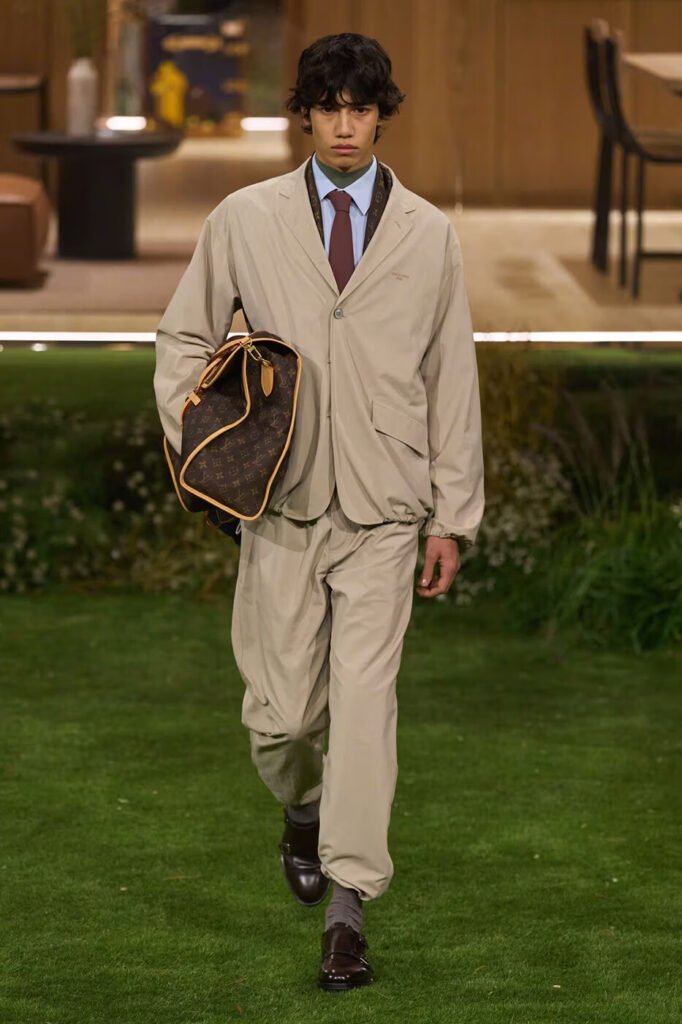
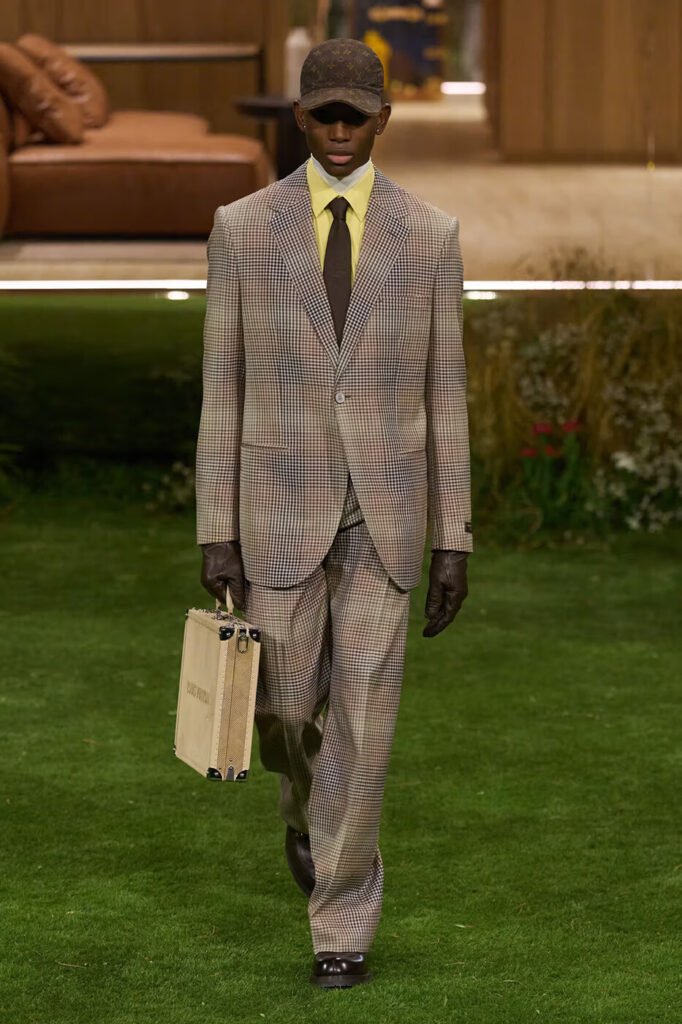
The color palette further demonstrated this shift away from traditional luxury signaling. Rather than the expected palette of sober neutrals punctuated by classic navy or burgundy, Williams introduced bubblegum pink, baby blue, and emerald green alongside the neutral base. These aren’t the power colors of boardroom aspiration but the playful, almost childlike hues of someone unburdened by the need to signal seriousness. The message is clear: contemporary luxury is about permission to be unserious, unpolished, unconcerned with traditional markers of professional success.
Industry experts suggest this aesthetic evolution connects to broader cultural shifts that extend far beyond fashion. The “artfully undone” look aligns with growing conversations around mental health, work-life balance, and the rejection of hustle culture. Generation Z consumers, who now represent a critical segment of luxury spending, have explicitly rejected the “try-hard” aesthetics of their predecessors. They view visible effort as inauthentic, polish as performative. For this demographic, a wrinkled shirt isn’t a sign of carelessness but of confidence—the sartorial equivalent of not caring whether others approve of your choices.
Williams reinforced the collection’s cultural ambitions through his strategic approach to the show’s soundtrack. He produced the music in partnership with Jackson Wang, A$AP Rocky, Quavo, John Legend, Pusha T, and Voices of Fire, with live performances by Voices of Fire and l’Orchestre du Pont Neuf. This wasn’t merely atmospheric music selection but a deliberate statement about luxury fashion’s expanding cultural role. The eclectic front row—featuring SZA, Usher, Joe Keery, Gong Yoo, Kai Cenat, and Future, alongside runway debutant Bambam of GOT7—underscored the cross-cultural, multi-generational appeal Williams is building for the brand.
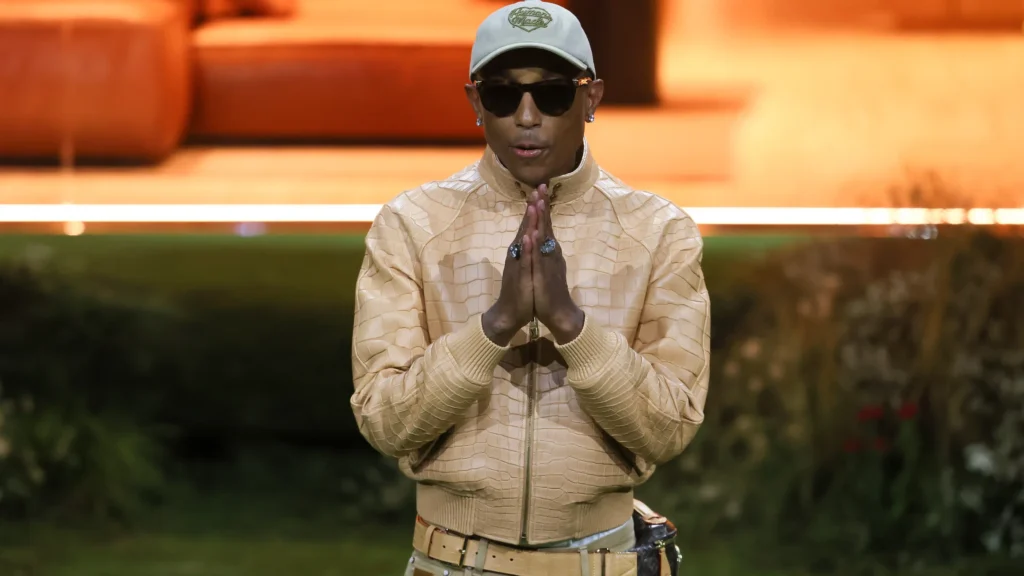
The commercial calculation behind this approach is sophisticated. Louis Vuitton isn’t abandoning its traditional luxury customer base but rather expanding its definition of luxury to capture consumers who might have previously felt alienated by fashion’s rigid standards of perfection. By offering diverse silhouettes, embracing imperfection, and collaborating with cultural figures across music genres and global markets, Williams is positioning the brand to dominate multiple luxury segments simultaneously. This is particularly crucial as the luxury market faces increasing competition from streetwear brands and digitally native labels that built their identities around authenticity and accessibility from day one.
What makes this strategy especially bold is its execution at Louis Vuitton specifically, during the brand’s anniversary year. Heritage houses typically use milestone moments to reaffirm their founding values and remind consumers why they’ve endured for over a century. Williams has done the opposite, using the 130th anniversary as permission to question those very foundations. The message is that Louis Vuitton’s longevity comes not from rigid adherence to past definitions of luxury but from its ability to recognize when those definitions no longer serve the cultural moment.
The wrinkles in those opening looks, then, aren’t signs of decline or carelessness but symbols of luxury fashion’s necessary evolution. They represent a bet that tomorrow’s wealthy consumers won’t want to signal their status through visible perfection but through the confidence to appear imperfect. In an era of curated social media personas and relentless self-optimization, the ultimate luxury might simply be looking like you haven’t bothered to try. Williams is banking Louis Vuitton’s future on the possibility that imperfection has become the new aspiration—and if he’s right, every wrinkle represents not a flaw but a fortune.