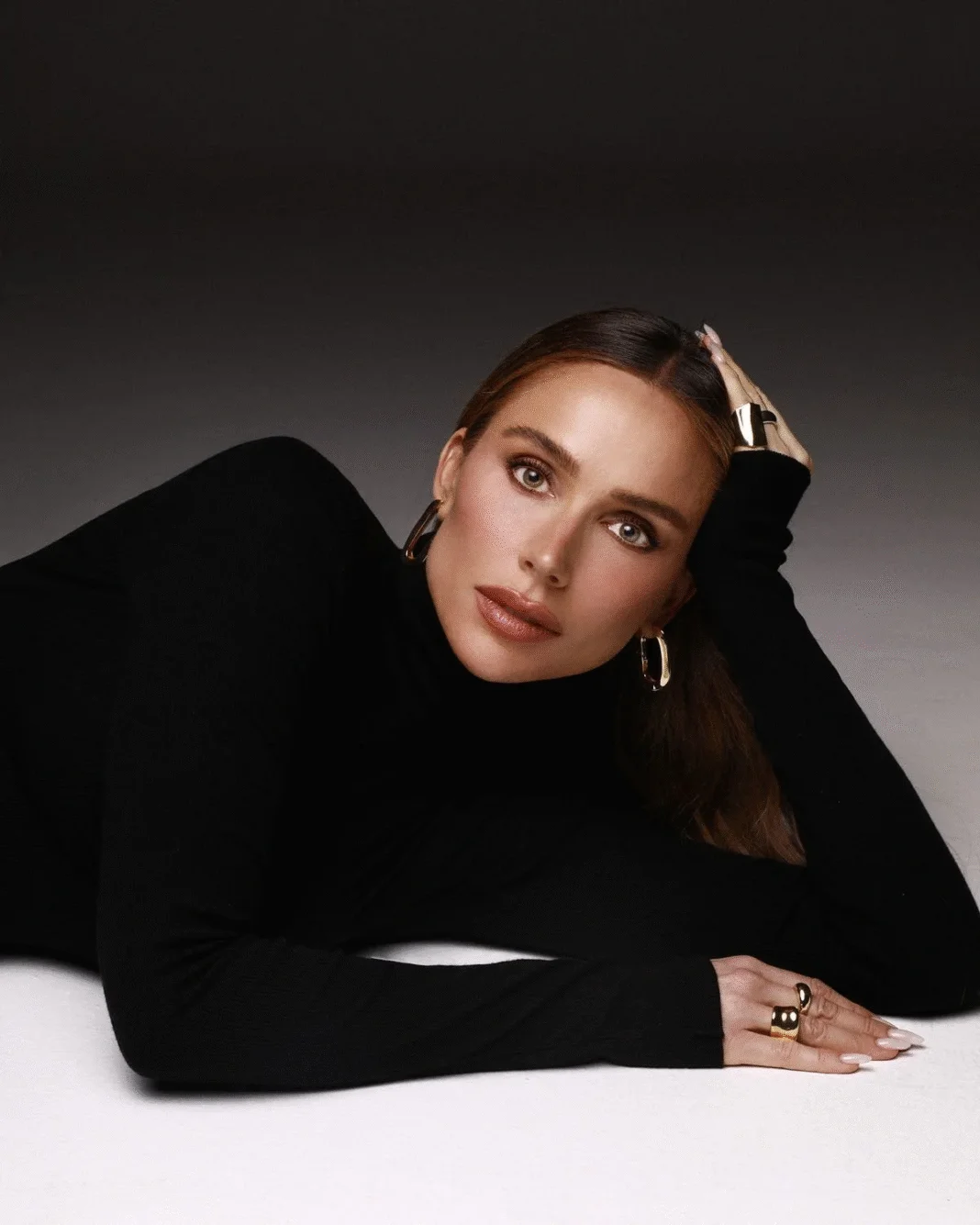
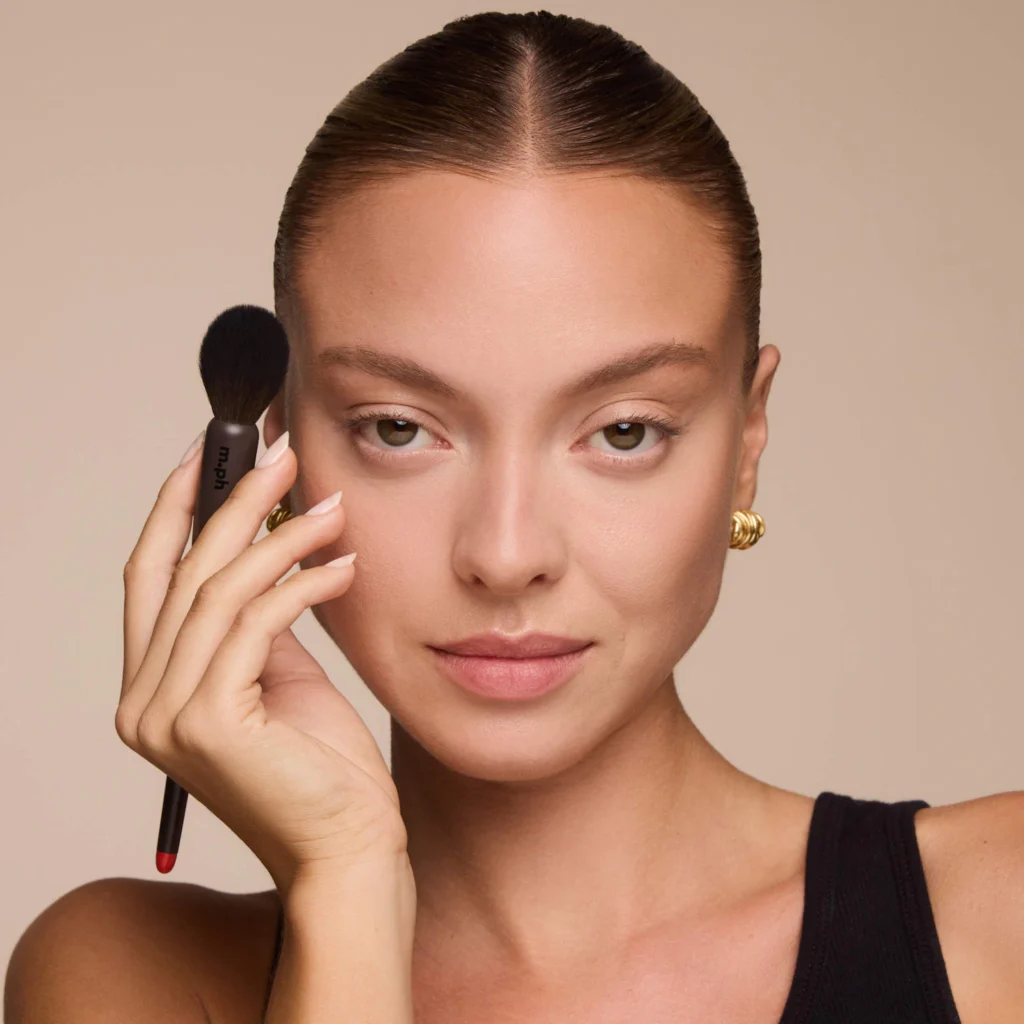
In a Tribeca hotel bathtub, surrounded by wine glasses and soft lighting, models showcase not flawless porcelain skin—but visible freckles, texture, and the kind of imperfection that would have been airbrushed into oblivion a decade ago. This is the campaign imagery for m.ph by Mary Phillips‘ new Le Skin foundation, and it’s a deliberate provocation: a $49 product designed not to cover skin, but to let it breathe. “The younger TikTok generation likes seeing skin,” Phillips explains. “It’s not about covering up anymore.” It’s a sentiment that would have been heretical in beauty’s foundation-obsessed past, but today it represents the industry’s most urgent existential question. The foundation category—worth billions and anchoring every prestige beauty counter—is being fundamentally redefined by a generation that rejects the very premise it was built on: the promise of coverage, perfection, and transformation. As legacy giants like Estée Lauder scramble to reformulate hero products and celebrity artist-founded brands like m.ph flood Sephora with sheer, “skin-like” formulas, the question isn’t just who will dominate foundation sales—it’s whether the category, as we’ve known it, will survive at all.
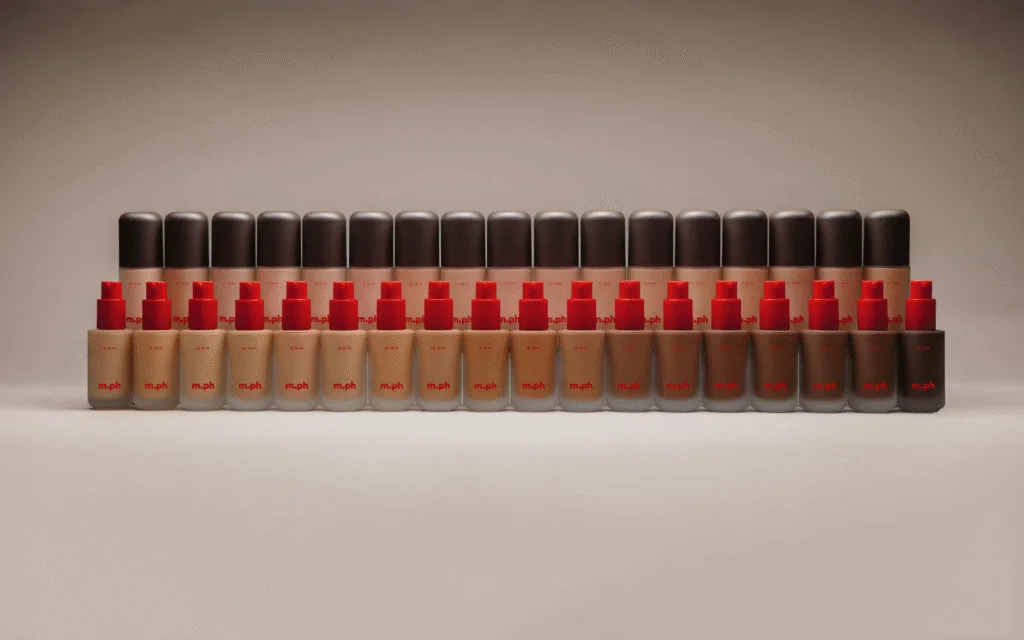
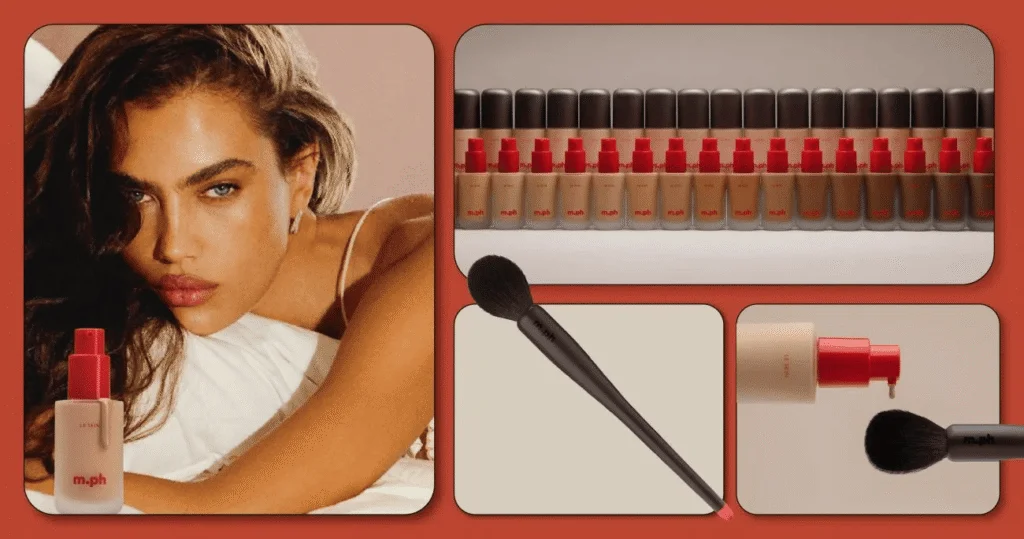
The launch of Le Skin Weightless Serum Foundation this Thursday at Sephora, offered in 35 shades at $49 alongside The Foundation Brush at $48, arrives at a moment of profound category disruption. This is not merely another celebrity makeup artist entering an oversaturated market. Mary Phillips, whose client roster includes Kendall Jenner and Bella Hadid, is betting that the future of foundation lies in its near-invisibility. The product development timeline tells its own story: three years in the making, the same duration Phillips dedicated to her hero Underpainting Face Highlight & Contour Palette, which debuted at Sephora in August and currently ranks as the brand’s bestseller at $64. That a foundation and a contour palette received equal development investment signals a strategic recognition that complexion products must now serve radically different consumer expectations than they did even five years ago.
The financial stakes are considerable. Newly appointed CEO Hannah Beals projects that the Underpainting Palette and Le Skin Foundation will together account for roughly 50 percent of m.ph’s total business in 2026. To realize that ambition, Beals has publicly stated the brand’s goal: to become Sephora’s number one foundation seller. That position currently belongs to Haus Labs’ Triclone Skin Tech Medium Coverage Foundation, according to industry sources. The competitive landscape is noteworthy. m.ph is challenging not a legacy prestige brand with decades of counter dominance, but a celebrity-fronted line launched by Lady Gaga in 2019. This represents a new axis of competition in beauty: artist credibility versus celebrity star power, with both positioned against heritage brand equity.
The strategic importance of this launch is evident in m.ph’s marketing investment. The brand is deploying its first-ever out-of-home campaign, with billboards appearing in New York City and Los Angeles, including high-visibility placements on Sunset Boulevard and Abbot Kinney. NYC taxi-top advertisements extend the campaign’s reach. Simultaneously, the brand increased its influencer seeding by 50 percent for this launch, a recognition that foundation credibility in 2026 is built less through traditional advertising and more through peer validation and real-skin proof points shared across social platforms.
This shift in marketing strategy reflects the deeper philosophical transformation reshaping the foundation category. For decades, foundation marketing centered on transformation narratives: before-and-after imagery, promises of flawless skin, coverage that concealed imperfections. The product’s value proposition was erasure. Today’s consumer, particularly Gen Z, has inverted that expectation. They seek products that enhance rather than obscure, that allow skin texture to remain visible, that preserve rather than eliminate individuality. Phillips’ freckle-forward campaign imagery is not merely aesthetic positioning. It represents a fundamental recalibration of what foundation is meant to accomplish.
The economic implications of this shift extend far beyond a single product launch. Foundation has historically served as the anchor category in prestige beauty, driving traffic to counters and establishing brand loyalty that extends into adjacent categories. When consumers purchase foundation, they typically invest in coordinating concealers, setting powders, and color correctors. The category’s profitability rests not just on the foundation itself, but on the ecosystem of products required to achieve and maintain full coverage. If the next generation rejects full coverage as a beauty ideal, that entire product architecture becomes vulnerable.
Legacy brands face a particularly acute challenge. Companies like Estée Lauder, Lancôme, and Giorgio Armani built their prestige positioning on foundation formulas engineered for maximum coverage and longevity. Their research and development pipelines, their manufacturing relationships, their counter training protocols, all optimize for products designed to conceal. Pivoting toward sheer, skin-like formulas requires more than reformulation. It demands a philosophical reinvention of brand identity and a willingness to potentially cannibalize existing hero products that still generate significant revenue from older consumer cohorts who maintain traditional coverage expectations.
The three-year development timeline for Le Skin Foundation offers additional context. In an industry increasingly shaped by viral TikTok moments and rapid trend cycles, a three-year development process seems almost anachronistic. Yet it also suggests that creating a foundation that delivers on the promise of weightless, breathable coverage while maintaining enough payoff to justify a $49 price point is technically complex. The challenge is not simply creating a sheer formula. It’s engineering a product that reads as sophisticated and high-performance despite doing less of what foundation has traditionally been asked to do. This is the central paradox of the post-coverage era: consumers want foundations that are nearly invisible, but they still expect them to perform a function worth paying for.
@makeupbymaryphillips I’m dropping The Underpainting Tutorial. Part 1: color correcting & contouring. HOW TO: – Color correct to brighten under your eyes. – Apply contour to lift and sculpt face around the eyes, cheekbones, nose, forehead, and chin. – Pro tip: contour where you’d enhance a natural shadow on your face. Have questions? Drop them below. Shop the Underpainting Face Palette in shades light, medium, and deep at mphbeauty.com and Sephora.com on 8.15.
♬ original sound – Mary Phillips
The broader market dynamics suggest this is not a temporary trend. Gen Z’s preference for visible skin texture aligns with parallel movements in beauty: the growth of skincare as the dominant category, the rise of “skin cycling” and skin barrier health conversations, the popularity of skin tints and tinted moisturizers over traditional foundations. Social media has accelerated this shift by normalizing close-up, unfiltered imagery that makes heavy foundation application immediately apparent. The same platforms that once drove contouring crazes now celebrate “glass skin” and “no-makeup makeup.” Foundation, in its traditional form, has become optically and culturally legible as artificial.
Yet declaring the death of full-coverage foundation would be premature. Consumer preferences are not monolithic, and beauty has always accommodated multiple aesthetics simultaneously. What is changing is the balance of market power. The brands and products that defined prestige foundation for decades—Estée Lauder Double Wear, MAC Studio Fix, Armani Luminous Silk—are no longer the default reference points for younger consumers entering the category. Instead, they’re encountering foundation through artist-founded brands like m.ph, through TikTok recommendations, through values-driven narratives about letting skin breathe and embracing natural texture.
This generational handoff in category leadership creates both opportunity and vulnerability. For m.ph and similar brands, the moment is advantageous. They enter the market unencumbered by legacy product lines or established brand identities tied to full coverage. They can build from a philosophy aligned with current consumer expectations. For legacy brands, the challenge is more complex: how to honor existing customers while courting new ones whose foundational assumptions about foundation have fundamentally changed.
The answer to whether the foundation category, as traditionally conceived, will survive lies not in any single product launch but in how the industry navigates this philosophical divide. If Gen Z’s preference for visible skin texture proves durable, the category will likely fracture into distinct segments: high-coverage formulas for occasions, events, and older consumers who maintain traditional beauty standards, and sheer, skin-like products for everyday wear and younger demographics. The question is whether prestige brands can maintain their premium pricing and cultural authority across both segments, or whether the future of foundation belongs to newer brands built from the ground up around post-coverage values.
Mary Phillips’ Le Skin Foundation is not simply another product competing for Sephora shelf space. It’s a test case for whether the industry’s most lucrative category can reinvent itself for a generation that wants to see their freckles. The billions of dollars at stake suggest this is more than a philosophical debate. It’s a referendum on beauty’s next decade.