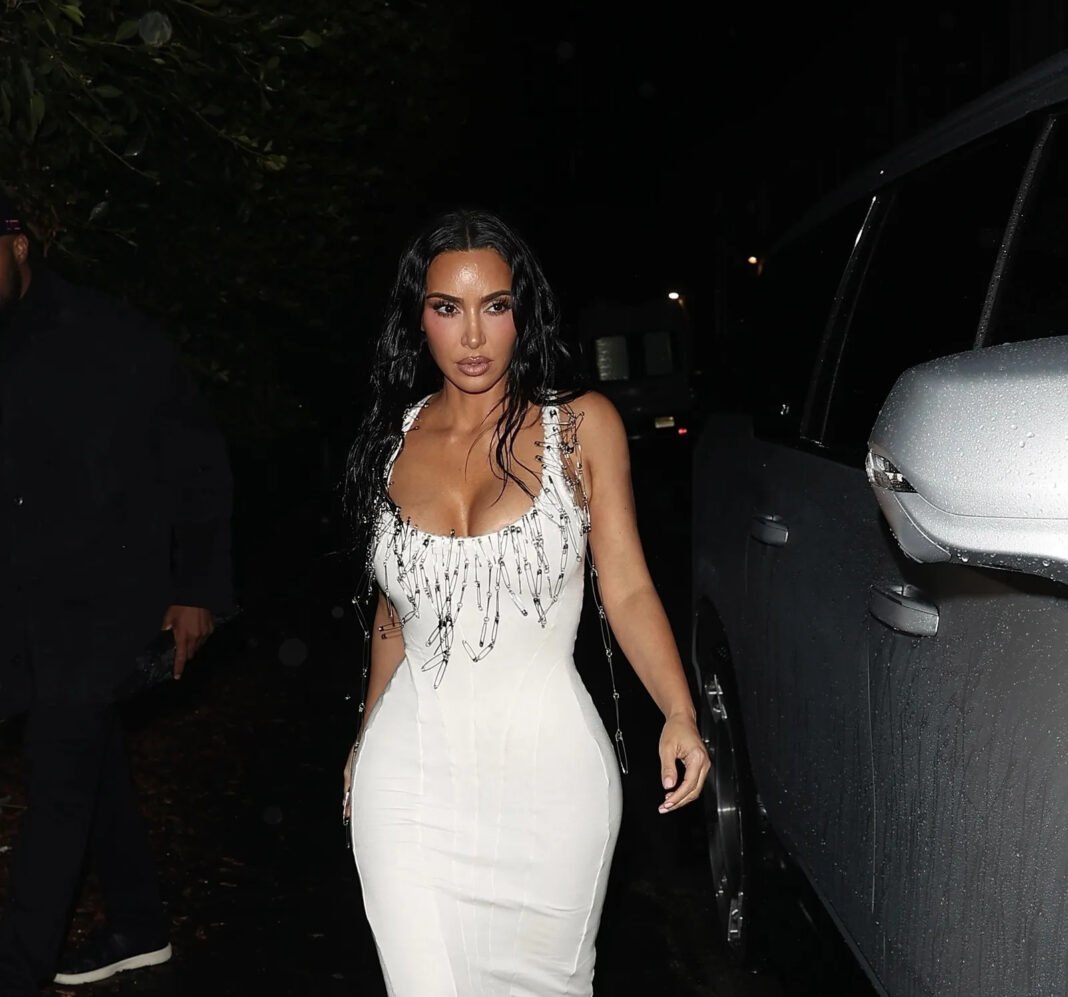
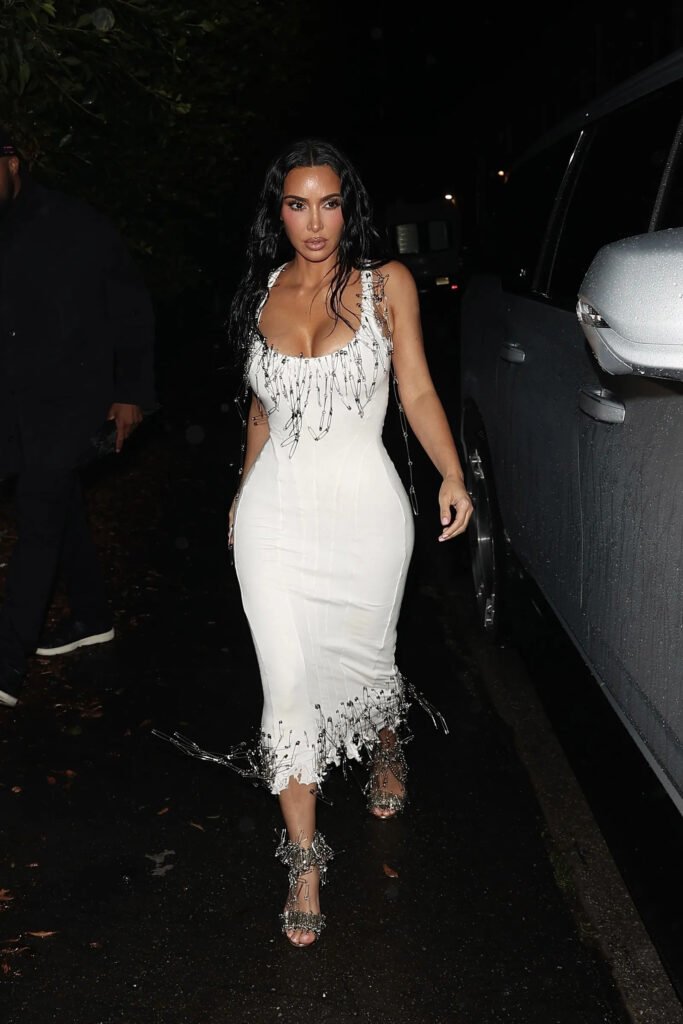
For nearly three years, Kim Kardashian dressed like a cipher. Balenciaga’s black bodysuits, featureless sunglasses, and monastic silhouettes transformed the world’s most photographed woman into an abstraction—luxury as erasure. Then came the safety pins. At Petra Collins’s birthday party in December 2025, Kardashian arrived in a white Dilara Findikoglu dress festooned with fringe made entirely of linked safety pins, each step producing a metallic whisper of rebellion. It was punk. It was provocative. It was the antithesis of everything she’d worn for the past half-decade. This wasn’t just a wardrobe change—it was a strategic detonation. After spending years as a walking billboard for fashion’s megabrands, Kardashian has pivoted to Findikoglu, a Turkish-born designer whose braided hair bras and bondage-inspired corsetry represent everything quiet luxury is not. The message is clear: minimalism’s stranglehold on elite fashion is over, and Kardashian—as always—is leading the charge into whatever comes next.
The statistics tell the story of luxury’s minimalist era with brutal clarity. From 2020 through 2024, the industry witnessed an unprecedented consolidation around a single aesthetic philosophy: stealth wealth. Brands from The Row to Loro Piana built empires on the promise that true luxury whispers rather than shouts. Kardashian herself became the unexpected poster child for this movement, her partnerships with Demna at Balenciaga and earlier work with Olivier Rousteing at Balmain positioning her squarely within the megabrand ecosystem. These weren’t casual collaborations—they were cultural declarations, each appearance functioning as a billion-dollar advertisement for the sanitized, streamlined vision of aspiration that dominated the decade’s first half.
This move signals a fundamental recalibration in how celebrity influence intersects with fashion power dynamics. Kardashian’s embrace of Dilara Findikoglu represents something more disruptive than a simple change in personal taste. The London-based designer operates outside the conglomerate structure that governs brands like Balenciaga (owned by Kering) and Balmain (owned by Mayhoola). Findikoglu’s atelier runs on independence, her collections emerging from a singular creative vision unconstrained by shareholder expectations or quarterly earnings calls. When Kardashian chooses to wear Findikoglu’s sheer black corset and lace-up skirt to a post-Met Gala appearance, or her black croc-embossed dress with dramatic cutouts to the London premiere of “All’s Fair,” she’s not just selecting garments—she’s making a statement about where cultural currency now flows.
The financial implications are considerable. Historically, Kardashian’s fashion endorsements have functioned as commercial coronations. Her association with brands like Fashion Nova drove the fast-fashion retailer to valuations exceeding one billion dollars. The “Kardashian effect” became industry shorthand for the kind of exposure that transcends traditional marketing, creating overnight demand surges and waitlists that stretch for months. But those previous partnerships operated within established commercial frameworks—brands with existing infrastructure, distribution networks, and production capacity designed to capitalize on viral moments.
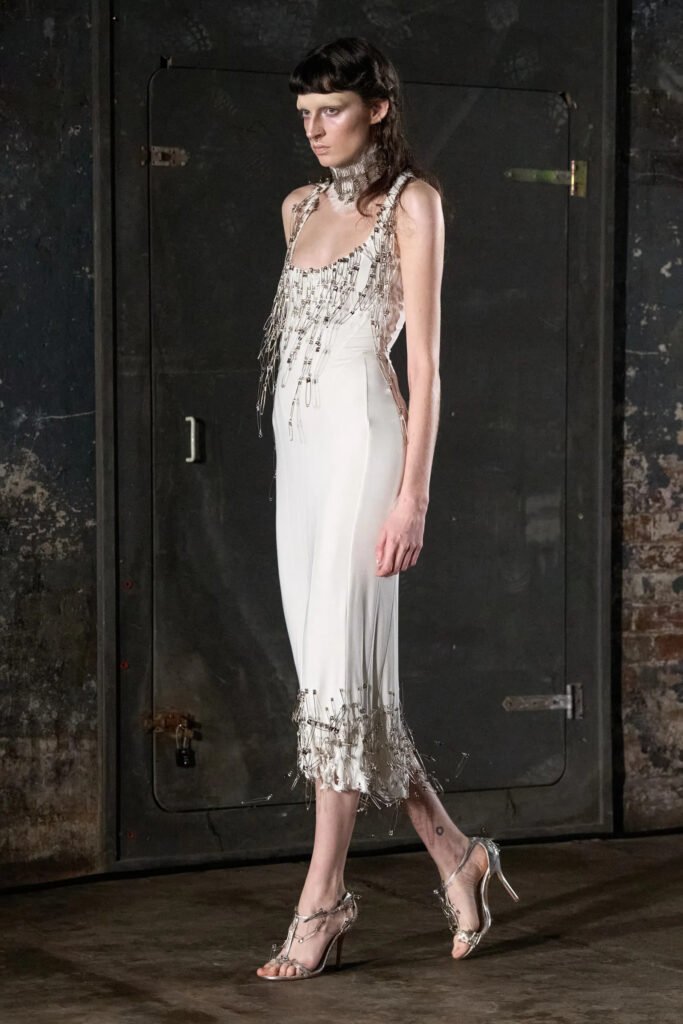
Findikoglu presents a different equation entirely. As an independent designer, her business model prioritizes craft over scale, provocation over palatability. The safety pin fringe that adorned Kardashian’s white bodycon midi dress required hours of hand-assembly, each pin individually linked to create movement and sound. The braided hair bra worn with a nude corset ensemble pushed boundaries that corporate design committees typically sand down in pursuit of mass appeal. This is significant because it suggests Kardashian no longer needs the institutional validation that megabrand partnerships provide. Her influence has reached escape velocity—she can now create fashion moments without borrowing credibility from heritage houses.
Industry experts suggest this represents the maturation of a decades-long power shift. Where once designers held absolute authority over taste and celebrities served merely as mannequins, the relationship has inverted. Kardashian’s previous collaborators understood this implicitly. Demna’s Balenciaga tenure was defined partly by his willingness to reshape the brand’s identity around Kardashian’s aesthetic preferences. But that arrangement still preserved the traditional hierarchy—celebrity as muse, designer as auteur, megabrand as ultimate beneficiary.
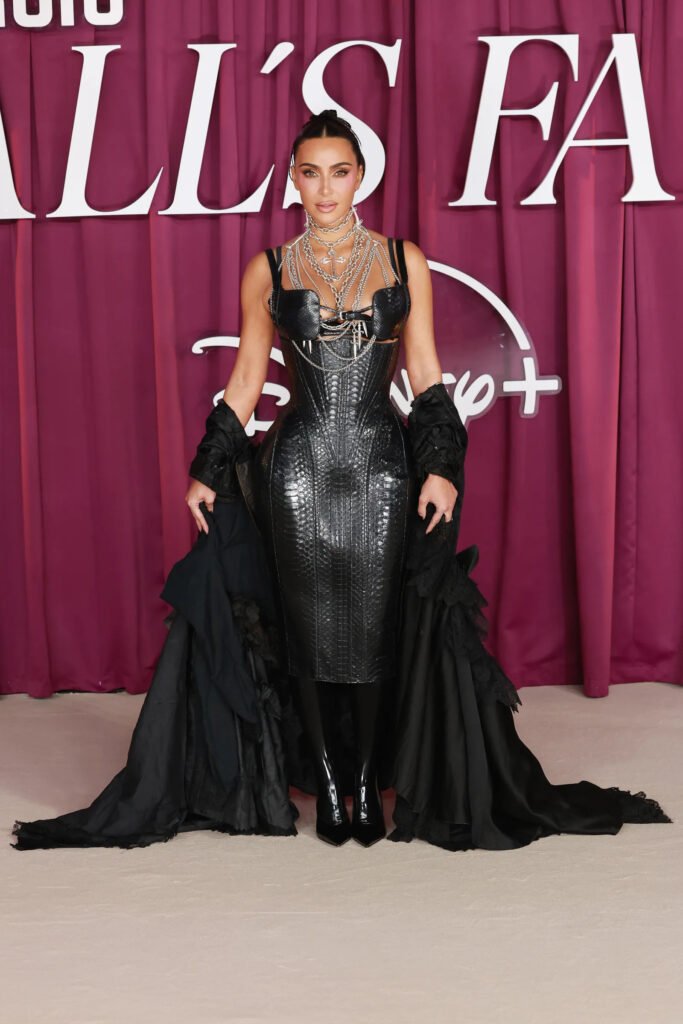
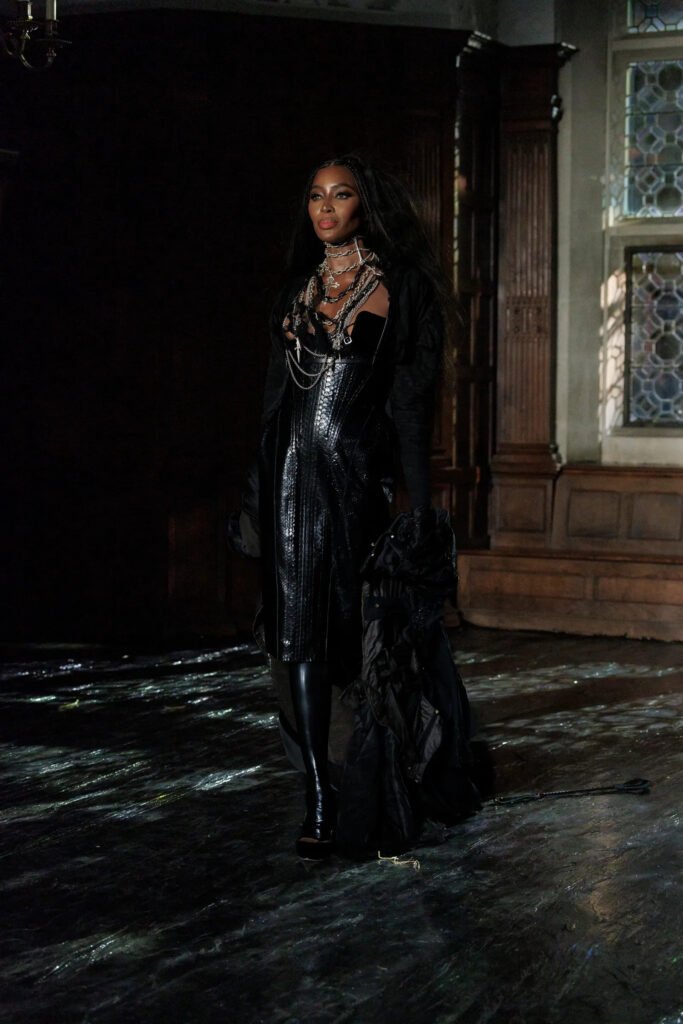
The Findikoglu partnership demolishes that structure. Here, Kardashian elevates rather than validates. She’s not borrowing cool from an established name; she’s manufacturing it through association. This is the culmination of social media’s disruption of fashion’s gatekeeping mechanisms. When a figure commands the attention Kardashian does—hundreds of millions of followers across platforms, instantaneous global reach, the ability to generate trending topics with a single photograph—the brand becomes secondary to the broadcaster.
The aesthetic pivot itself deserves examination beyond its immediate visual impact. Findikoglu’s design language draws from punk’s confrontational vocabulary, filtering subcultural signifiers through haute couture technique. Safety pins, historically symbols of DIY rebellion and appropriated by Vivienne Westwood in the 1970s, return here as luxury details. Bondage-inspired corsetry and transparent fabrications challenge the body-concealing modesty that defined quiet luxury’s appeal. These are garments designed to provoke reaction rather than blend seamlessly into boardrooms or private jet cabins.
This move serves as the antidote to an aesthetic that had begun calcifying into dogma. The quiet luxury movement, for all its initial appeal as a corrective to logo-mania and conspicuous consumption, had hardened into its own form of conformity. Beige became tyrannical. Minimalism morphed from design philosophy to social signaling—a way for the wealthy to distinguish themselves from aspirational consumers who still sought visible markers of status. Kardashian’s enthusiastic embrace of Findikoglu’s maximalism functions as a rejection of that stratification, a reassertion that fashion’s purpose includes spectacle, experimentation, and yes, rebellion.
The timing amplifies the significance. Kardashian’s pivot arrives as broader cultural currents suggest fatigue with minimalism’s dominance across multiple industries. Architecture, interior design, and digital interfaces have all begun moving away from the stark reductionism that characterized the 2010s. The pendulum swings toward texture, color, ornamentation—elements that minimalism explicitly rejected. Fashion rarely operates in isolation from these larger aesthetic movements, and Kardashian’s choices suggest an intuitive understanding that the cultural moment has shifted.
The appearance of K-pop sensation Rosé in the same white Findikoglu dress at the 2025 VMAs after-party compounds the narrative. This isn’t coincidental convergence—it’s coordinated cultural production. The simultaneous adoption by Western and Asian entertainment royalty creates a pincer movement that surrounds Findikoglu with exactly the kind of cross-demographic appeal that transforms niche designers into global phenomena. Rosé’s fashion influence in Asian markets mirrors Kardashian’s dominance in the West. Together, they provide Findikoglu with a launchpad that most independent designers spend careers hoping to access.
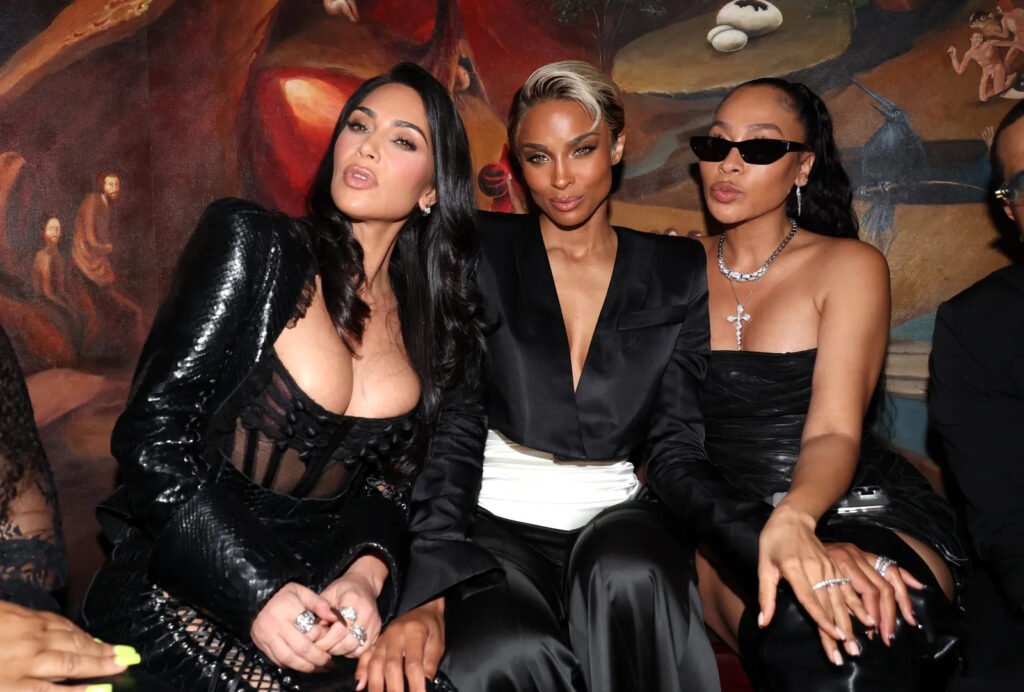
What emerges from Kardashian’s sustained commitment to Findikoglu—documented across birthday celebrations, film premieres, and elite industry parties—is a blueprint for fashion’s future power structures. The monolithic brand partnership, where celebrities serve extended tenures as ambassadors for single houses, appears increasingly obsolete. The new model favors flexibility, surprise, and the kind of genuine curatorial voice that audiences, increasingly sophisticated in their understanding of commercial influence, reward with attention and ultimately, purchasing decisions.
This represents more than a single celebrity’s sartorial evolution. Kardashian’s choices have historically functioned as leading indicators for mass-market shifts that follow months or years later. Her early adoption of athleisure presaged its colonization of everyday wardrobes. Her embrace of body-conscious silhouettes preceded the rejection of the minimalist silhouettes that dominated the early 2010s. If pattern holds, Findikoglu’s punk-meets-couture aesthetic may signal the beginning of maximalism’s return to mainstream fashion consciousness—not as nostalgic throwback, but as necessary correction to an aesthetic that had exhausted its cultural utility.
The implications extend into the business architecture of fashion itself. If independent designers can achieve scale through celebrity amplification without sacrificing creative control to corporate structures, it fundamentally alters the industry’s economic logic. Venture capital flows could redirect toward supporting atelier-model businesses rather than demanding the rapid expansion that typically dilutes brand identity. The Kardashian-Findikoglu partnership suggests that influence, properly deployed, can substitute for traditional infrastructure—at least long enough to build the infrastructure that sustains long-term growth.
As fashion emerges from minimalism’s long dominance, Kardashian’s embrace of Dilara Findikoglu reads as both eulogy and manifesto. The safety pins that announced her arrival at Petra Collins’s birthday party weren’t just decorative details—they were punctuation marks, declaring the end of one era and the violent, glorious beginning of another. In an industry built on the constant manufacture of novelty, Kardashian has once again positioned herself at the inflection point, proving that her most valuable asset isn’t her ability to follow trends, but her uncanny instinct for knowing exactly when to abandon them.