
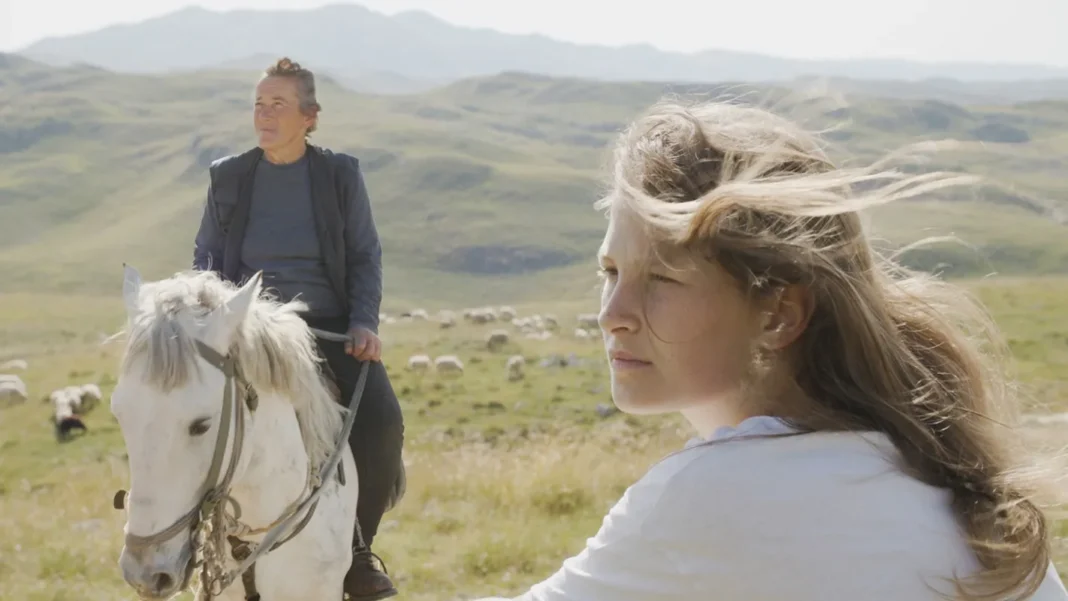
In the summer highlands of Montenegro’s Sinjajevina plateau, a middle-aged woman named Gara rises before dawn to tend sheep, milk cows, and haul injured calves down mountainsides in a wheelbarrow. Her 13-year-old daughter, Nada, works beside her when school permits. Their labor—endless, backbreaking, economically precarious—has sustained this landscape for generations. But Gara knows what the filmmakers capturing her life seem reluctant to ask outright: Will Nada stay? The question haunts “To Hold a Mountain,” the Sundance award-winning documentary by Biljana Tutorov and Petar Glomazić. Yet it extends far beyond one family. Across Europe’s highlands—from the Albanian Alps to the Scottish Hebrides—the same crisis is unfolding. Small-scale pastoral farming, once the backbone of rural economies, is collapsing under the weight of mechanized agriculture, climate disruption, and the exodus of young people to cities. Gara’s story, intimate and specific, is also universal: a reckoning with the invisible labor that feeds nations and the uncomfortable truth that it may not survive another generation.
Through its observational lens, “To Hold a Mountain” captures what economic data often obscures: the crushing mathematics of subsistence farming in the 21st century. Gara’s workday stretches from predawn milking to late-night animal checks, a cycle that repeats without weekends or holidays. The film, stripped of voiceover or explanatory intertitles, allows Eva Kraljević’s cinematography and immersive sound design to reveal the relentless physical toll of this existence. This is not romanticized pastoral life. It is labor that offers no sick days, no retirement plan, and increasingly, no financial return that justifies its demands.
The economic unsustainability of highland farming has been documented across the European Union, where agricultural policy has favored industrial-scale operations over traditional smallholdings. Subsidies flow toward mechanized, lowland farms capable of meeting export quotas and efficiency metrics. Small-scale herders like Gara, who maintain practices essential to biodiversity and landscape preservation, receive minimal support. The result is predictable: rural depopulation, aging farmer demographics, and the abandonment of land that has been continuously cultivated for centuries.
Montenegro’s Sinjajevina plateau represents a microcosm of this continental crisis. The region’s traditional economy relied on seasonal migration patterns, communal grazing rights, and knowledge systems passed from generation to generation. Gara embodies this continuity, but she also represents its breaking point. The film’s most devastating moments arrive not in dramatic confrontations but in quiet repetitions: the same chores, the same mountains, the same isolation. The question of whether Nada will inherit this life hangs over every frame.
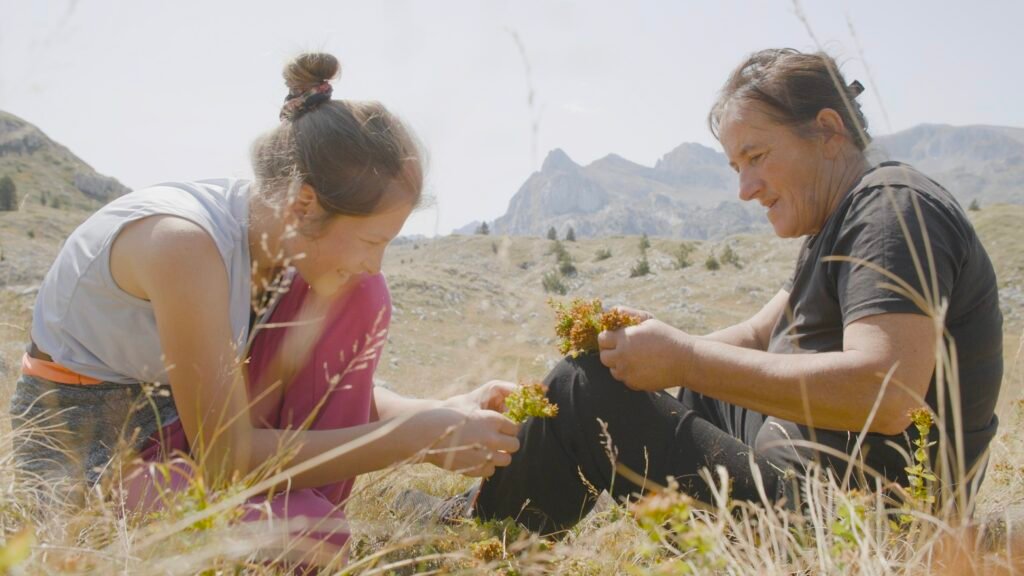
This generational question carries implications far beyond individual choice. UNESCO has increasingly recognized traditional pastoral systems as intangible cultural heritage, acknowledging that when these practices disappear, so too does irreplaceable knowledge about land management, animal husbandry, and ecological balance. Highland grazing, for instance, prevents the encroachment of woody vegetation that can increase wildfire risk and reduce meadow biodiversity. These ecosystem services have measurable value, yet they generate no income for the farmers who provide them.
The film also captures Gara’s role as a community advocate against NATO-backed military training exercises that disrupt the highland farming community. This subplot reveals another dimension of the rural sustainability crisis: the competing claims on marginal lands. As traditional agricultural use becomes less economically viable, these spaces become available for alternative uses, whether military training grounds, renewable energy installations, or tourism development. Each transition further erodes the social fabric that sustained rural communities.
Climate disruption adds another layer of precarity. Shifting weather patterns affect grazing seasons, water availability, and animal health in ways that small-scale farmers are least equipped to manage. Unlike industrial operations with insurance, veterinary support, and capital reserves, subsistence herders absorb climate shocks directly. A severe drought or unexpected cold snap can devastate a year’s income with no safety net.
The slow-burn structure of “To Hold a Mountain” mirrors the gradual erosion of rural livelihoods. The film has been described as an emotionally shattering meditation on grief and perseverance, and that grief extends beyond the violent past event that has marked Gara and Nada’s relationship. It encompasses the loss of a way of life, the fading of community networks, and the knowledge that this labor, however essential to cultural identity and environmental health, may simply not be economically rational for the next generation.
European policy debates around rural sustainability have intensified in recent years, particularly as governments confront the tension between agricultural efficiency and rural preservation. Some regions have experimented with payments for ecosystem services, compensating farmers for maintaining traditional practices that provide public goods. Others have invested in agritourism and heritage preservation as economic supplements. Yet these interventions often arrive too late or at insufficient scale to reverse demographic collapse.
The financial implications are stark. Highland farming communities across Europe report average farmer ages exceeding 60, with few young people entering the profession. The land-use consequences are equally dramatic. Abandoned pastures revert to scrub, changing fire ecology and wildlife patterns. Traditional breeds adapted to harsh highland conditions face extinction as industrial genetics dominate. Local food systems that once provided regional food security disappear, replaced by long supply chains vulnerable to disruption.
What makes “To Hold a Mountain” culturally significant is its refusal to sentimentalize this crisis or offer false hope. The filmmakers, through their observational approach, allow the material reality of Gara’s existence to speak without editorial intervention. There are no experts explaining the problem, no policy solutions proposed, no calls to action. Instead, the film presents a document of labor, relationship, and place with the understanding that this document may serve as an archive of something disappearing.
The mother-daughter dynamic at the film’s center carries particular weight in this context. Nada’s presence represents both continuity and uncertainty. She possesses the skills and knowledge required for this life, yet she also represents a generation with access to education, urban opportunities, and alternative futures. The film captures her working alongside her mother, but it also captures the silence around what comes next. This is the unspoken negotiation occurring in rural households across the globe: the gap between cultural expectation and economic possibility.
“To Hold a Mountain” arrives at a moment when urban audiences are increasingly disconnected from food production realities. The labor that sustains agricultural systems remains largely invisible, emerging into public consciousness only during supply chain disruptions or food safety scandals. Gara’s story makes that labor visible in its full complexity, neither romanticizing pastoral life nor dismissing its cultural and ecological significance.
The film’s success at Sundance, where it received awards within a festival landscape increasingly favoring observational intimacy over conventional documentary approaches, suggests growing recognition that these quiet stories of rural perseverance carry urgent contemporary relevance. As global food systems face climate stress, geopolitical disruption, and sustainability reckonings, the question of who will tend the land becomes less abstract.
Gara holds the mountain through sheer determination and inherited responsibility. But mountains, unlike human endurance, are patient. The Sinjajevina plateau will remain long after the last shepherd leaves. What vanishes is not landscape but relationship, the accumulated knowledge of how to live with that landscape sustainably. “To Hold a Mountain” documents that knowledge system at what may be its end point, raising questions that extend far beyond Montenegro’s borders about the true cost of rural abandonment and whether societies will recognize that cost before it becomes irreversible.