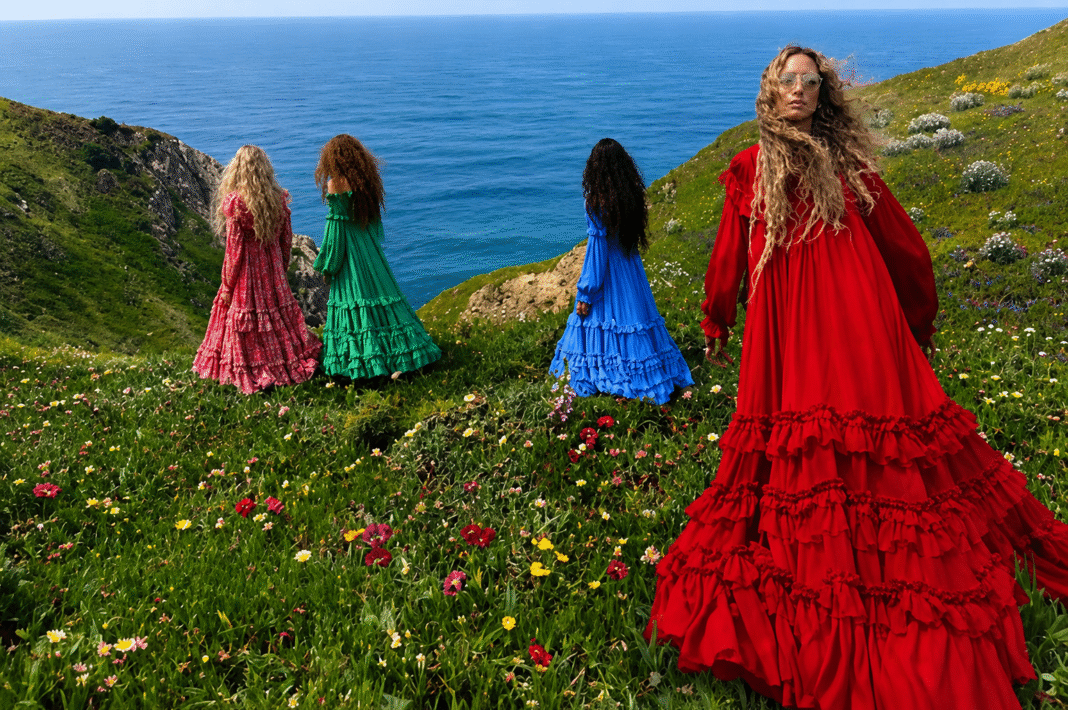
The wind arrives before the clothes do. That is the quiet radical gesture at the heart of Chloé’s Winter 2026 campaign, which the French house unveiled this season ahead of a September arrival in boutiques and online. Photographed across windswept coastal meadows and clifftop grass overlooking the ocean, the imagery lets the elements move first, billowing through ruffled dresses and sweeping capes before the lens has time to settle. Nature here is not a backdrop for a fashion story. It is the co-author of one.
Creative Director Chemena Kamali built the campaign around a single, deceptively simple idea. “For this campaign, I wanted to express devotion through women, the vastness of open landscapes, and craftsmanship,” she said in the house’s release. “Nature brings us back to instinct, freedom, and connection. In that openness, femininity unfolds with untamed strength and togetherness.” It is a thesis you can see in every frame, where four women exist not as isolated figures but as a collective, tethered to one another and to the land they walk across.
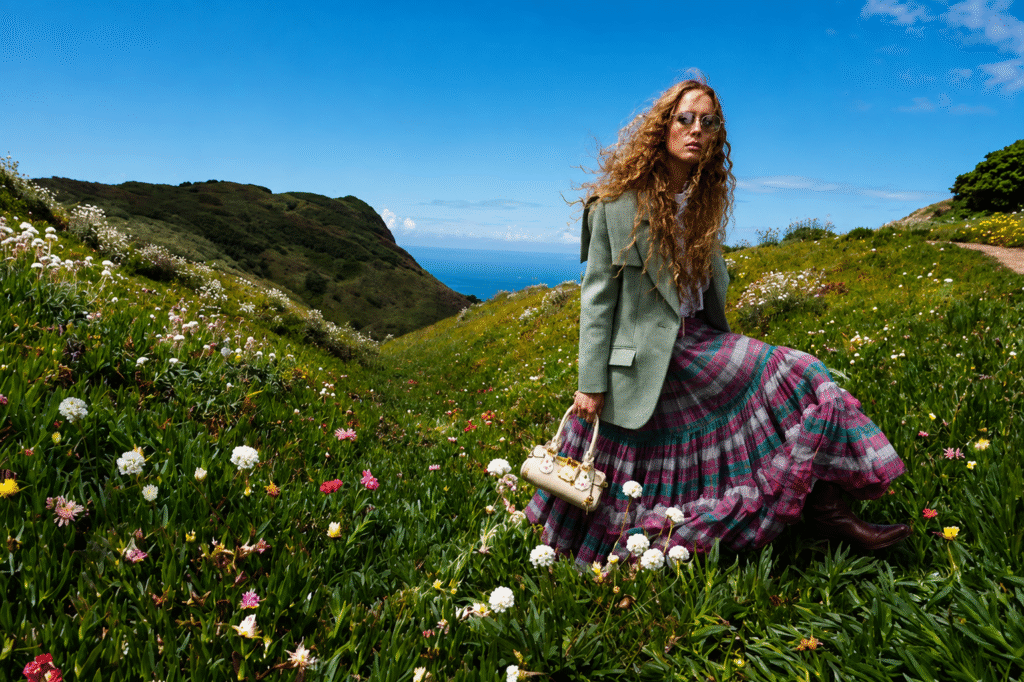
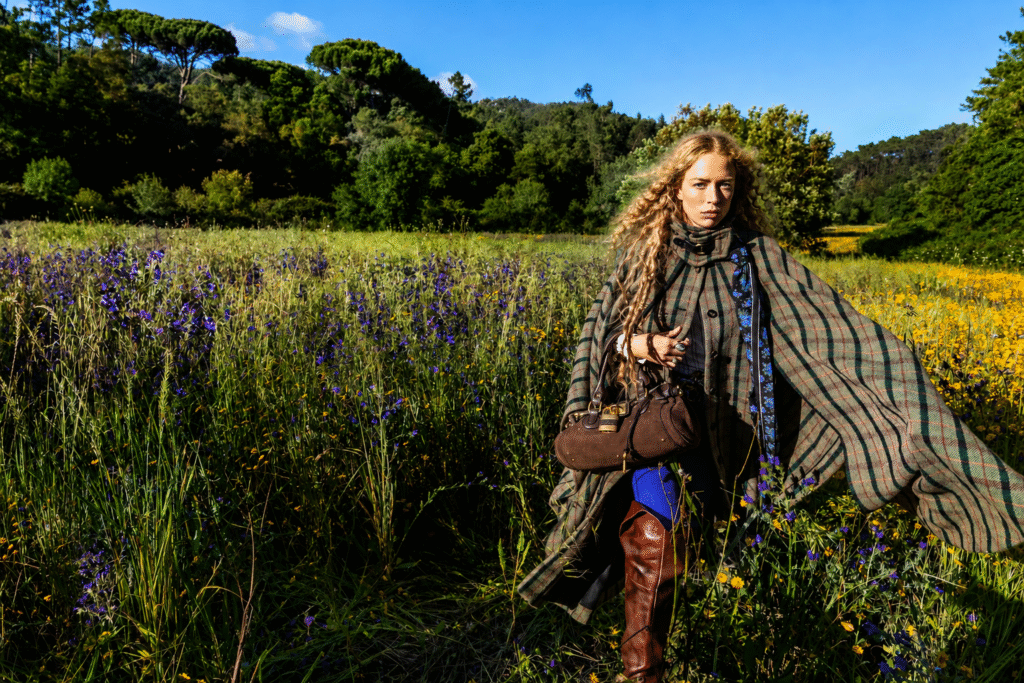
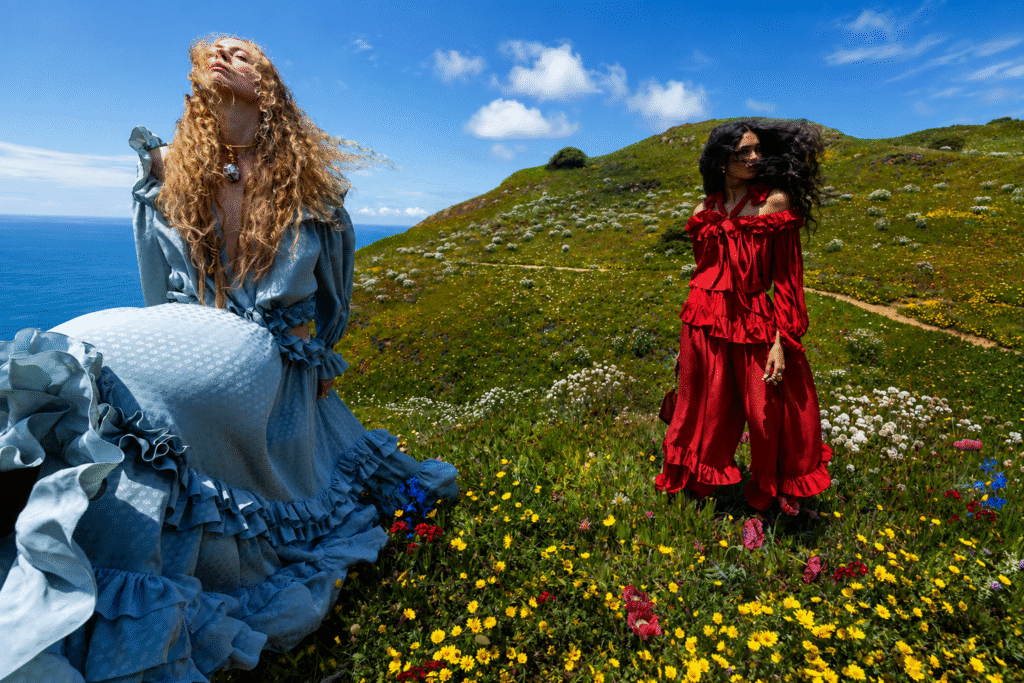
Those women are Raquel Zimmermann, Jacqui Louise, Thalita Ferreira, and Sarah Isaksen, cast less for spectacle than for the ease they generate together. They move through the hillside as companions rather than competitors, each holding a singular presence while surrendering to the group’s shared rhythm. Kamali’s femininity has always been expressed through presence over performance, and here that instinct reaches its fullest articulation. Emotion arrives through gesture, through the way a hand catches a friend’s shoulder, through the wind doing what direction never could.
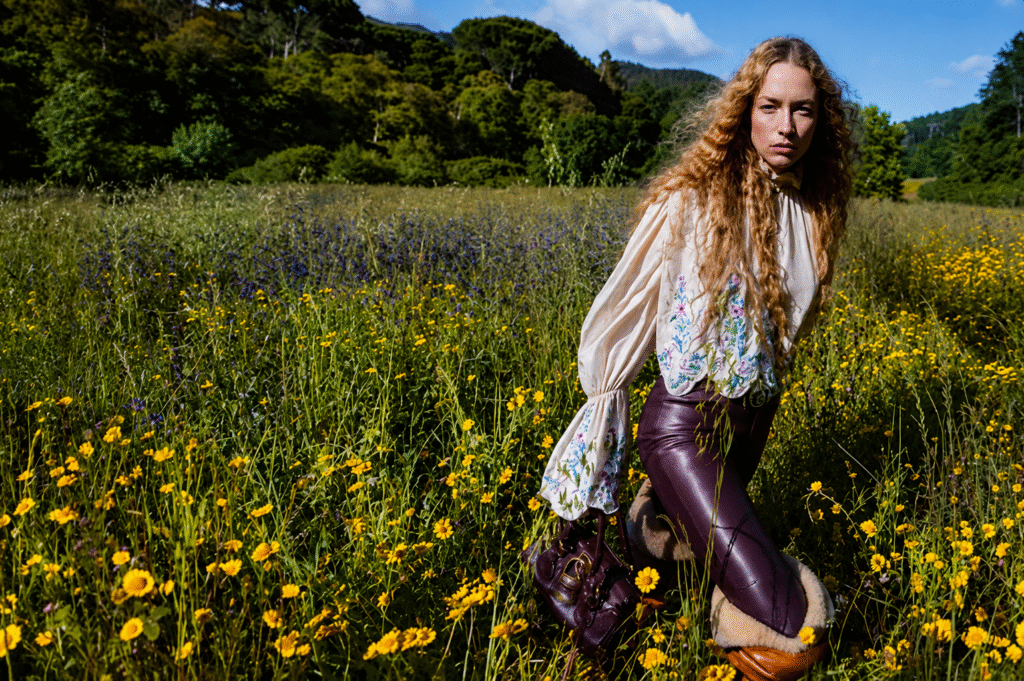
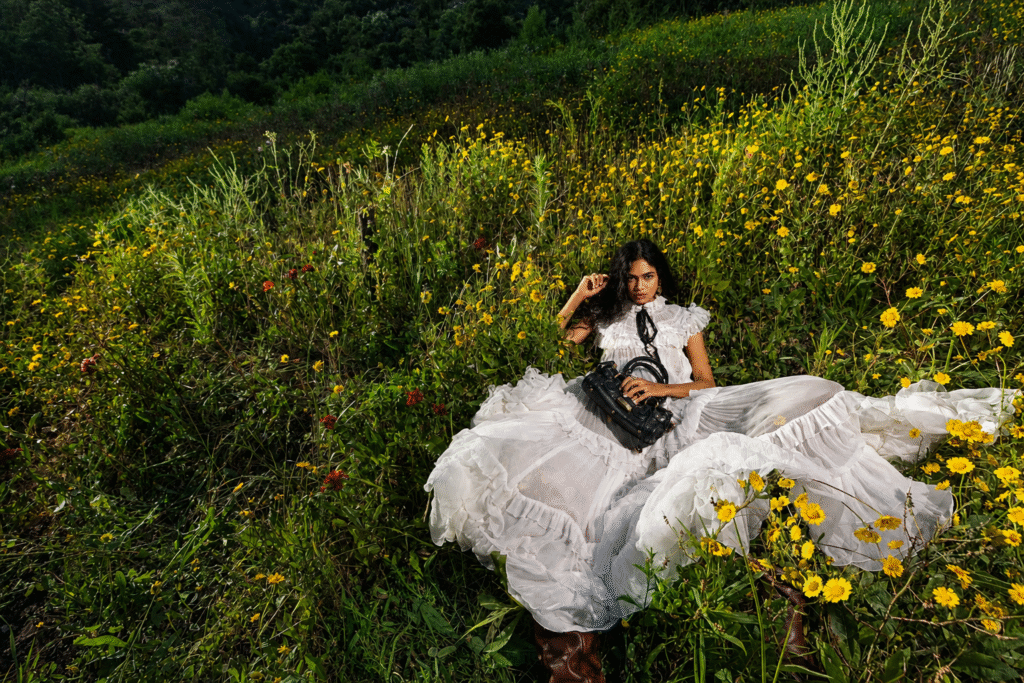
The images were captured by Inez Van Lamsweerde and Vinoodh Matadin, the storied duo who abandoned the controlled studio for untamed terrain. Their palette runs saturated and earthy at once: reds and blues, emerald greens, tartans, and grounded natural tones. Shifting winter light does the heavy lifting, softening every frame as the low sun glides across the sky and shadows sculpt the silhouettes. Voluminous cascading dresses, plaid capes, prairie blouses, over-the-knee boots, and the house’s Paddington bags read as almost elemental, garments designed to exist in harmony with air rather than resist it.
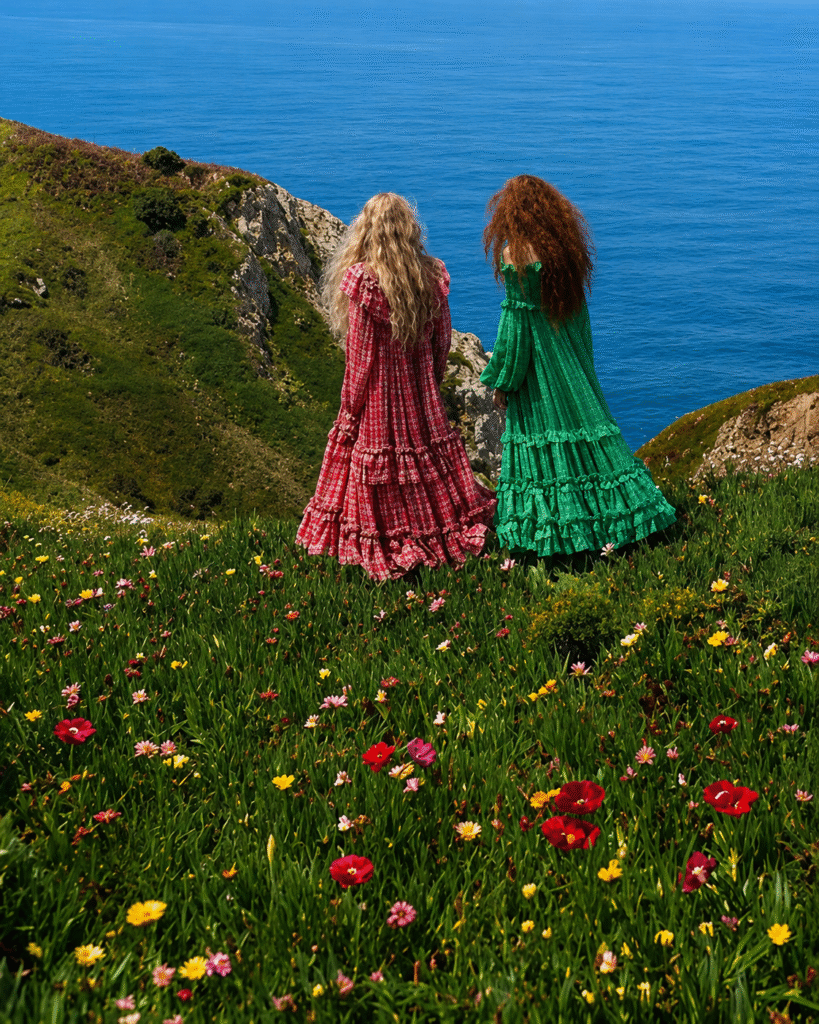
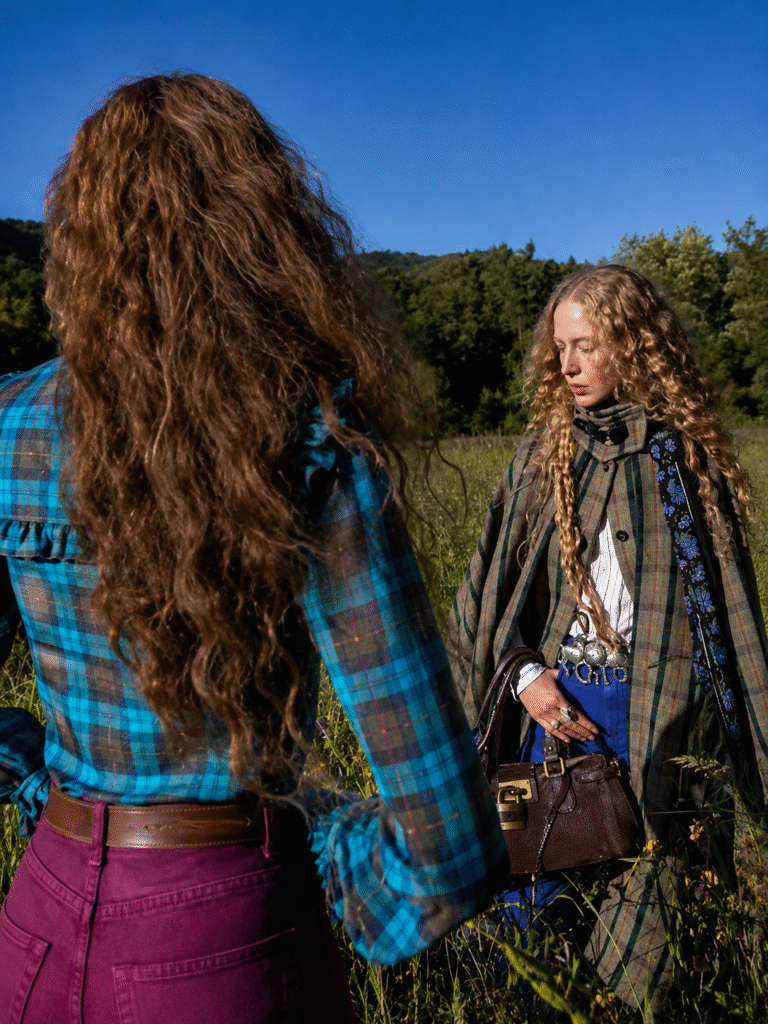
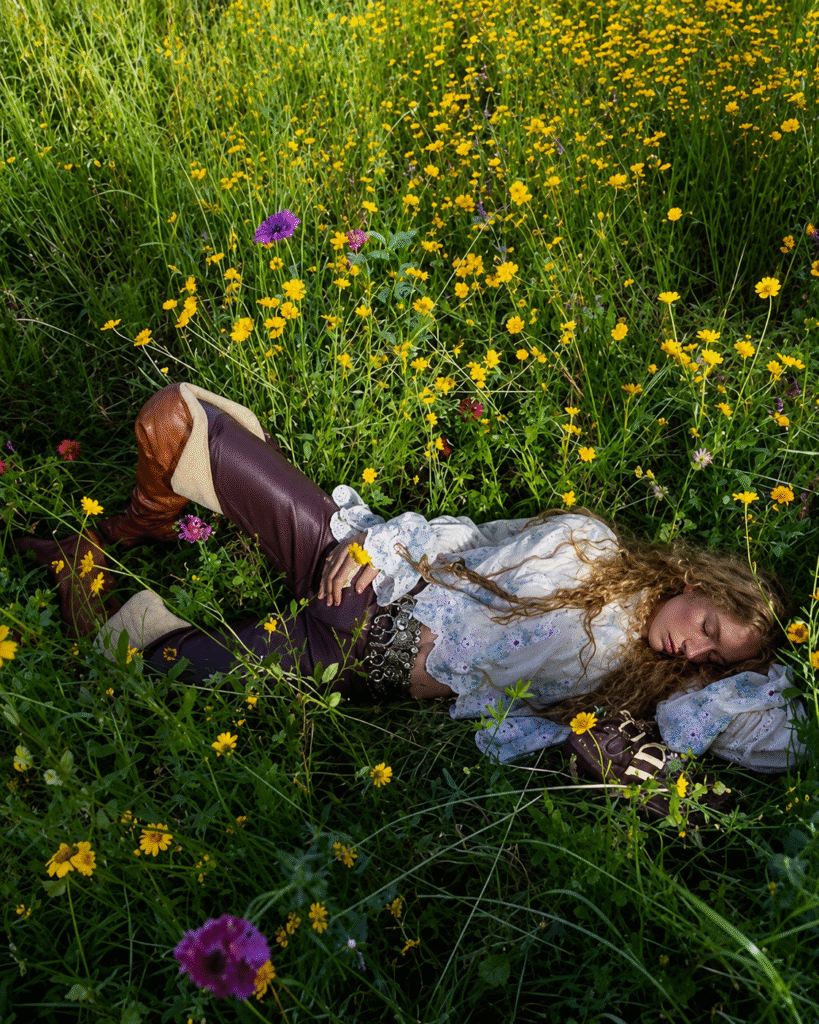
To understand why this matters, you have to understand what Kamali has restored at Chloé since taking the reins in early 2024. She inherited a house of exceptional malleability, one steered by successive designers through pastoral bohemia, glittered denim, and sleek minimalism, and she made a decision that now looks like clarity: to trust feeling over philosophy. Winter 2026 continues the folkloric language of the runway collection that preceded it, all Tyrolean knits, embroidered prairie tops, and diaphanous ruffled skirts. Kamali has spoken about being moved not only by the beauty of such garments but by the labor visible inside them, the hours and the human hand. In an industry saturated with speed, she has staked Chloé on subtle irregularity and craft.
There is something older running beneath the surface, too. Observers have drawn a line from these images to the Pre-Raphaelites, to painters like John Everett Millais who rendered women entwined with nature, hair loose, color saturated. The campaign’s soundtrack, a haunting track by the Welsh group Tristwch Y Fenywod, deepens that folkloric register, pulling the work toward myth rather than trend. It exists as both still photography and film, a small confirmation that Kamali intends atmosphere to be the point.
What emerges is a portrait of femininity as something shared instead of solitary, timeless instead of momentary. Chloé’s power, as Kamali keeps proving, lies not in spectacle but in the freedom it makes you feel. In the open air, shaped by wind and grounded in sunlight, that freedom finally looks like the whole story.