
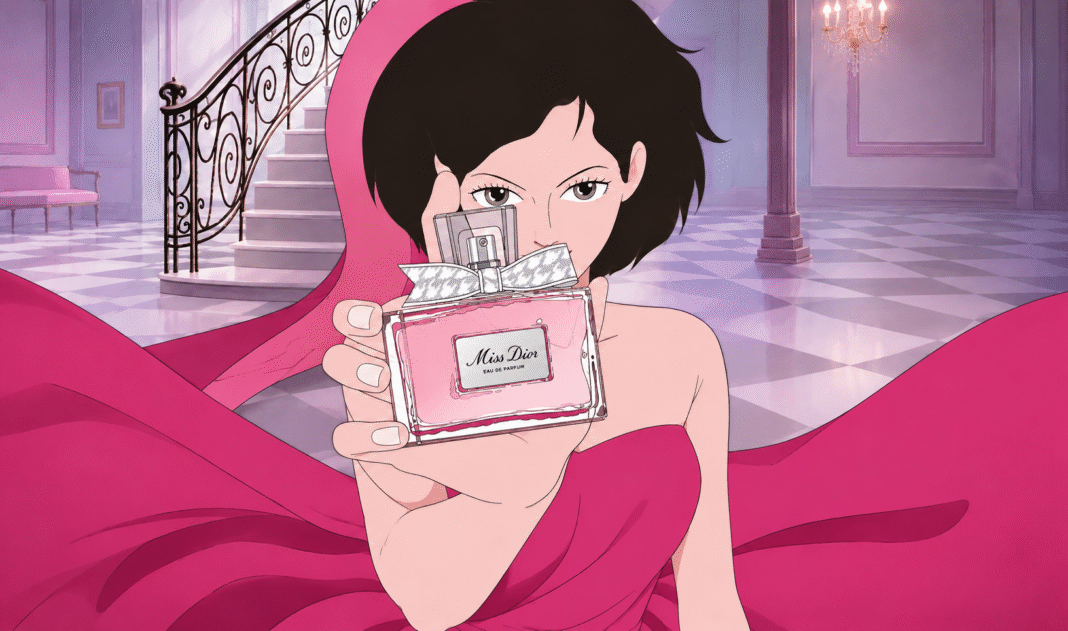
There is a bee, first of all, and it will not leave her alone. It follows the heroine of Dior‘s new animated film through a Paris rendered in hand-painted gouache, past cherished roses and a giant pink bow, up into a sky where she drifts beneath a cluster of colored balloons. This is “Miss Dior“ as you have never seen her: not a bottle on a vanity, not a face in a glossy campaign, but a fully animated character with somewhere to be. For the first time in the house’s history, Christian Dior Parfums has released an original animated short, and it arrives with the unmistakable pedigree of a studio that knows how to make a drawing feel like it breathes.
The film was written, directed, and produced by Ugo Bienvenu alongside the team at Remembers, the French animation studio he co-founded, and it draws openly on the delicate register of classic Japanese animation. Bienvenu is not a decorative choice. His feature debut, Arco, premiered at Cannes in 2025 and was co-produced by Natalie Portman, who has served as the face of Miss Dior since 2010 and who describes the collaboration as the natural continuation of a relationship already built on trust. “I met Ugo Bienvenu and the Remembers teams when I decided to co-produce Arco, which went on to achieve such extraordinary success,” Portman said of the project. “Imagining Miss Dior as an animated film has turned into the most beautiful and meaningful adventure.”
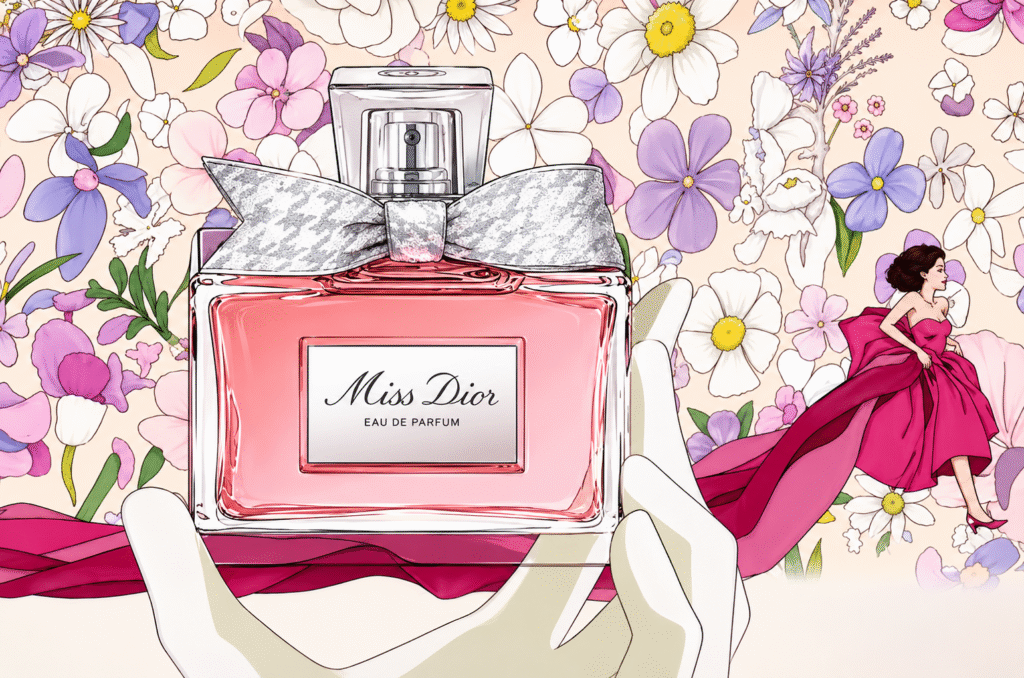
What makes the film worth pausing over is not simply its charm, though it has that in abundance, but the deliberate difficulty of its making. Bienvenu and his collaborators reached for a technique most studios have long abandoned. “We had complete creative freedom in terms of the art direction,” he tells Hypebae. “To portray the gentle beauty of living nature, we chose a rarely used technique for the background design of this film. It is a Japanese artisanal gouache technique that dates back to the 1980s. Hardly anyone uses it anymore, because it demands an immense amount of time.” He credits a single artist, Louise Seynhaeve, with painting every background in the film, and believes she may be the only person in France who still commands the method.
That insistence on the slow and the handmade is not incidental to Miss Dior. It is the whole point. The fragrance was born in 1947, when Christian Dior asked the perfumer Paul Vacher to make him something that smelled like love, and it emerged as a floral chypre bright with rose and jasmine from Grasse. Its name arrived by accident, when the couturier’s muse Mitzah Bricard saw his younger sister enter the salon and cried out, “Look, there’s Miss Dior.” Catherine Dior was a horticulturist, a resistance fighter who survived deportation, and the quiet moral center of her brother’s imagination. The film gestures toward her directly, and toward the gardens of the Château de La Colle Noire, Christian Dior’s Provençal home, folding the founding story into its dreamlike course.
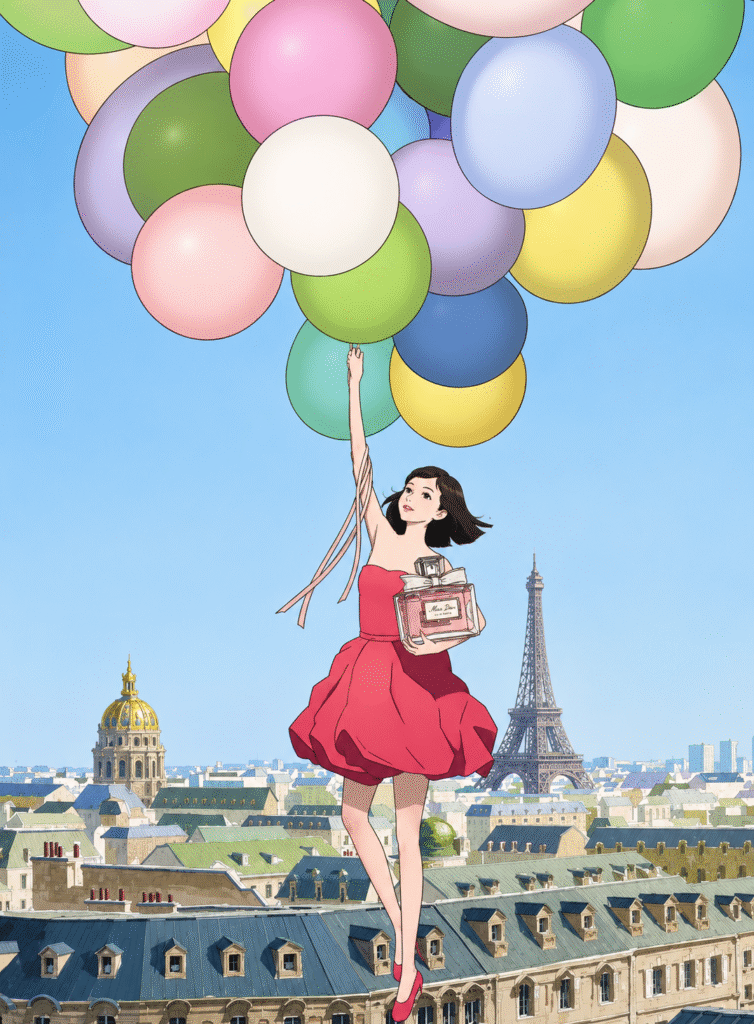
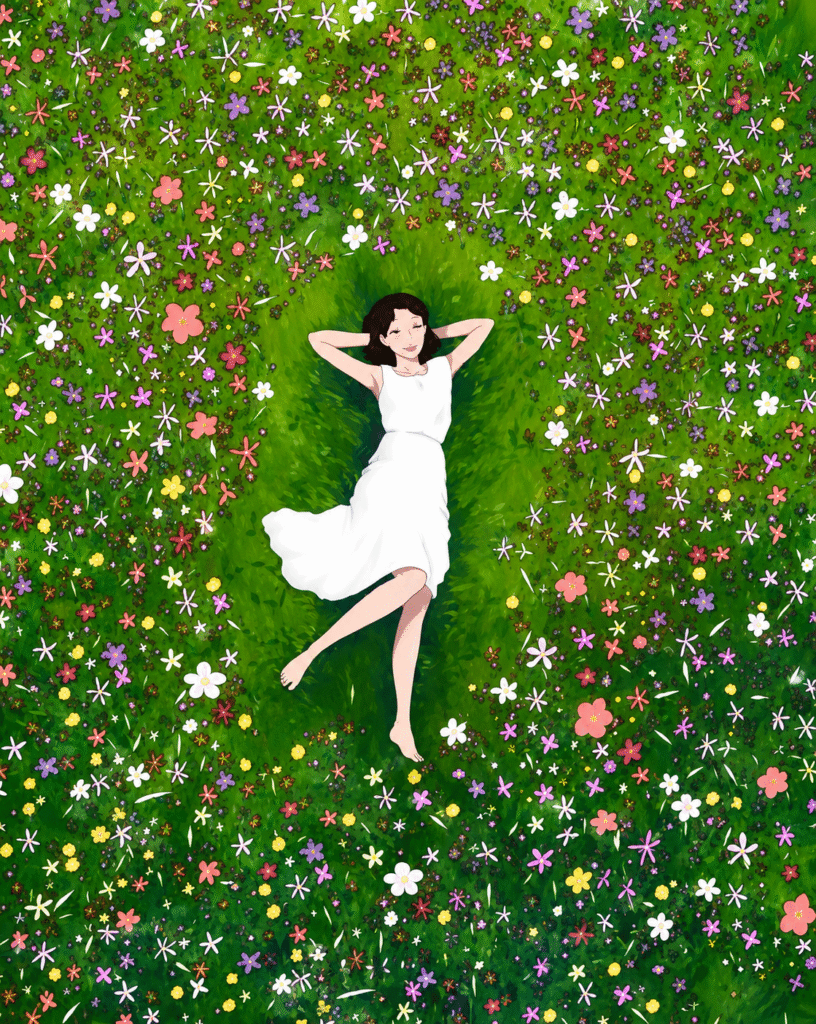
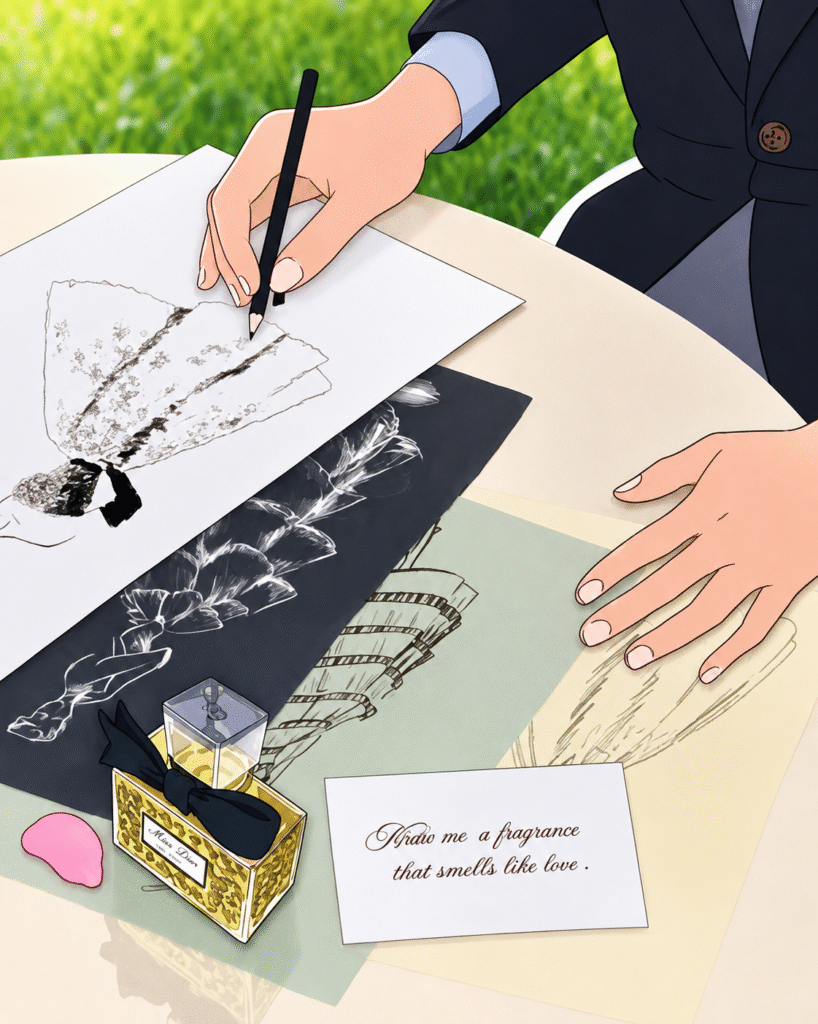
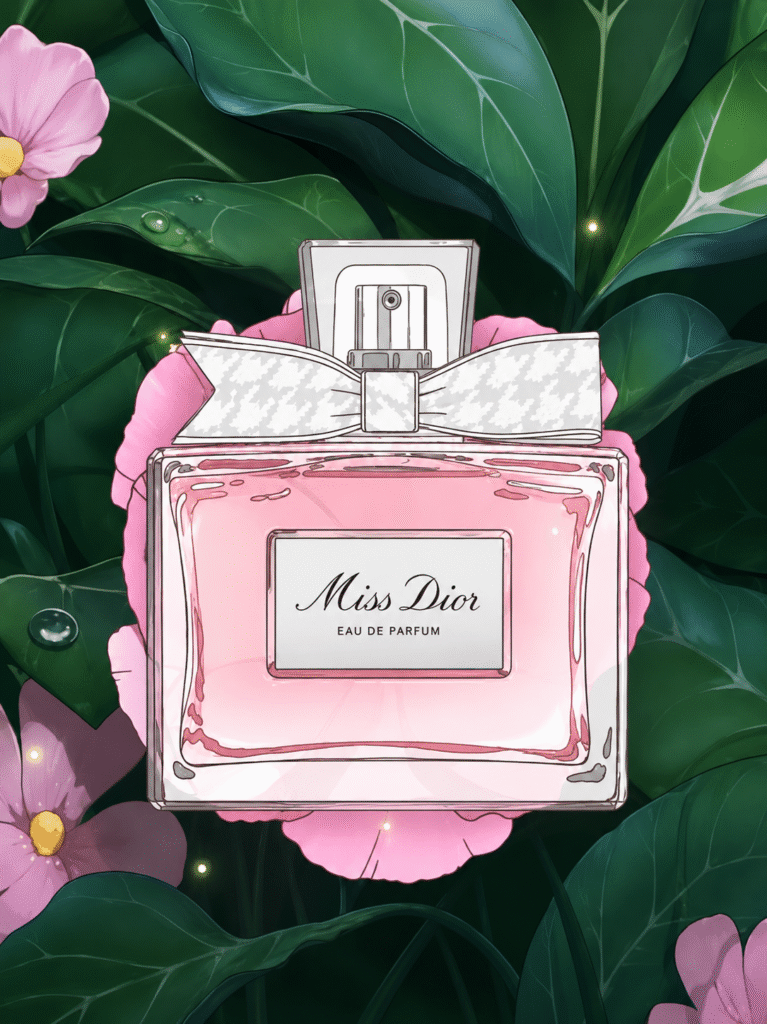
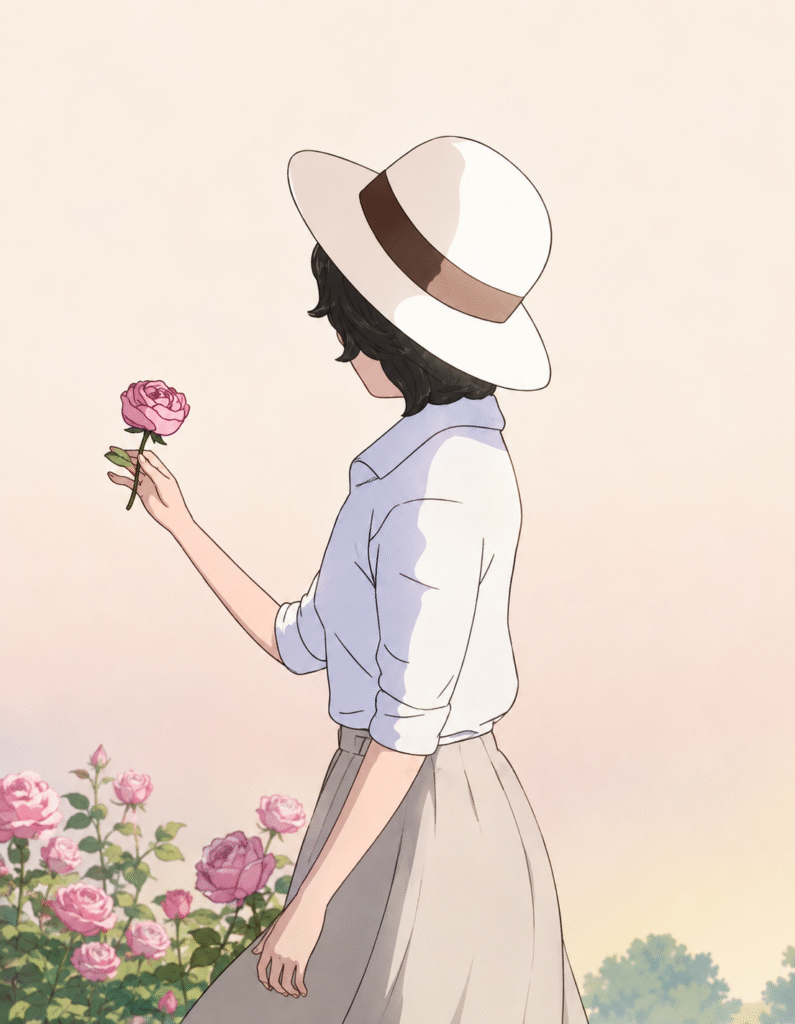
The result reads as a genuine dialogue between couture and craft rather than a marketing exercise borrowing anime’s current cultural cachet. The film retraces the Maison through its most quintessential motifs, the houndstooth, the roses, the pink bow, the 1947 New Look silhouette, each one arriving as a discovery rather than a logo. Portman framed the choice of such labor-intensive technique as an act of preservation, an approach that mirrors how a house like Dior perpetuates its own time-honored savoir-faire. In an industry increasingly fluent in the fast and the synthetic, a fragrance choosing to be told through a nearly extinct method of painting feels less like nostalgia than like a statement of values. Miss Dior, after all, was always a story about beauty insisted upon after a difficult time. This is simply the newest way of telling it.