
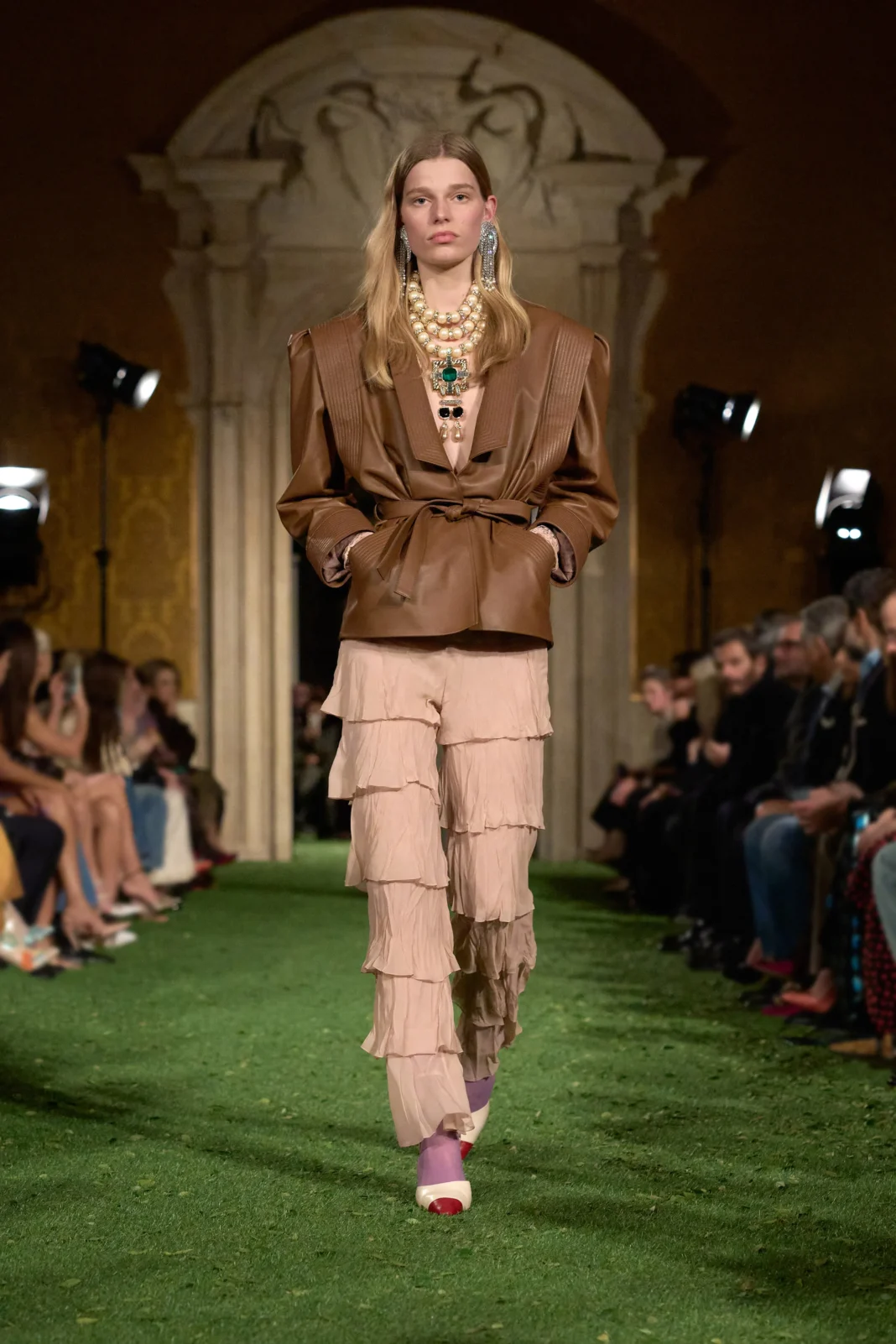
Every great fashion house carries its founder like a watermark, invisible until held to the light. On a cool Roman evening, inside the frescoed halls of Palazzo Barberini, Alessandro Michele sent out Valentino’s first ready-to-wear collection since the death of Valentino Garavani, the man who gave the house its name, its blood-red signature, and its soul. There was no explicit tribute. No empty chair. Instead, Michele arrived with something far more considered: a four-page philosophical essay, draped silhouettes that refused easy resolution, and a quietly radical argument that a building, like a legacy, does not merely host the bodies that move through it. It claims them. In choosing to stage his FW26 collection as an act of intellectual excavation rather than nostalgic homage, Michele may have answered fashion’s most delicate question: not how you honor a founder, but how you dare to move beyond one.
The choice of Palazzo Barberini was not incidental. Built in the seventeenth century by the Barberini family with papal ambition and Baroque theatricality, the palazzo is a structure saturated in the tension between power and beauty, between institution and individual. Michele’s deployment of this space as his runway signals a precise intention: the house of Valentino is being repositioned not as a memorial, but as a living architectural argument. Like the palazzo’s frescoed ceilings, which bear the weight of history without collapsing beneath it, the collection sought to demonstrate that inheritance need not be a burden. It can be a method.
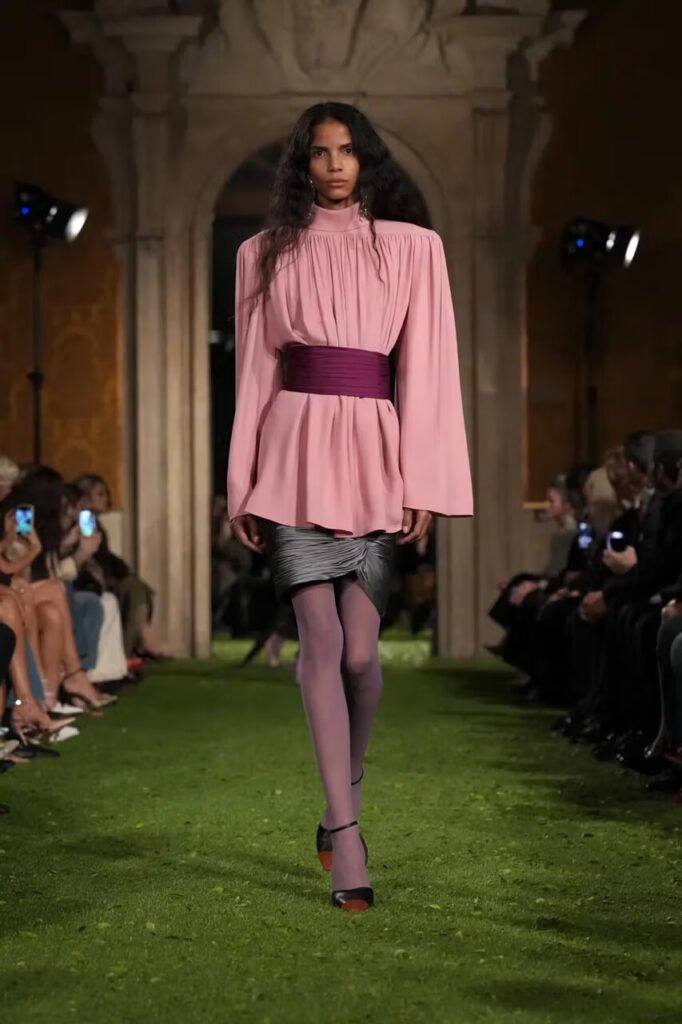
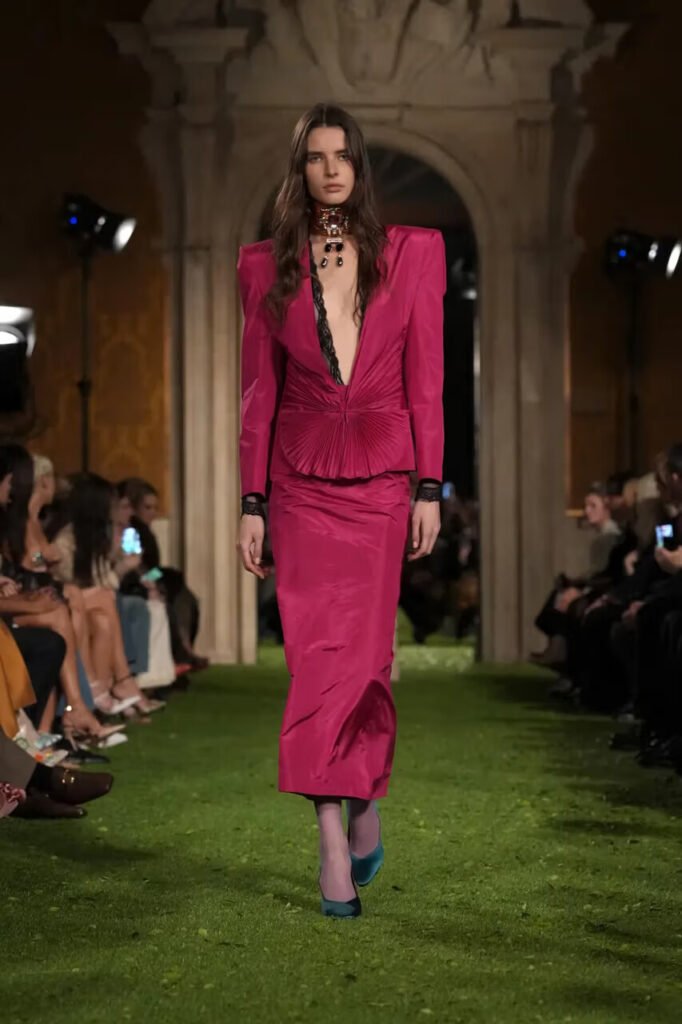
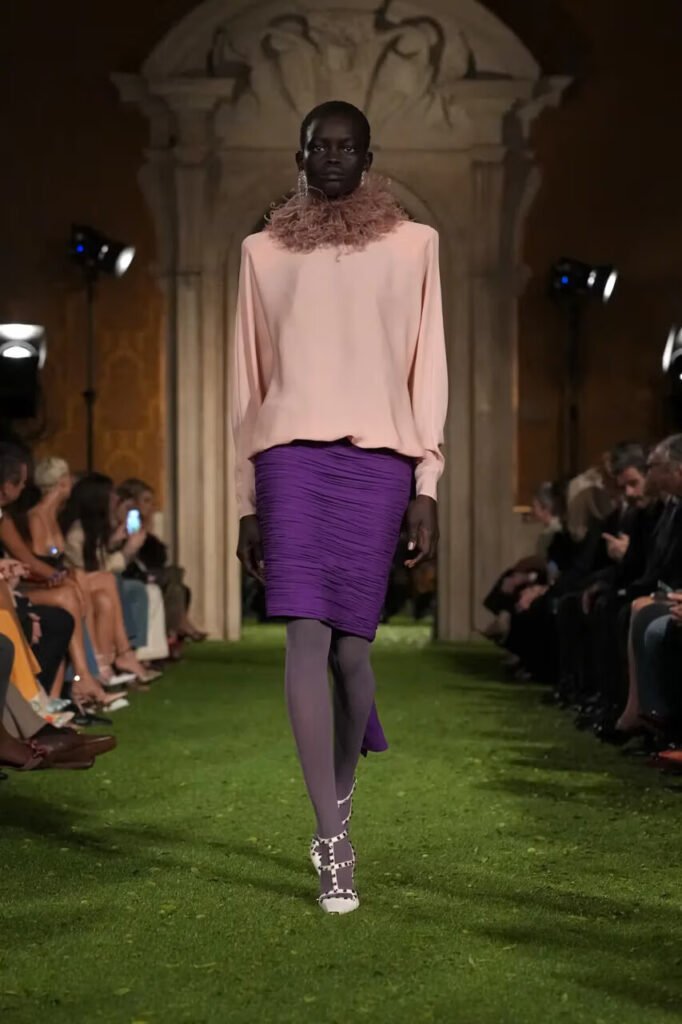
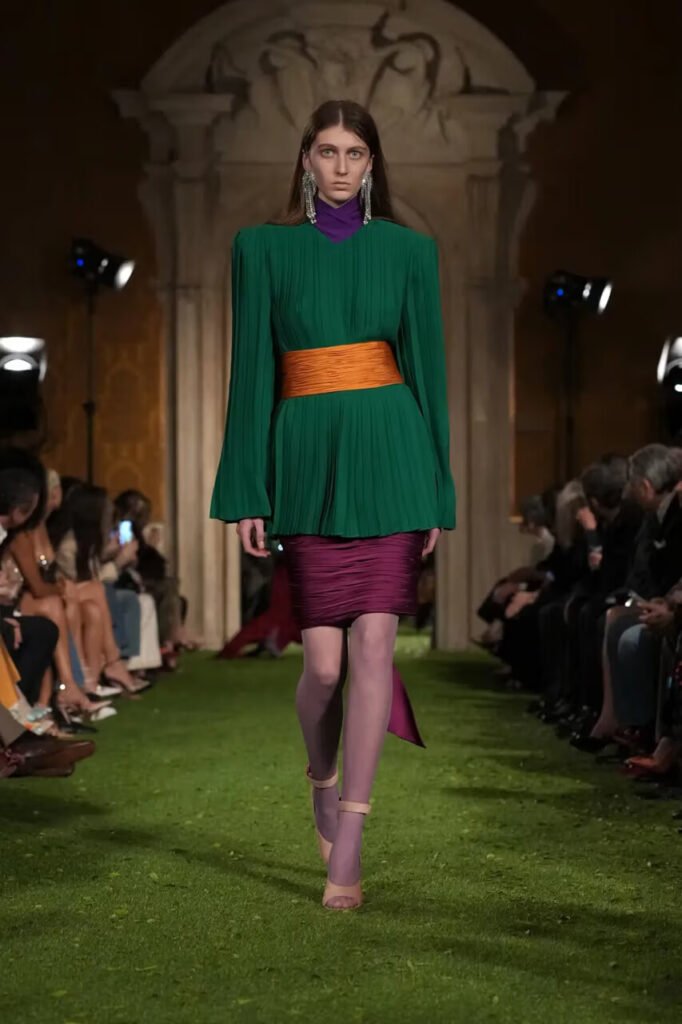
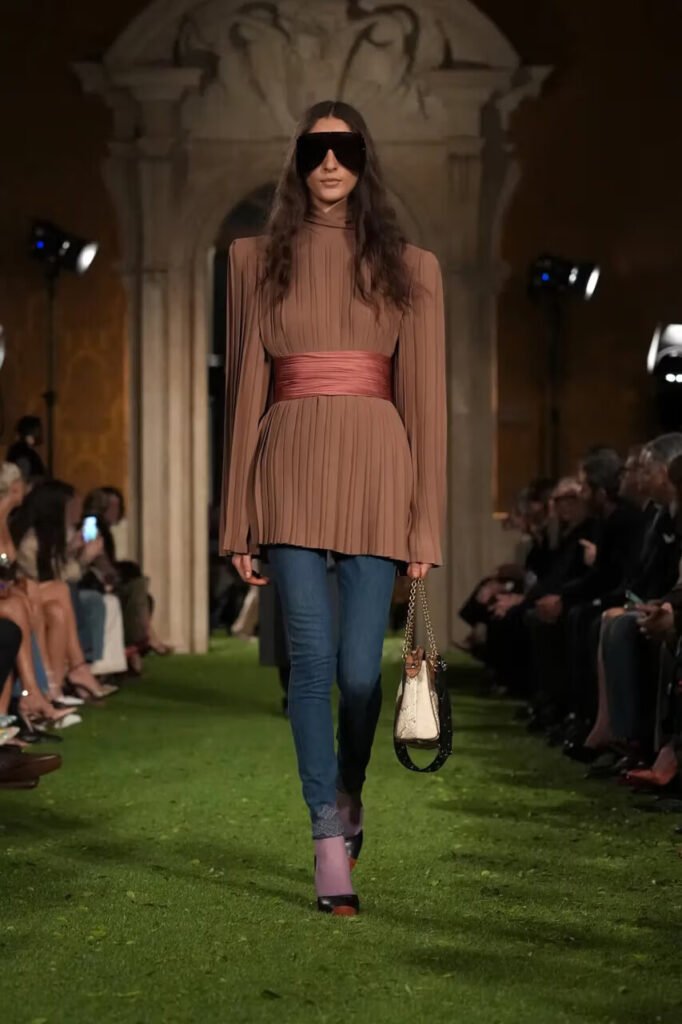
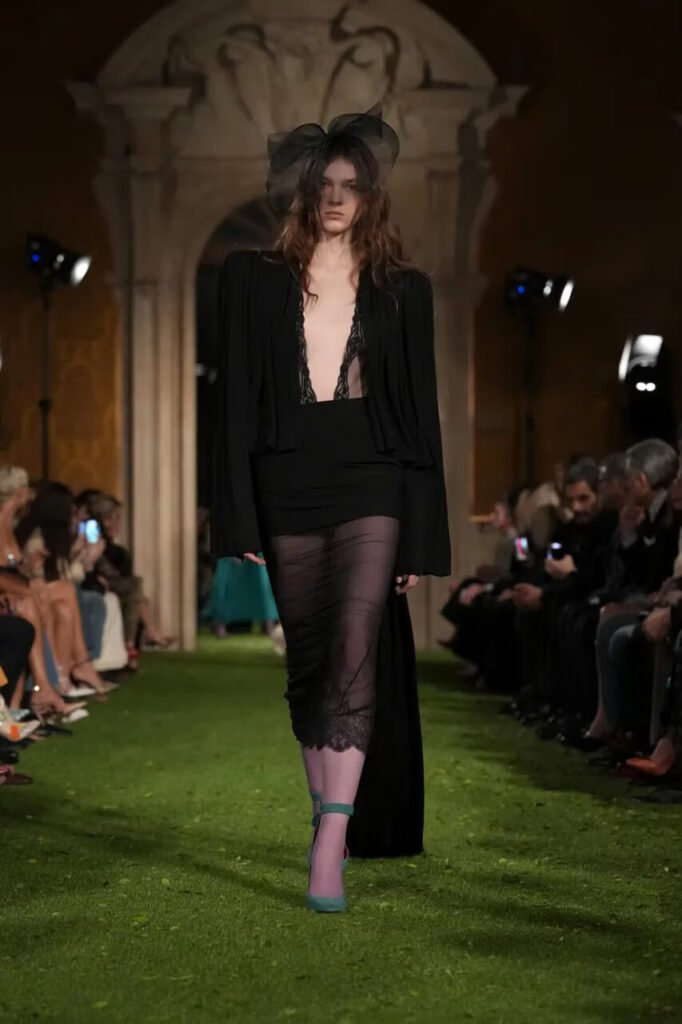
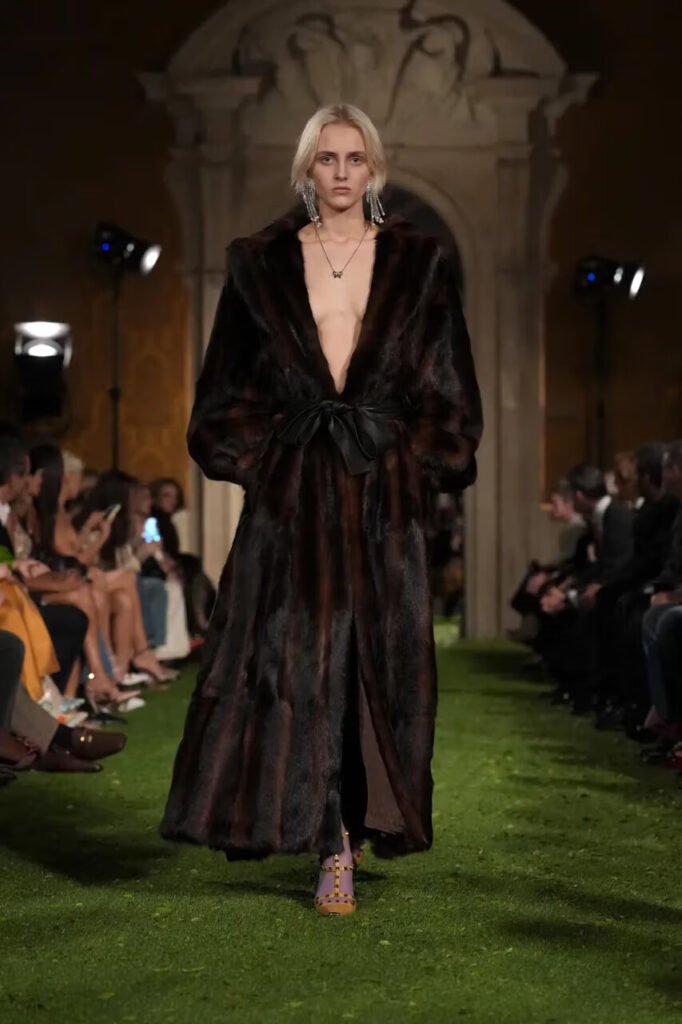
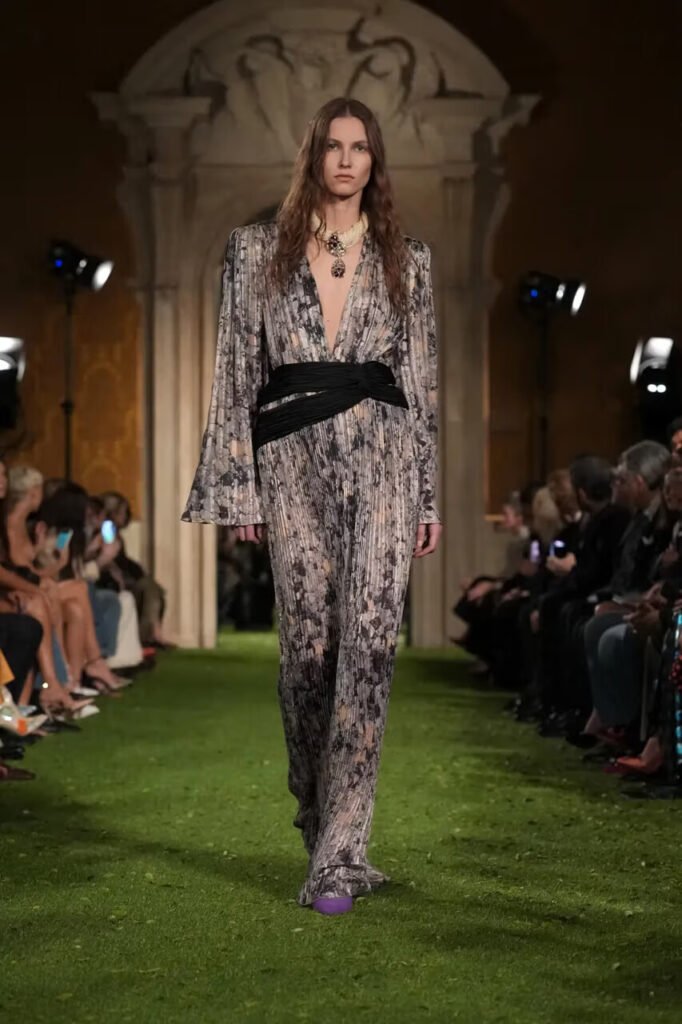
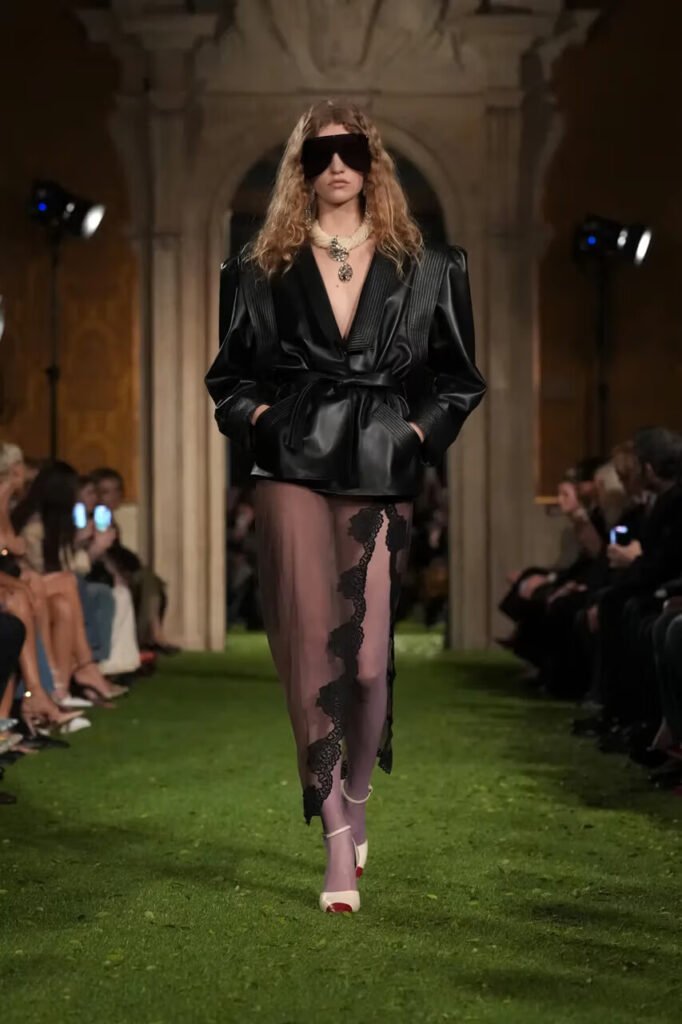
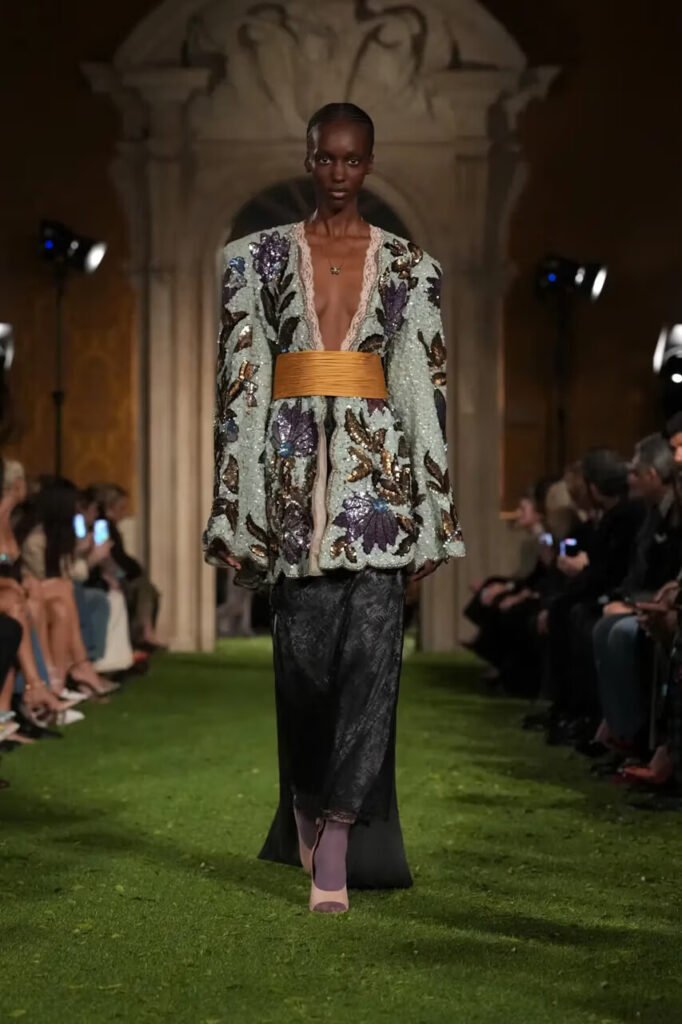
That Michele accompanied his runway presentation with a four-page philosophical essay referencing Friedrich Nietzsche, Walter Benjamin, and Georg Simmel is, in itself, a culturally significant act. Benjamin’s theory of historical time as something rupturing rather than flowing, Simmel’s analysis of fashion as a dialectic between conformity and transgression, and Nietzsche’s conception of becoming rather than being, are not casual intellectual accessories. They are load-bearing references. Together, they construct a framework in which grief and continuation are not opposites but co-authors of the same act. For a collection staged in the immediate aftermath of a founder’s passing, this framework carries unmistakable weight.
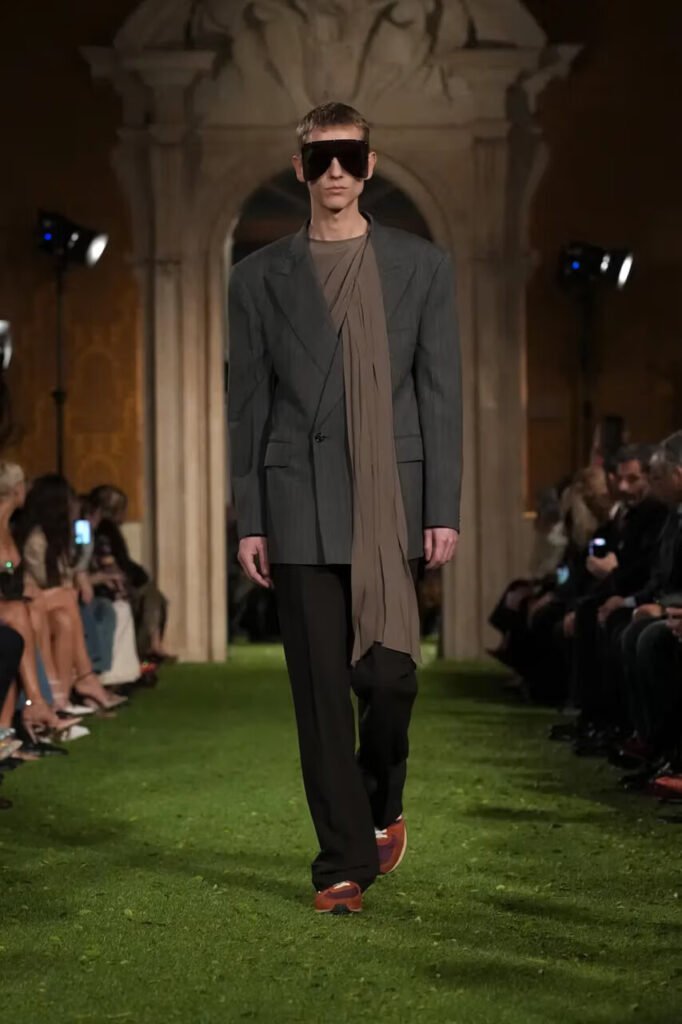
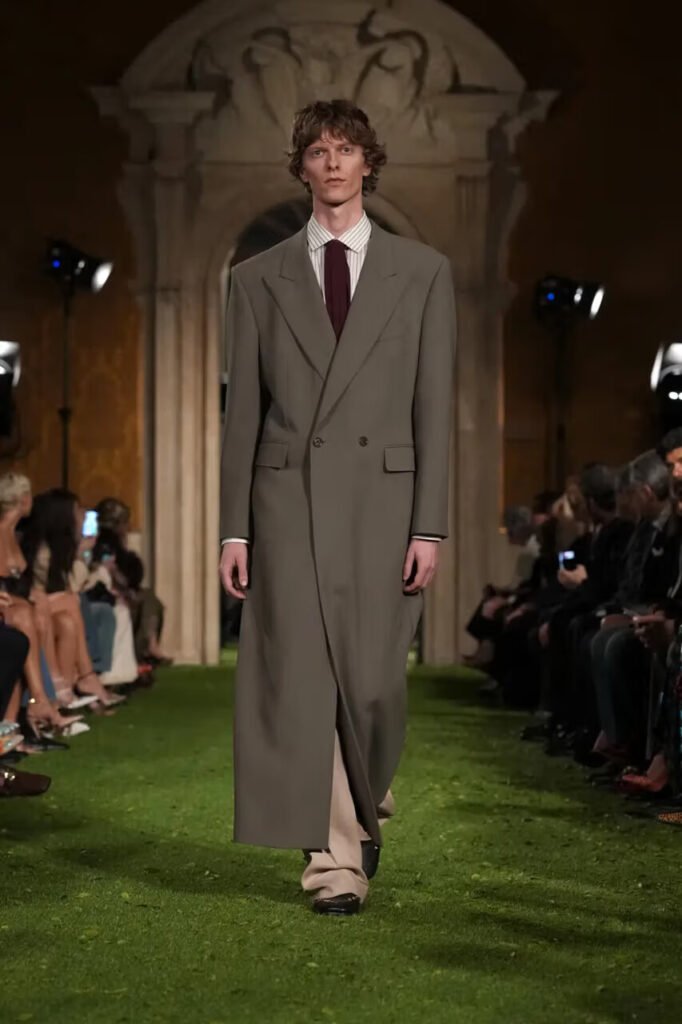
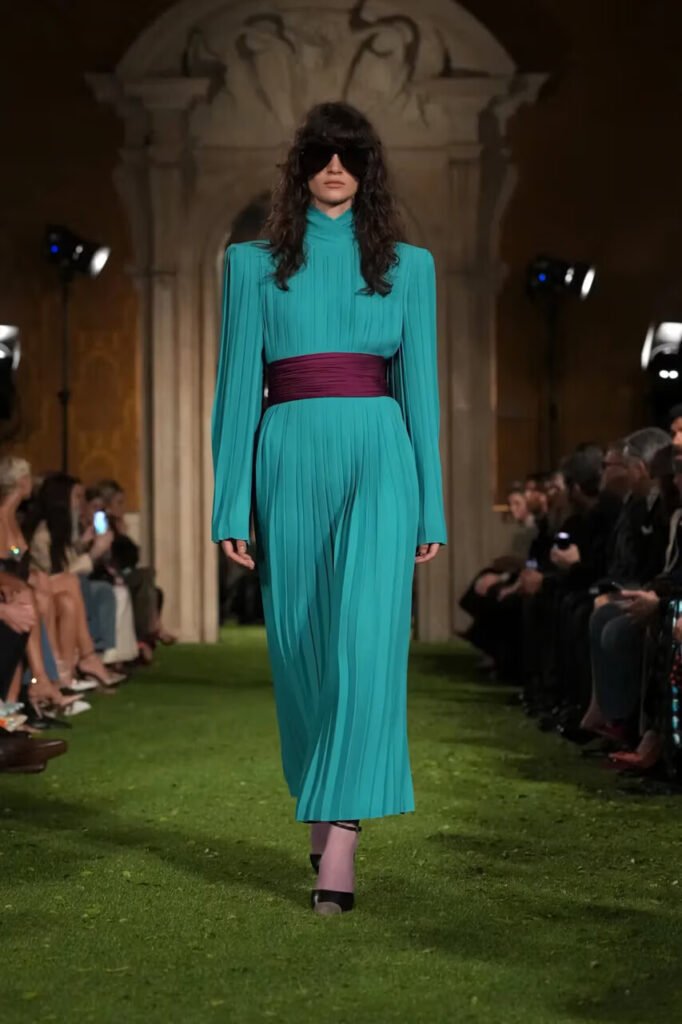
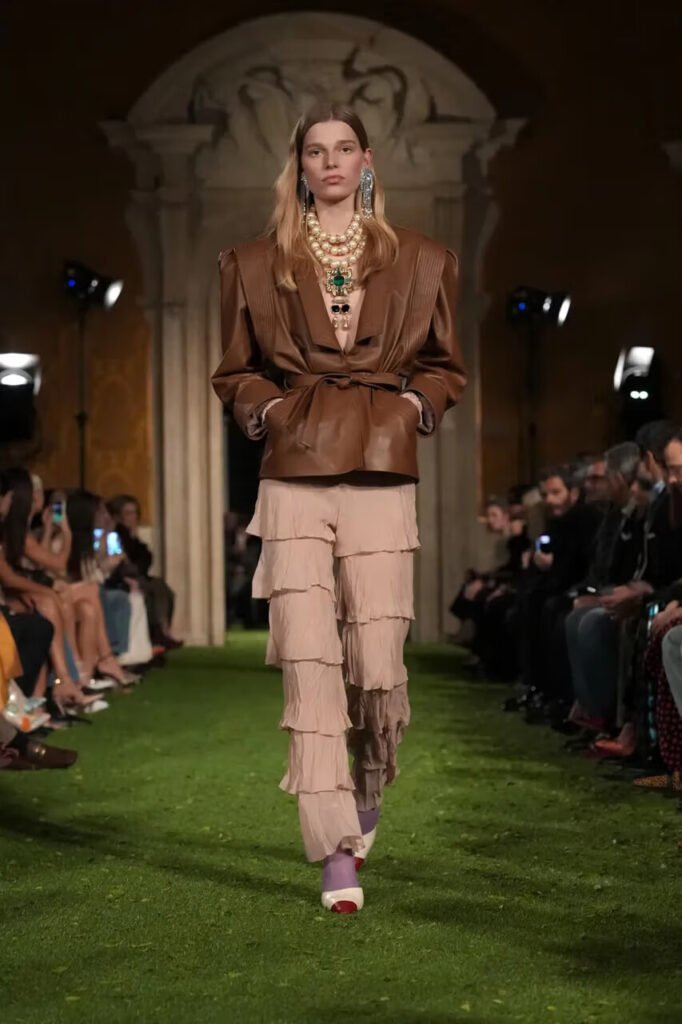
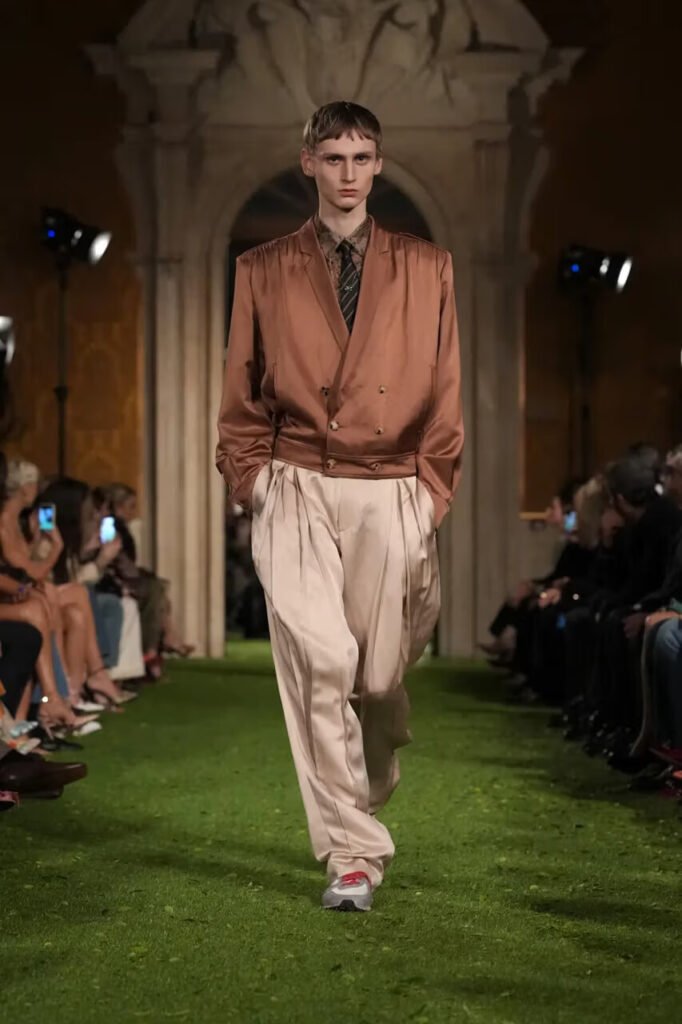
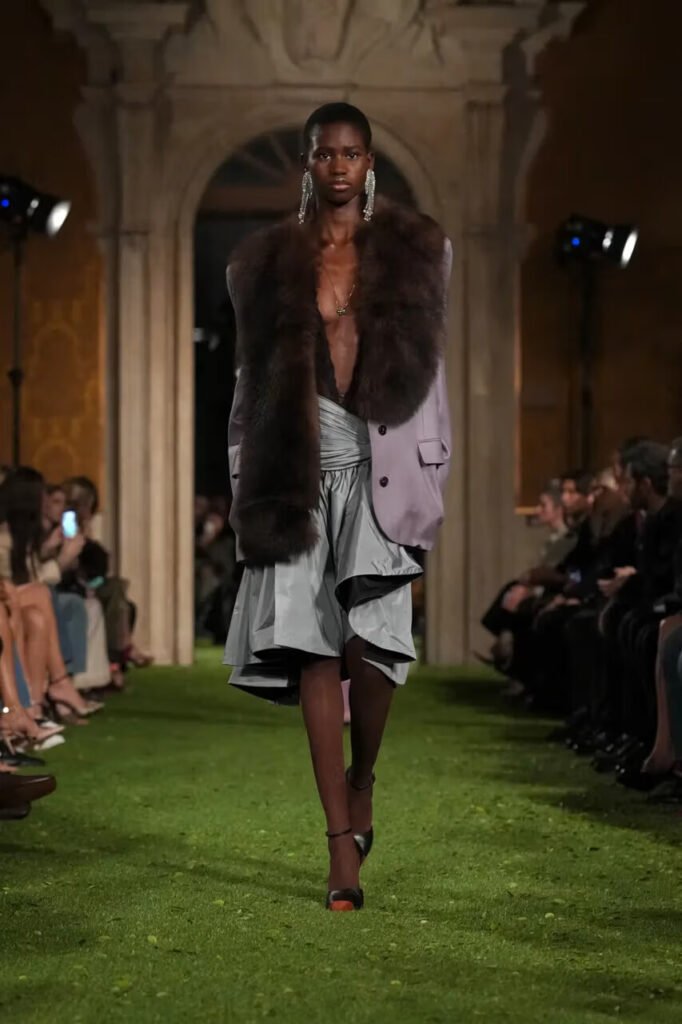
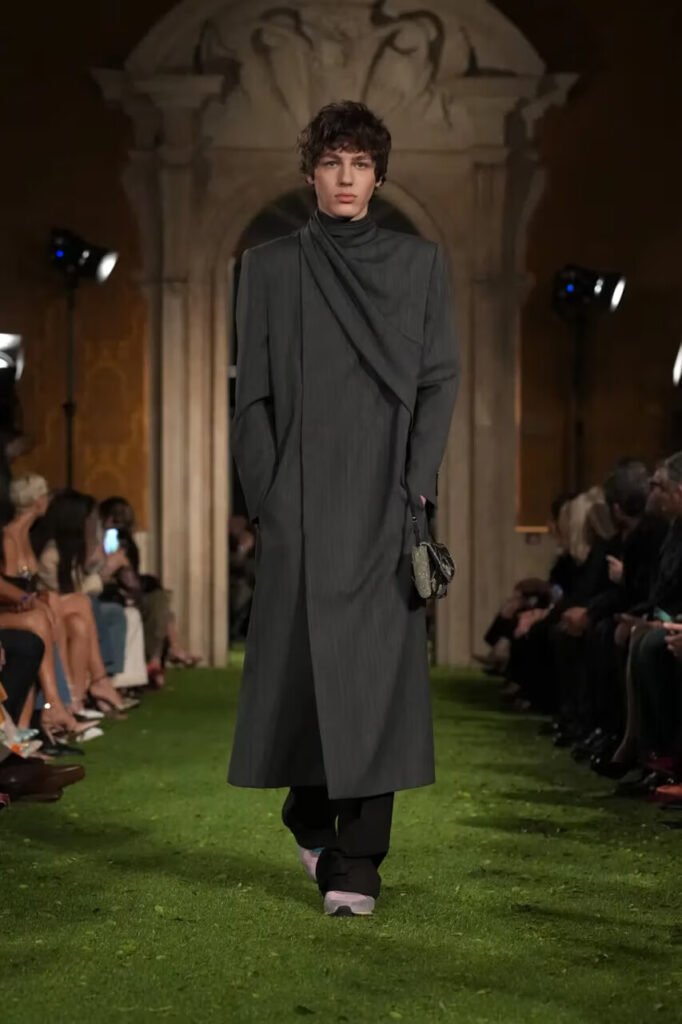
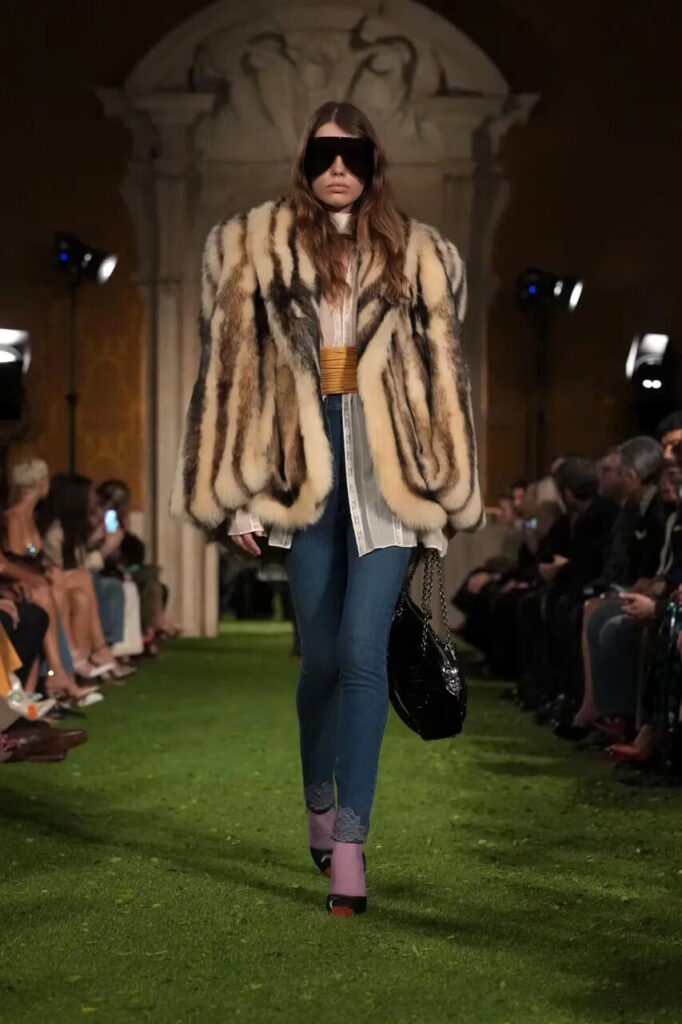
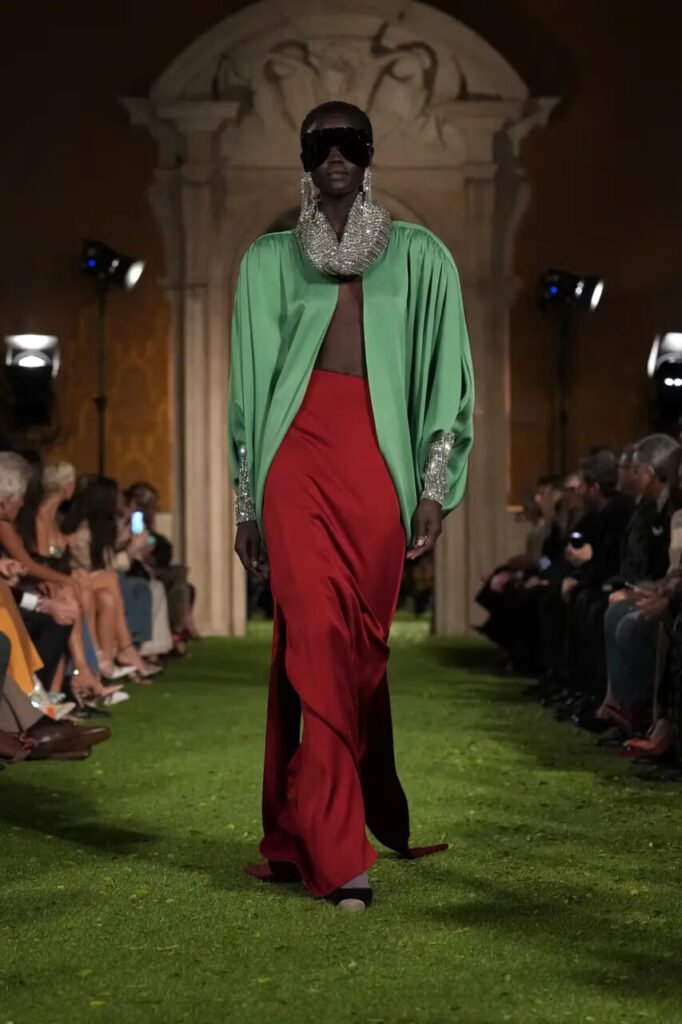
The collection’s design vocabulary reinforced this intellectual architecture with striking precision. The tension of opposites that defined the garments, code versus deviation, lightness versus gravity, conformity versus transgression, found material expression in architectural tailoring set against asymmetric pleating, in restrained silhouettes interrupted by artful drapery. These are not merely aesthetic contrasts. They are the visual grammar of mourning rendered productive: the structure of what was, pressing through the form of what is becoming.
The question of how a creative director navigates a founder’s death is rarely examined with the seriousness it deserves. The fashion industry tends to treat such moments as either branding opportunities or logistical hurdles. Michele’s approach resists both framings. His four-page essay, rather than deploying sentiment, deploys epistemology. It asks not what Valentino Garavani meant, but what meaning-making itself looks like inside a house that now exists after its originator. This is significant because it reframes the standard vocabulary of tribute entirely. Where other designers might have reached for archival red gowns or a ceremonial restatement of the house’s founding codes, Michele reached for philosophy. The intellectual rigor on display is, in this reading, a form of fidelity, fidelity not to the man’s aesthetic output, but to the seriousness with which Valentino Garavani always regarded the act of dressing.
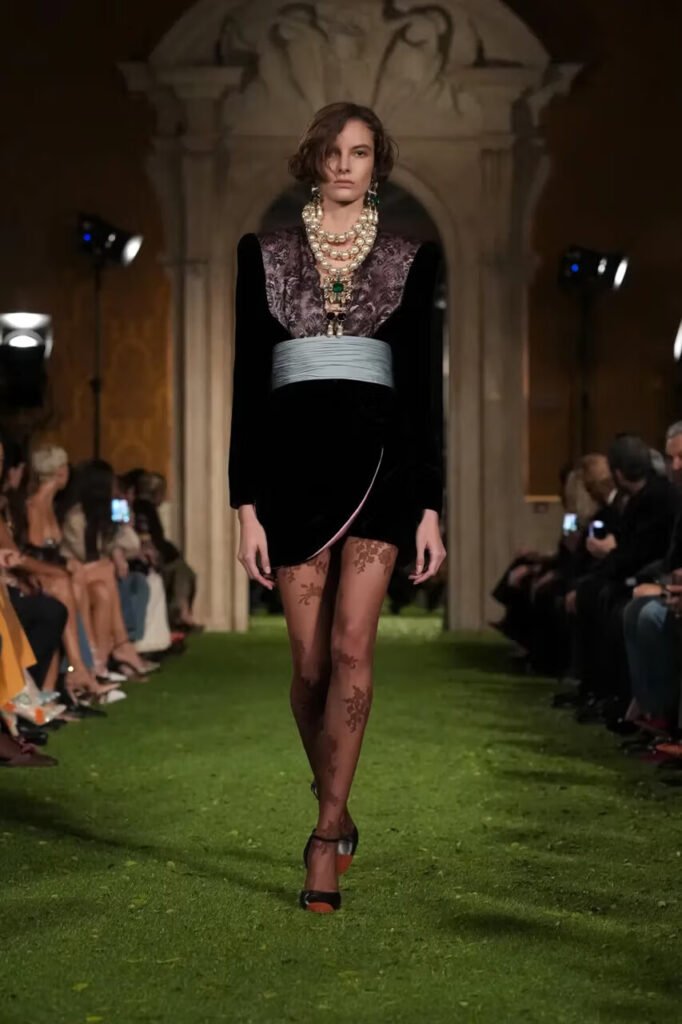
There is also a practical dimension to this moment that the intellectual framing should not be allowed to obscure. Alessandro Michele arrived at Valentino in 2024 following a high-profile departure from Gucci, a house where his maximalist, logo-saturated vision had produced a commercial and cultural phenomenon before losing momentum. His appointment at Valentino was understood immediately as a pivotal test: could a designer of such a distinctive and recognizable sensibility successfully migrate his creative identity into a different institutional body?
The FW26 collection, read in this context, is an answer of considerable sophistication. The restraint on display does not read as self-suppression. Rather, it reads as calibration. The philosophical scaffolding Michele has erected allows him to approach Valentino’s legacy not as a constraint but as a dialogue partner. This is significant because it sidesteps the two most obvious failure modes for a designer in his position: slavish imitation of the founder’s aesthetic, or aggressive iconoclasm that alienates the house’s core audience. Instead, Michele has located a third path, one rooted in intellectual respect rather than emotional fealty.
The timing of this collection amplifies everything. A first ready-to-wear show after a founder’s death is, by definition, a moment of institutional vulnerability. The house must demonstrate continuity while simultaneously justifying its present-tense existence. This is a creative and emotional burden that few outside the industry’s inner circle fully appreciate. The creative director in such a position is not merely designing clothes. He is making an argument about what the house is for now, about what it owes its past, and about where its authority is located going forward.
Michele’s use of Benjamin’s concept of the dialectical image, in which historical material erupts into the present rather than flowing toward it, provides a useful lens for understanding what the collection attempted. The garments did not quote Garavani. They did not echo his silhouettes or revive his palette. Instead, they operated as a kind of pressure from within, as if the history of the house were asserting itself through the fabric of the present collection without overwriting it. The asymmetric pleating and architectural tailoring read simultaneously as contemporary and as deeply structural, as if the clothes were built on a foundation they declined to display.
There is a final dimension to this collection that resists purely analytical treatment. Grief, even when sublimated into intellectual frameworks, leaves traces. The choice of Palazzo Barberini, a space that insists on the permanence of structures while the bodies within them are always transient, carries an elegiac undertone that the philosophical essay alone cannot fully account for. Michele’s invocation of history, hierarchy, and what he has described as “critical reactivation” suggests a designer working through something, rather than simply working on something.
The concept of critical reactivation is worth dwelling on. It implies that what is being restored is not the original object but the original force, the animating energy of a legacy rather than its literal forms. This is a meaningful distinction for a house in Valentino’s position. Garavani’s genius was not located in any single silhouette or color or motif. It resided in a relationship to beauty that was simultaneously opulent and precise, in a commitment to the idea that dressing well was itself a form of seriousness. If Michele’s FW26 collection is, at its core, an act of mourning, it is mourning of this particular kind: not for the loss of forms, but for the loss of the person who believed in them most completely.
The broader implications of this collection extend beyond the house of Valentino. Fashion is navigating an increasingly complex relationship between individual creative genius and institutional longevity. The deaths of founders, the departures of defining creative directors, and the accelerating pressure of commercial cycles have forced a reckoning with questions the industry has historically preferred to avoid: what is a house when its originator is gone? Who owns a legacy? And what does it mean to continue rather than merely replicate?
Michele’s FW26 collection does not answer these questions definitively. No single collection could. But it stages them with a seriousness and a formal intelligence that marks it as something more than a seasonal offering. In arriving at Palazzo Barberini with a philosophical essay and garments built on the tension between what endures and what must change, Michele has demonstrated that the most honest response to a founder’s absence is not tribute but continuation, rigorous, searching, and prepared to carry the full weight of what it inherits.
That is, in the end, what the watermark reveals when the light finally falls on it.