Inside Matthieu Blazy’s Quiet Campaign to Rewrite Luxury’s Loudest Rules
When was the last time a fashion show made you think about wearing the clothes rather than photographing them? In an industry that has spent the past decade competing for viral moments—see: Balenciaga’s destroyed sneakers, Coperni’s spray-on dress, Jacquemus’s wheat field spectacles—Matthieu Blazy’s first Métiers d’art collection for Chanel posed a quietly revolutionary question: What if luxury fashion returned to its original purpose of making exceptional clothes for real life?
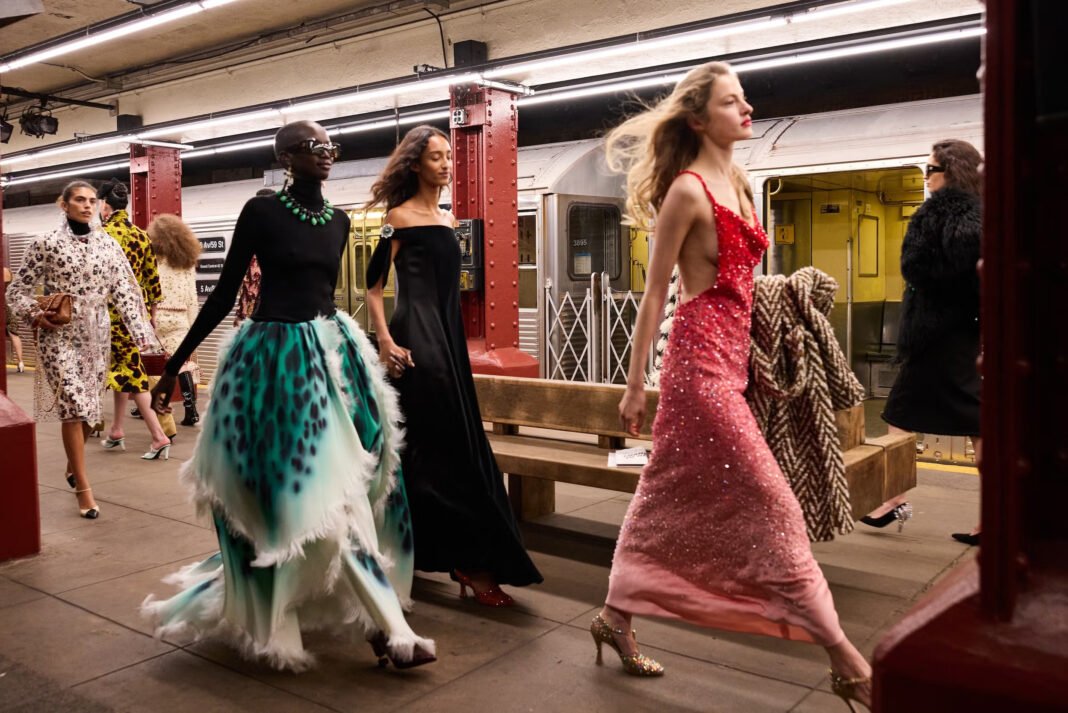
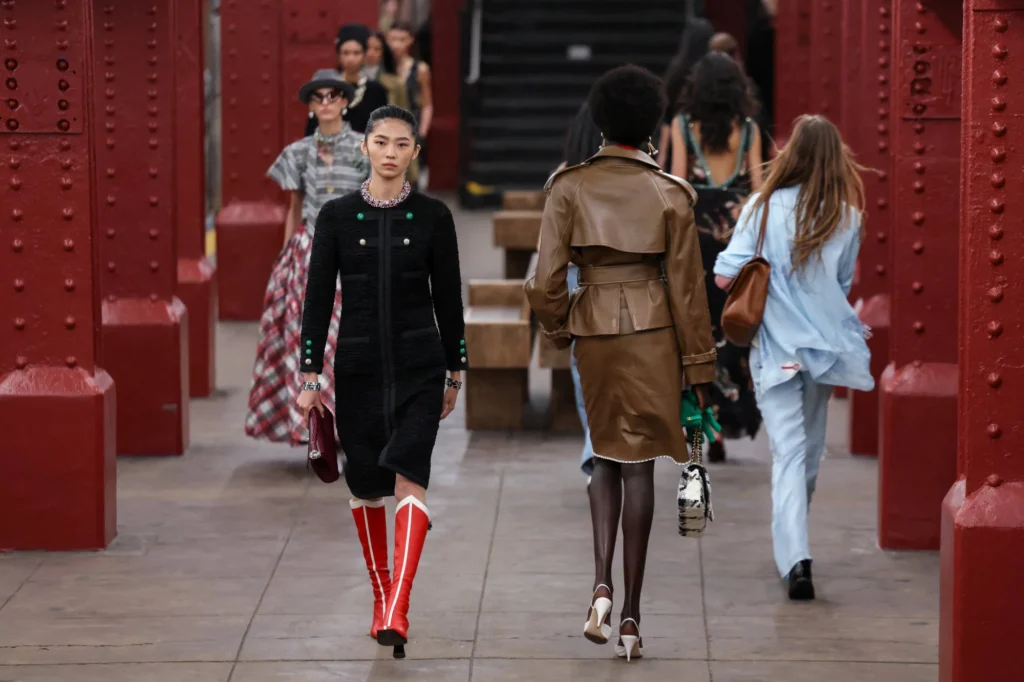
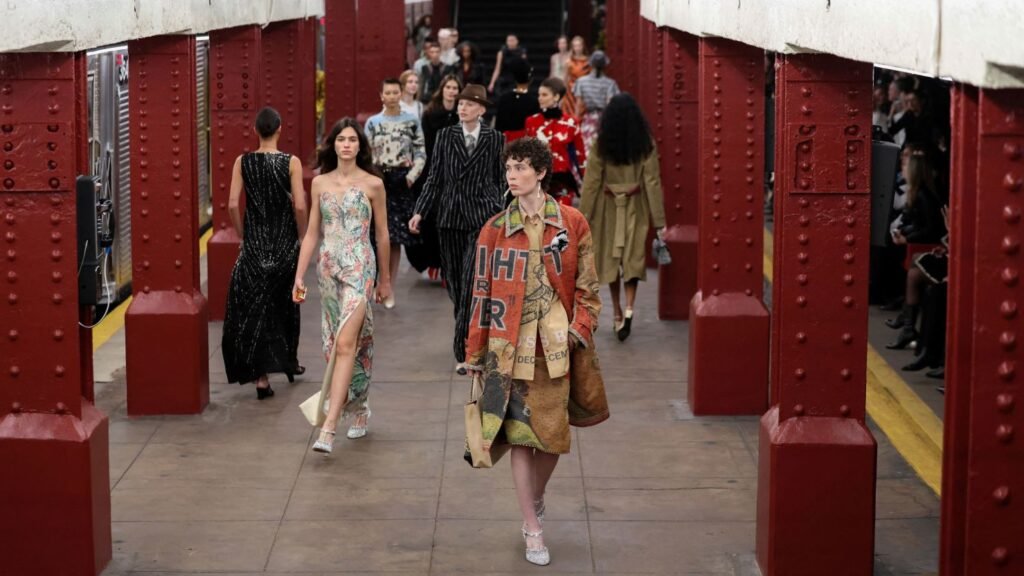
On a decommissioned subway platform beneath Manhattan last week, Blazy sent models down the runway in pinstripe suits with coats slung over forearms, sweaters tied around waists, and yes, quarter-zips paired with light-wash jeans. The setting screamed spectacle, but the clothes whispered something far more disruptive: restraint. In an era when creative directors are expected to generate endless content and quarterly viral moments, Blazy is making a $6 billion bet that the future of Chanel—and perhaps luxury itself—lies not in louder logos or more outrageous shows, but in the radical act of designing clothes that people might actually live in.
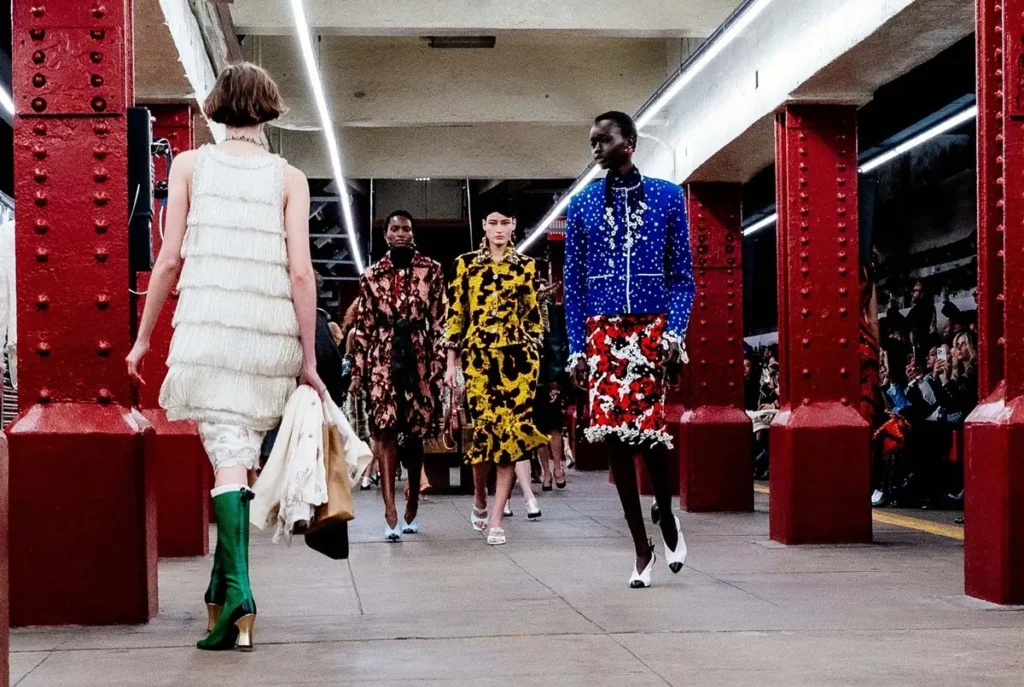
The December 2024 presentation marked Blazy’s second major statement for the house, following his October runway debut, and the contrast with fashion’s prevailing maximalism could not be starker. Where competitors chase shock value and social media impressions, Blazy doubled down on the philosophy that made his tenure at Bottega Veneta a critical darling: subtlety as the ultimate luxury. The collection featured androgynous pinstripe suits, animal prints rendered in muted giraffe-like patterns, and urban-influenced pieces including an “I ♥ New York” sequined T-shirt that managed to feel more knowing homage than tourist kitsch. This is fashion that requires a second look rather than demanding attention at first glance.
This approach represents a direct challenge to the business model that has sustained luxury conglomerates through the Instagram age. For the past decade, the industry’s dominant strategy has been clear: hire visionary provocateurs, empower them to generate buzz, and convert viral moments into handbag sales. The formula worked spectacularly well when newness itself was the product, when the shock of Demna’s Balenciaga or the irreverence of Alessandro Michele’s Gucci could drive billions in accessories revenue. But as digital platforms fragment and consumer attention scatters across countless creators and micro-trends, the returns on spectacle have begun to diminish.
Blazy’s counter-proposition is that exceptional design—not theatrical presentation—should be luxury’s differentiator. This is significant because it reframes the creative director’s role from content generator to craftsman, from ringmaster to tailor. The financial implications are profound: if Blazy succeeds at Chanel, it validates an entirely different path forward for heritage houses, one that privileges longevity over novelty and cumulative brand value over quarterly social media metrics. If he fails, it suggests that luxury has permanently crossed a threshold where clothes alone, no matter how beautifully made, cannot compete with the dopamine rush of viral marketing.
The setting of Blazy’s Métiers d’art show adds another layer to this strategy. By presenting in an abandoned New York City subway station, he acknowledged the need for spectacle while simultaneously undermining it. The location honored Gabrielle Chanel’s 1931 visit to the city and Karl Lagerfeld’s final Métiers d’art show at the Metropolitan Museum of Art in 2018, positioning Blazy within the house’s historical relationship with New York. Yet by choosing a gritty, democratic space over a gilded museum, he signaled that this Chanel would engage with urban reality rather than exist above it.
This is where Blazy’s biography becomes essential context. His three-year tenure at Calvin Klein under Raf Simons gave him an intimate understanding of New York’s aesthetic—not the aspirational Manhattan of Breakfast at Tiffany’s, but the functional city of commuters and professionals who need clothes that perform across multiple contexts. Those years shaped his design language, teaching him to balance European technique with American pragmatism. The result is luxury that doesn’t announce itself, that reveals its quality gradually through construction details and fabric choices rather than through logos or obvious embellishment.
The celebrity attendance at the show—A$AP Rocky with Margaret Qualley, Tilda Swinton, Ayo Edebiri, Teyana Taylor, and Jessie Buckley, all seated on subway platform benches—reinforced this message. These are not influencers hired to generate content, but cultural figures known for distinctive personal style rather than brand allegiance. Their presence suggested that Blazy’s Chanel aims to attract individuals who wear fashion rather than advertise it, people for whom clothes are tools of self-expression rather than social signaling.
Industry observers note that this strategy carries considerable risk for a house of Chanel’s stature and commercial scale. The brand generates approximately $6 billion in annual revenue, much of it from accessories and beauty products sold to consumers who may never purchase ready-to-wear but want to participate in the Chanel universe. Those customers have traditionally been drawn by the house’s unmistakable codes: the interlocking Cs, the quilted leather, the pearls and chains and camellias that announce “Chanel” at a glance. Blazy’s minimalism risks alienating this core audience by making the brand less immediately recognizable, less efficient as a status symbol.
Yet this may be precisely the calculation. As luxury markets mature and younger consumers demonstrate greater interest in quiet luxury and stealth wealth aesthetics, the houses that can credibly offer sophisticated understatement may capture disproportionate value. The success of Bottega Veneta under Blazy’s creative direction—where instantly recognizable logos gave way to woven leather and architectural shapes—suggested that a substantial market exists for luxury that doesn’t broadcast itself. Chanel’s ownership structure, as a privately held company controlled by the Wertheimer family, gives Blazy the latitude to pursue this long-term vision without the quarterly earnings pressure faced by conglomerate-owned brands.
The broader question is whether Blazy’s doctrine represents a genuine philosophical shift or merely a pendulum swing in fashion’s eternal cycle of maximalism and minimalism. The difference lies in execution: Blazy is not simply making quiet clothes, he is making quiet clothes within luxury’s most artisan-intensive format. The Métiers d’art collections exist specifically to showcase the work of specialized craft houses—embroiderers, feather workers, button makers, pleaters—that Chanel has acquired or partners with to preserve endangered techniques. Reconciling this ornate tradition with Blazy’s minimalist instincts will test whether his approach can scale across Chanel’s full ecosystem or remains limited to ready-to-wear that only a fraction of customers will purchase.
What makes this campaign particularly compelling is its timing. As artificial intelligence accelerates the commodification of visual content and fast fashion can now replicate runway looks within weeks, luxury’s claim to exclusivity increasingly rests on the one thing algorithms cannot replicate: human craftsmanship applied to exceptional materials by designers who understand fit, proportion, and movement. Blazy’s emphasis on wearability and construction positions Chanel to capitalize on this shift, assuming consumers can be persuaded to value these qualities over the instant gratification of logo recognition.
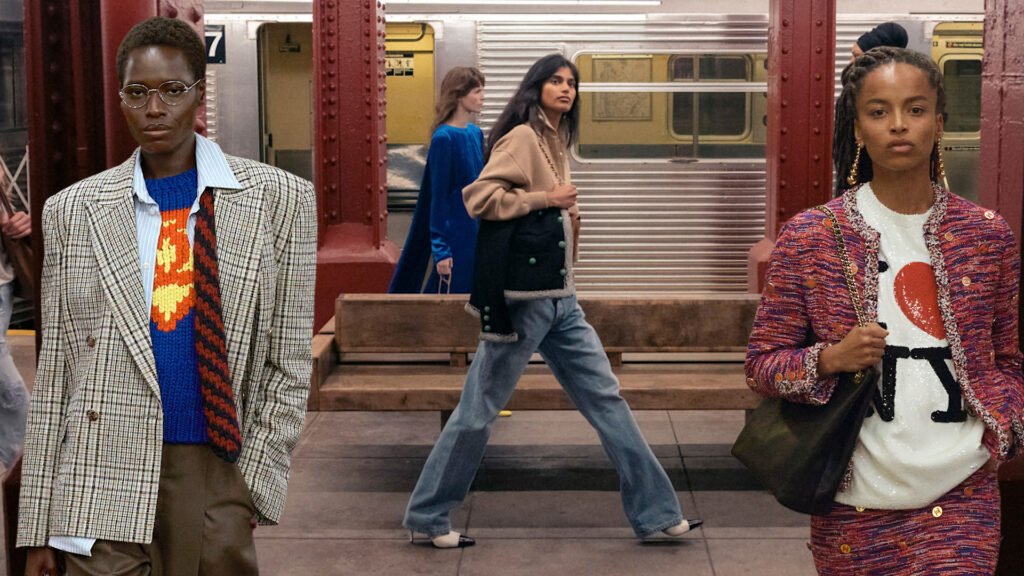
The subway station presentation, then, was not just a show but a thesis statement: luxury fashion can acknowledge the realities of urban life, the pragmatic needs of sophisticated dressing, and the cultural moment’s skepticism toward overt displays of wealth, while still maintaining the technical excellence and aspirational appeal that justify premium pricing. Whether this thesis proves commercially viable will determine not only Blazy’s tenure at Chanel but potentially the template for how heritage houses navigate an increasingly fragmented luxury landscape. In an industry built on constantly declaring what comes next, Blazy’s most radical proposition may be that the future looks like clothes you would actually want to wear tomorrow, and the day after that, and the day after that—a revolution measured not in viral moments but in garments that endure