
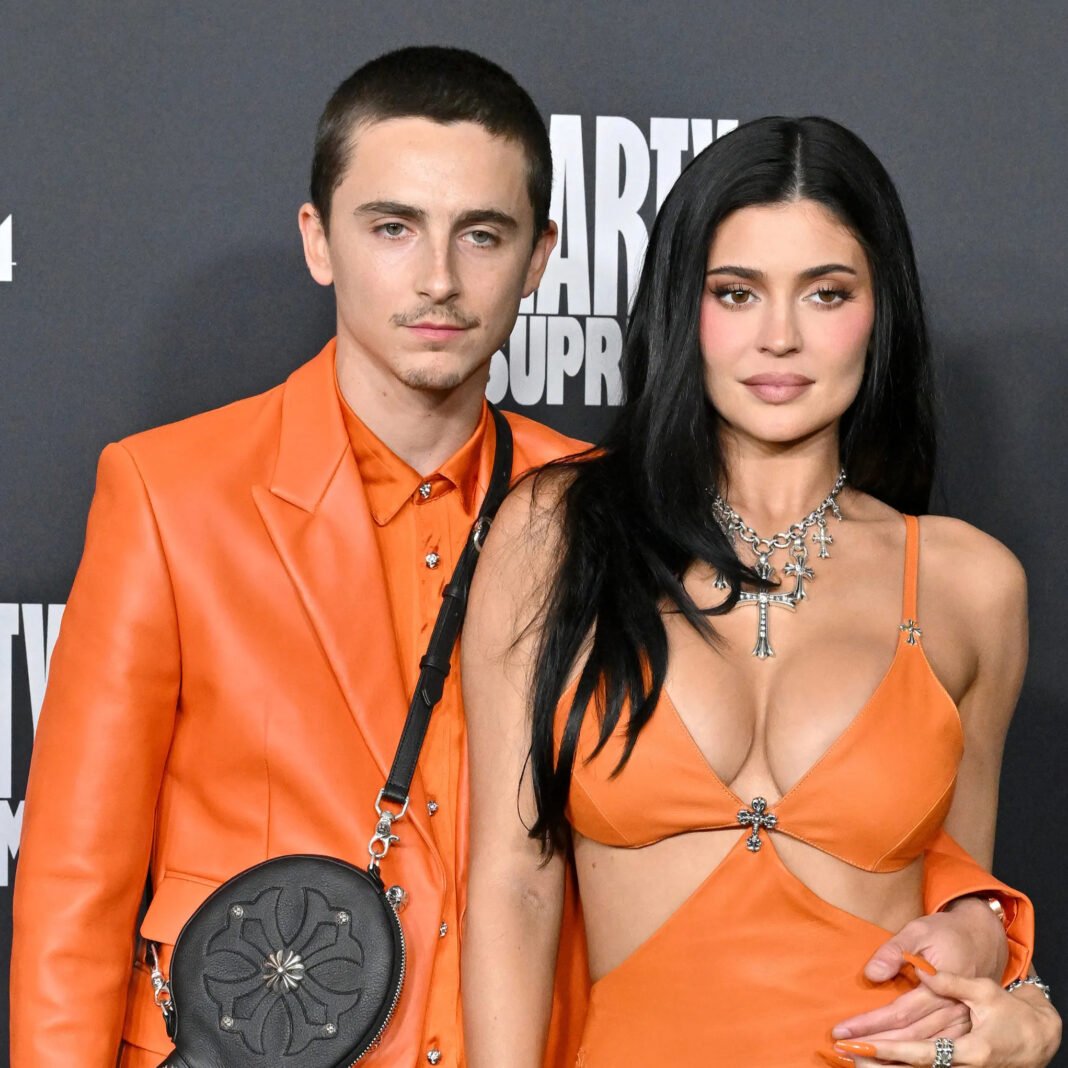
When Timothée Chalamet’s black leather ping-pong paddle case—a Chrome Hearts original—hit the red carpet Monday night, it carried more than just a prop from his upcoming film. It carried the weight of a Hollywood publicity evolution decades in the making. As Kylie Jenner stood beside him in matching custom orange, her 400 million social media followers got a front-row seat to what industry insiders are calling the new math of film marketing: the celebrity couple as unpaid promotional juggernaut. Gone are the days when romantic partners were relegated to the shadows at premieres, emerging only for post-party photos. Today, they’re strategic assets, and the Marty Supreme premiere crystallized this shift. With traditional advertising facing diminishing returns and streaming platforms fracturing theatrical audiences, studios are quietly embracing a new reality—sometimes the most effective marketing campaign doesn’t come from a Super Bowl ad but from the person holding your star’s hand on the red carpet.
The December 8 premiere of Marty Supreme at Los Angeles represented more than another stop on Chalamet’s press tour. It marked a calculated expansion of the couple’s public presence, transitioning Jenner from her previous role as awards season companion to active participant in Chalamet’s film promotion cycle. This evolution carries significant implications for how Hollywood conceives of celebrity relationships as marketing infrastructure.
The timeline reveals a methodical escalation. Since spring 2023, the couple maintained relative privacy, with Jenner’s presence at the 70th David Di Donatello Awards in Rome this past May serving as their first official red carpet debut. Throughout Chalamet’s awards campaign for A Complete Unknown, Jenner attended the Golden Globes, BAFTAs, and Oscars—but notably, these were industry events where her presence could be framed as support rather than promotion. The Marty Supreme premiere represents a category shift: a project-specific appearance directly tied to box office performance rather than awards recognition.
This move signals a recognition by distributors that celebrity relationships represent untapped promotional equity. The financial implications are substantial. Traditional film marketing budgets have ballooned to match production costs, with studios routinely spending $100 million or more to promote major releases. Yet social media analytics reveal that organic celebrity content consistently outperforms paid advertising in engagement metrics and conversion rates. When Jenner posts to her combined Instagram and TikTok following—a reach exceeding the population of the United States—she generates what marketing executives term “earned media value,” publicity that would cost millions to replicate through conventional channels.

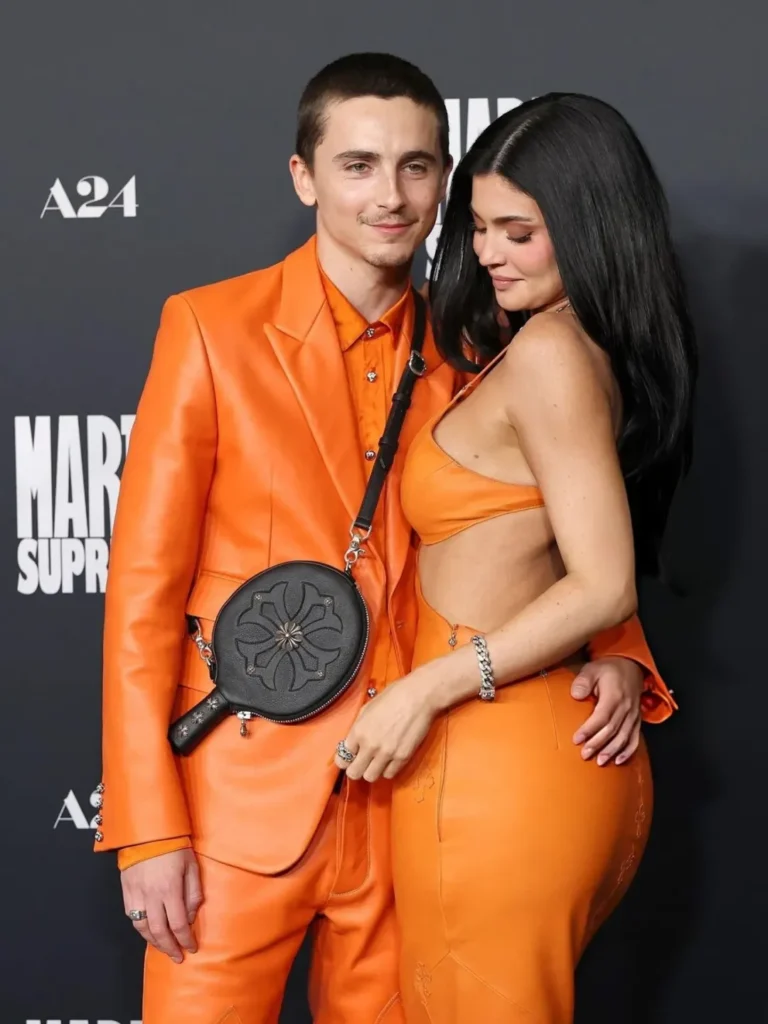

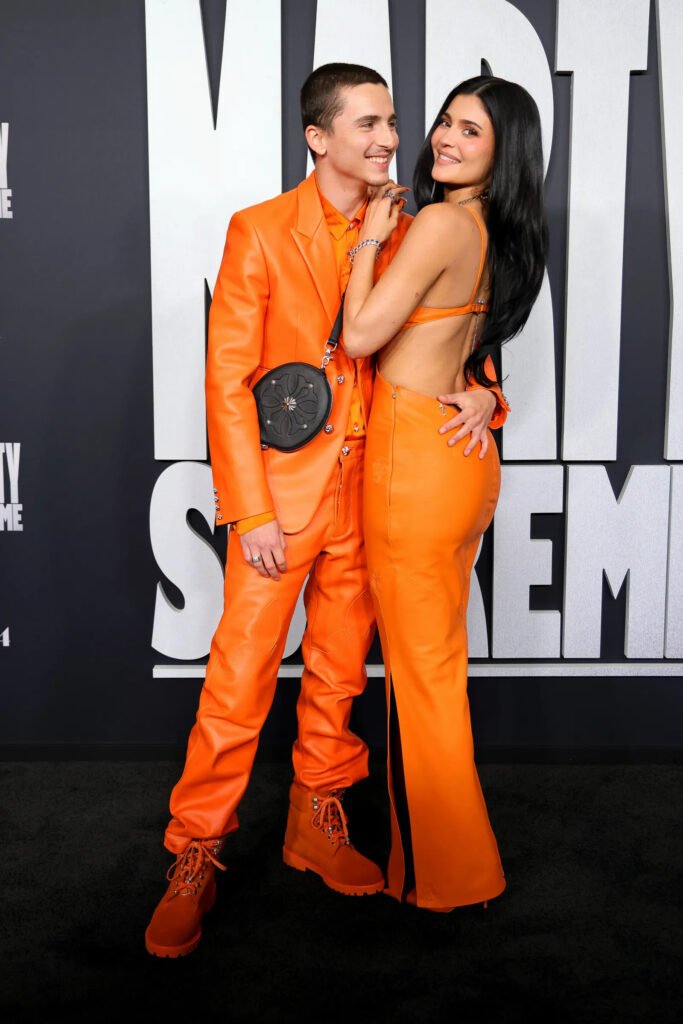
The Chrome Hearts coordination amplifies this effect. Both wore custom orange ensembles designed specifically for the occasion: Chalamet in a bright orange leather suit with silk shirt and boots, Jenner in a floor-length gown featuring strategic cutouts and cross embellishments. This level of aesthetic synchronization transforms the couple into a unified visual statement, creating the kind of shareable moments that drive social media algorithms. Fashion coverage extends the news cycle beyond entertainment outlets into style publications, lifestyle blogs, and international media—each additional mention multiplying the film’s visibility without additional marketing expenditure.
The strategic genius lies in the demographic intersection. Marty Supreme, set for December 25, 2025 theatrical release, tells the story of professional ping-pong—not traditional blockbuster territory. The film requires audiences beyond Chalamet’s established base of cinephiles and art house devotees. Jenner’s following skews younger, more diverse, and more digitally native than typical prestige film audiences. Her presence at the premiere creates a bridge between these demographic segments, making the film culturally relevant to populations that might otherwise scroll past a period sports drama.
Industry experts suggest this represents the maturation of a trend that began with strategic Instagram posts and carefully timed paparazzi photographs. What’s different now is the institutional acceptance. Where studios once treated celebrity relationships as potential distractions—complications requiring damage control and carefully worded “no comment” statements—they now view them as assets to be strategically deployed. The shift reflects changing media consumption patterns. Younger audiences increasingly discover films through social media rather than traditional advertising, and algorithmic feeds prioritize content involving recognizable personalities over corporate promotional material.
This is significant because it fundamentally alters the calculus of casting and publicity strategy. Studios must now consider not just an actor’s box office history and critical credibility, but their romantic partner’s social media reach and brand alignment. A-list actors dating high-profile influencers or celebrities with substantial digital followings bring built-in promotional infrastructure that extends far beyond traditional press junkets. The relationship itself becomes part of the film’s marketing architecture.
The Marty Supreme premiere also reveals how power couples can authenticate projects that might otherwise struggle for mainstream attention. Chalamet brings artistic credibility; Jenner brings mass appeal and luxury brand associations. Together, they create a cultural moment that transcends the film itself. The premiere becomes an event worth covering regardless of journalistic interest in ping-pong narratives or sports biopics. Media outlets run stories not because they’re invested in the film’s commercial prospects, but because the couple’s appearance generates reader engagement.
The Chrome Hearts element deserves particular attention. The luxury brand’s involvement—creating matching custom pieces rather than simply lending existing designs—indicates how fashion houses now view celebrity couples as premium advertising real estate. The coordinated looks generate guaranteed press coverage across entertainment, fashion, and business publications. For Chrome Hearts, traditionally associated with rock-and-roll aesthetics and subcultural rebellion, the partnership with this particular couple offers access to both Gen-Z influence and arthouse sophistication—a demographic fusion difficult to achieve through conventional celebrity endorsements.
Looking forward, this premiere may represent an inflection point. If Marty Supreme performs beyond expectations at the box office, studios will inevitably analyze the correlation between Jenner’s promotional presence and ticket sales. Success could institutionalize celebrity partners as expected components of major film campaigns, fundamentally reshaping Hollywood publicity machinery. The implications extend beyond marketing budgets into questions of creative independence and public privacy. When romantic relationships become promotional necessities, the line between personal life and professional obligation blurs in ways that complicate both artistic integrity and genuine human connection.
The December 8 appearance ultimately demonstrates how contemporary film marketing increasingly relies on cultural moments rather than traditional advertising bombardment. In an era of streaming abundance and theatrical uncertainty, studios are searching for competitive advantages that cut through digital noise. The answer, it seems, stands beside their stars in custom orange Chrome Hearts—a partner whose social media reach and cultural capital represent millions in earned media value and access to audiences traditional marketing struggles to reach. The celebrity couple has evolved from tabloid curiosity to strategic necessity, and the Marty Supreme premiere marks Hollywood’s formal acknowledgment of this transformation.