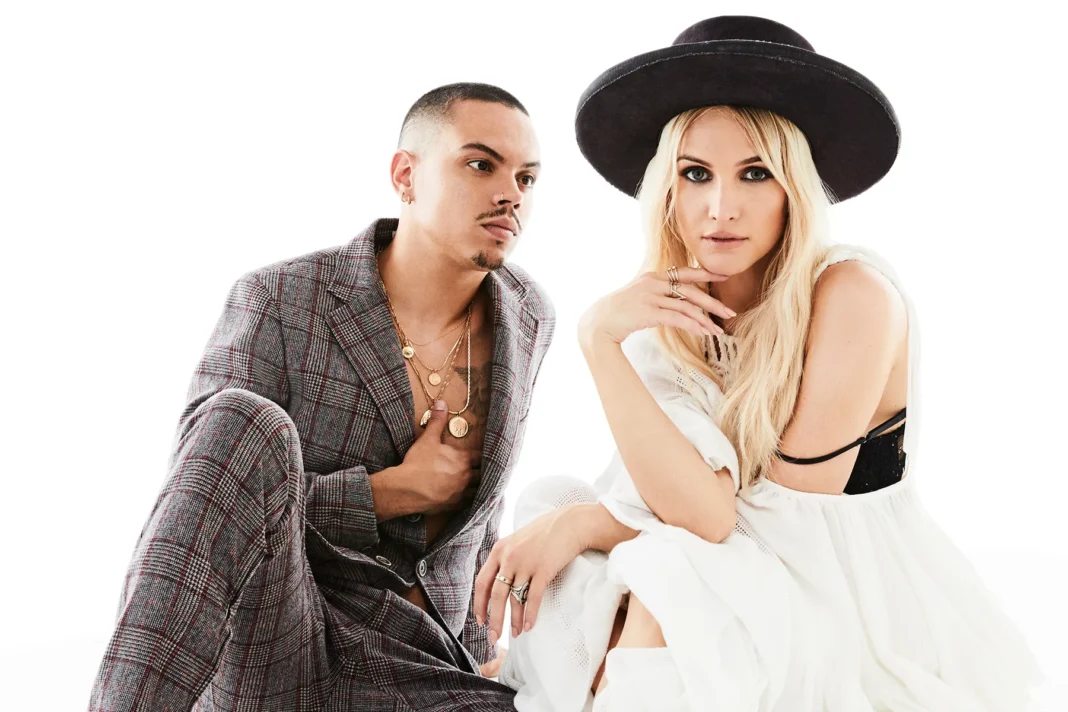
In 2018, when Ashlee Simpson and Evan Ross launched a unisex clothing line named after their daughter, released a joint EP, and premiered a reality series documenting their marriage—all within the same year—they weren’t just busy. They were executing a calculated business strategy that’s becoming the blueprint for celebrity survival in the 2020s.
While previous generations of famous couples carefully maintained separate professional identities, today’s celebrity pairs are increasingly functioning as joint ventures, transforming their relationships into multi-platform revenue generators. The Simpson-Ross model raises a provocative question: In an era where individual celebrity influence is fragmenting across countless social media channels and streaming platforms, is coupledom the new currency of fame? As traditional entertainment pathways contract and brand partnerships demand authentic narratives, celebrity couples are discovering that two moderately famous people can create more economic value together than apart—but at what cost to personal privacy and relationship authenticity?
The love of my life said YES!!!!!! pic.twitter.com/8CI6ovBAA1
— Evan Ross (@realevanross) January 14, 2014
The trajectory of Simpson and Ross’s partnership reveals a deliberate evolution from private relationship to public brand. After meeting at a friend’s birthday party in July 2013, the couple moved with striking velocity: engagement by January 2014, marriage by August 2014. This rapid 13-month timeline from first meeting to wedding established the foundation for what would become a comprehensive business apparatus. By the time they launched their multi-platform offensive in 2018—four years into their marriage—they had already established credibility as a stable unit, welcomed their first child Jagger Snow in 2015, and successfully integrated Simpson’s son Bronx from her previous marriage to Pete Wentz into their blended family narrative.
The timing of their brand expansion was strategic. By 2018, both Simpson and Ross occupied what industry insiders might characterize as the “middle tier” of celebrity—recognizable names with legacy connections (Ross as the son of Diana Ross, Simpson as the sister of Jessica Simpson and a former pop star in her own right), but without the sustained solo spotlight that would give them significant individual bargaining power. This positioning made them ideal candidates for the coupled-brand model. Rather than competing separately for diminishing solo opportunities, they could combine their residual fame and family connections into a larger, more marketable entity.
The financial implications are substantial. The ASHLEE + EVAN music project, while not achieving mainstream chart success, provided multiple revenue streams: the EP itself, potential touring income, and most significantly, content for their E! reality series. The reality show, in turn, served as a promotional vehicle for both their music and their clothing line with Zadig & Voltaire. This circular ecosystem—where each venture promotes and derives value from the others—represents sophisticated brand architecture that would be difficult for either partner to achieve independently.
The clothing line partnership with Zadig & Voltaire demonstrates another crucial element of the celebrity-couple business model: the authenticity premium. By naming the collection after their daughter Jagger, Simpson and Ross weren’t merely capitalizing on their child’s identity—they were offering consumers a narrative of genuine family investment. In an influencer economy where audiences are increasingly skeptical of inauthentic endorsements, the couple’s willingness to embed their actual family life into their commercial ventures creates perceived authenticity that single celebrities must manufacture through other means.

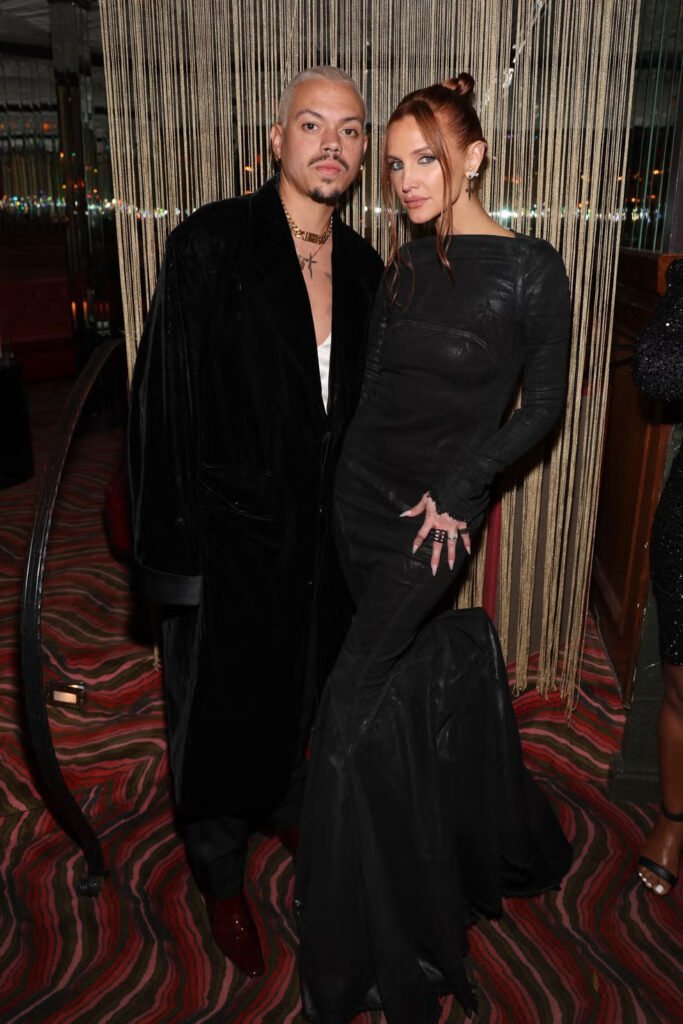
This move signals a broader shift in how celebrity capital functions in the contemporary media landscape. Previous generations of famous couples—from Paul Newman and Joanne Woodward to Brad Pitt and Angelina Jolie—maintained distinct professional identities even as their relationships generated public fascination. The coupling was a personal choice that happened to create publicity value, not a deliberate business structure. Simpson and Ross, by contrast, have engineered their coupledom as the central organizing principle of their professional lives. Their relationship isn’t adjacent to their careers—it is their career.
The model carries inherent risks. By intertwining their professional and personal identities so completely, Simpson and Ross have created a business that cannot survive relationship failure. Traditional celebrity divorces allow both parties to maintain separate careers; a Simpson-Ross separation would effectively dissolve their primary revenue-generating entity. This creates unusual economic pressure to maintain not just the relationship, but the public performance of relationship success. Every anniversary post, every collaborative project announcement, must be evaluated both as genuine expression and as brand maintenance.
Yet the longevity of their partnership—they celebrated their 10-year wedding anniversary in August 2024—suggests the model can work under certain conditions. The expansion of their family to include a second biological child, Ziggy Blue, born in October 2020, demonstrates continued investment in both the personal relationship and its brand implications. A growing family provides fresh content, renewed authenticity narratives, and extended commercial opportunities as children age and can participate in family brand activities.
The Simpson-Ross approach also reveals how celebrity couples are adapting to the fragmented attention economy. Rather than pursuing viral individual moments, they’ve created a sustained narrative ecosystem where their combined presence generates steady, if modest, engagement across multiple platforms. The couple isn’t competing for number-one singles or blockbuster film roles; they’re cultivating a devoted mid-level audience that follows their family journey across reality television, social media, music releases, and fashion collaborations. This strategy may generate less spectacular peaks than traditional celebrity careers, but it offers more stable, diversified income streams.
The broader implications extend beyond Simpson and Ross. As individual celebrity influence continues to fragment—with hundreds of influencers competing for attention spans shortened by algorithmic feeds and infinite content options—the celebrity couple model offers structural advantages. Two names double search engine optimization. Two fan bases create larger combined audiences. Two faces provide more versatile content possibilities. The mathematics are compelling, particularly for celebrities whose individual star power has plateaued.
However, this evolution raises fundamental questions about the nature of celebrity itself. When relationships become primarily commercial entities, when intimate moments are captured for content, when family expansion serves brand strategy—what remains genuinely private? Simpson and Ross have chosen visibility as their survival strategy, but that choice may ultimately limit the very authenticity that makes coupled brands valuable in the first place.
As the entertainment industry continues to contract traditional pathways to fame and income, the celebrity couple model that Simpson and Ross have refined will likely proliferate. For moderately famous individuals, coupledom offers a viable alternative to career decline—a way to leverage combined residual fame into sustained commercial relevance. But as more couples adopt this strategy, the market will become saturated, and audiences may grow weary of manufactured authenticity.
The true test of the Simpson-Ross model won’t be whether it worked for them over ten years, but whether the next generation of celebrity couples can replicate their success in an even more crowded marketplace—or whether they’ll need to invent entirely new strategies for converting personal relationships into professional survival.