
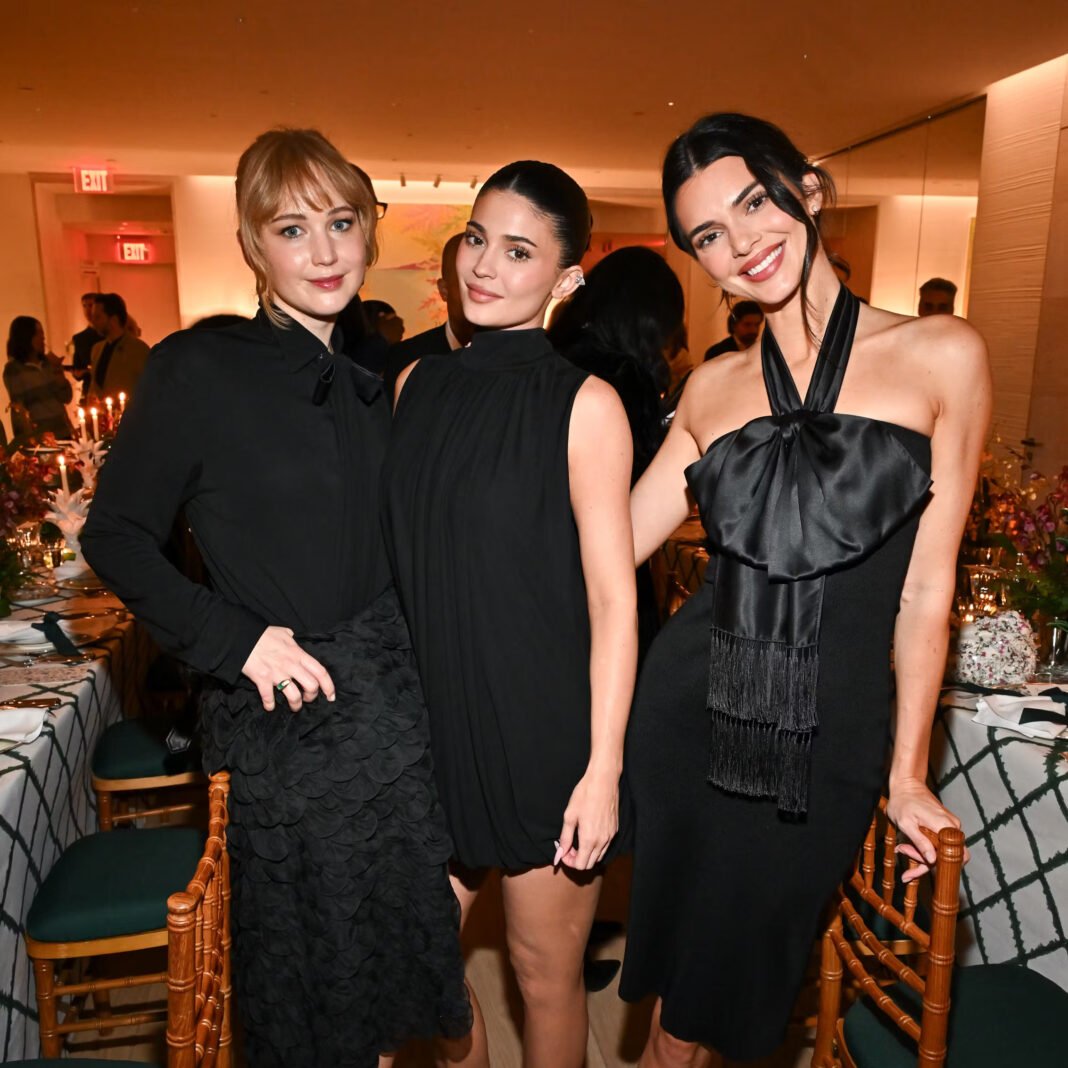
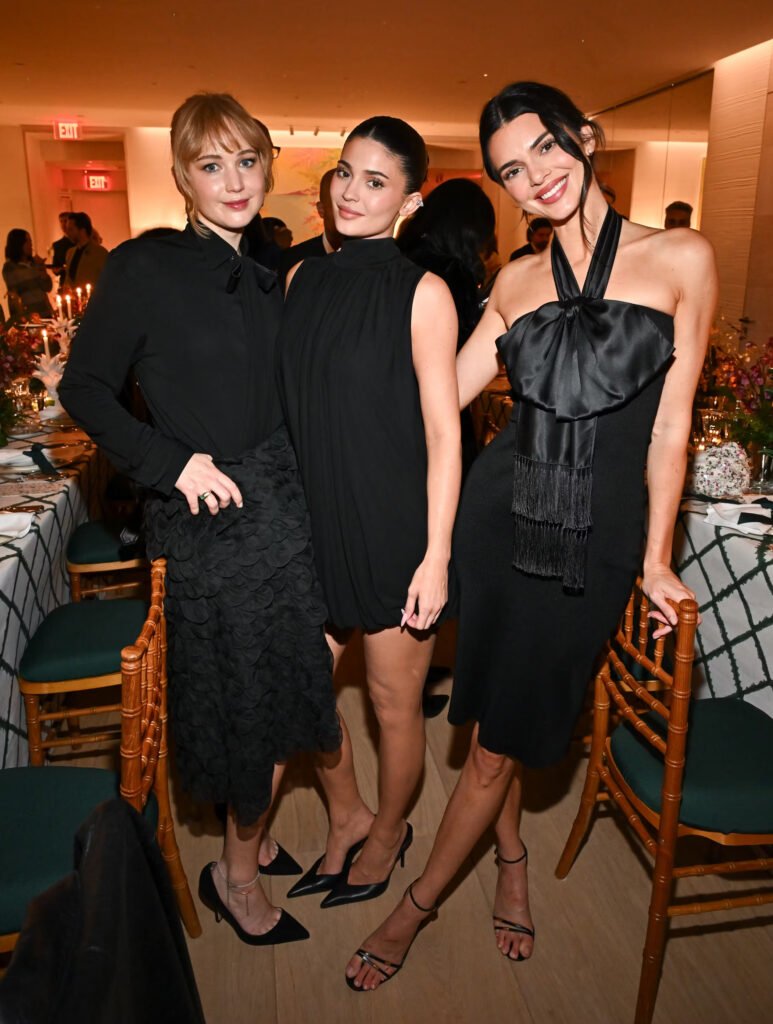
When Kendall Jenner wired $2,495 to Tab Vintage for a 17-year-old Dior dress last month, she made a statement louder than any runway appearance: the past is worth more than the present. On November 11, while Jennifer Lawrence showcased Jonathan Anderson’s unreleased Spring 2026 collection at Dior’s Beverly Hills dinner, the Jenner sisters arrived in archival looks—Kendall in her John Galliano-era mini, Kylie in a sleek vintage silhouette. The contrast wasn’t accidental. It’s a pattern. Despite having unfettered access to Dior’s latest offerings and personal relationships with the house, the Jenners consistently bypass contemporary collections for Galliano’s 1990s and 2000s treasures. Their preference illuminates an uncomfortable truth for luxury fashion: Generation Z’s most powerful style arbiters are voting with their wallets, and they’re buying backwards. As Anderson assumes creative leadership of one of fashion’s most storied houses, the question isn’t whether his work will be critically acclaimed—it’s whether it can compete with ghosts.
The economics of this preference are striking. Kendall Jenner’s $2,495 purchase represents a calculated investment in a Spring 2008 halter-neck mini dress—a piece from Galliano’s final era at Dior before his 2011 departure. This price point sits significantly below current Dior ready-to-wear offerings, where comparable cocktail dresses retail between $4,500 and $8,000. The financial logic is clear: archive pieces offer both cultural cachet and relative value. More significantly, they appreciate. Galliano-era Dior has demonstrated consistent price escalation on the secondary market, with certain pieces from his tenure increasing in value by 200 to 300 percent over the past decade.
This move signals a fundamental shift in how influential consumers approach luxury fashion. The Jenners are not merely nostalgic collectors—they are strategic curators building wardrobes that function as both personal expression and financial assets. Their choice to wear vintage Dior to a Dior event celebrating new creative direction speaks to a broader crisis of confidence in contemporary luxury design. When those with unlimited access to new collections consistently select old ones, the message to the industry is unambiguous: current creative output is failing to match historical benchmarks.
The financial implications are substantial for LVMH and Dior. The luxury resale market has grown exponentially, with platforms like The RealReal and Vestiaire Collective reporting that Dior archive pieces—particularly from the Galliano years—command premium pricing and sell faster than contemporary collections. Vestiaire Collective data indicates that Galliano-era Dior pieces have become among the platform’s most sought-after items, with certain iconic looks from his 1997 to 2011 tenure selling within hours of listing. This creates an uncomfortable paradox: Dior’s heritage is outperforming its present in both cultural relevance and market demand.
The preference for archive pieces reflects broader generational attitudes toward luxury consumption. Generation Z, which the Jenners represent and influence, approaches fashion with fundamentally different values than previous luxury consumers. They prioritize uniqueness over newness, provenance over trends, and investment potential over seasonal relevance. A vintage Galliano piece offers something no current collection can: guaranteed scarcity, historical significance, and the cultural weight of a designer whose tenure is now mythologized. Contemporary collections, by contrast, are immediately available to anyone with sufficient capital—a reality that diminishes their appeal to consumers seeking distinction.
This is significant because it challenges the traditional luxury business model. Fashion houses have historically operated on the premise that newness drives desire and commerce. Collections are designed, marketed, and sold with the expectation that consumers will continually refresh their wardrobes with current offerings. The archive economy disrupts this cycle entirely. When the most influential voices in fashion consistently champion pieces from 15 to 20 years ago, they redirect consumer attention and spending away from new collections toward secondary markets where the brand captures no revenue.
Industry experts suggest that this trend represents both challenge and opportunity for heritage houses. The commercial reality is stark: every dollar spent on vintage Dior is a dollar that doesn’t reach LVMH’s balance sheet. However, the sustained demand for archive pieces also validates the enduring power of Dior’s brand equity and demonstrates that the house has created work of lasting cultural value. The challenge facing Jonathan Anderson is not simply to design appealing collections—it is to create work that will be considered archive-worthy in two decades, pieces that future generations will seek out and pay premium prices to own.
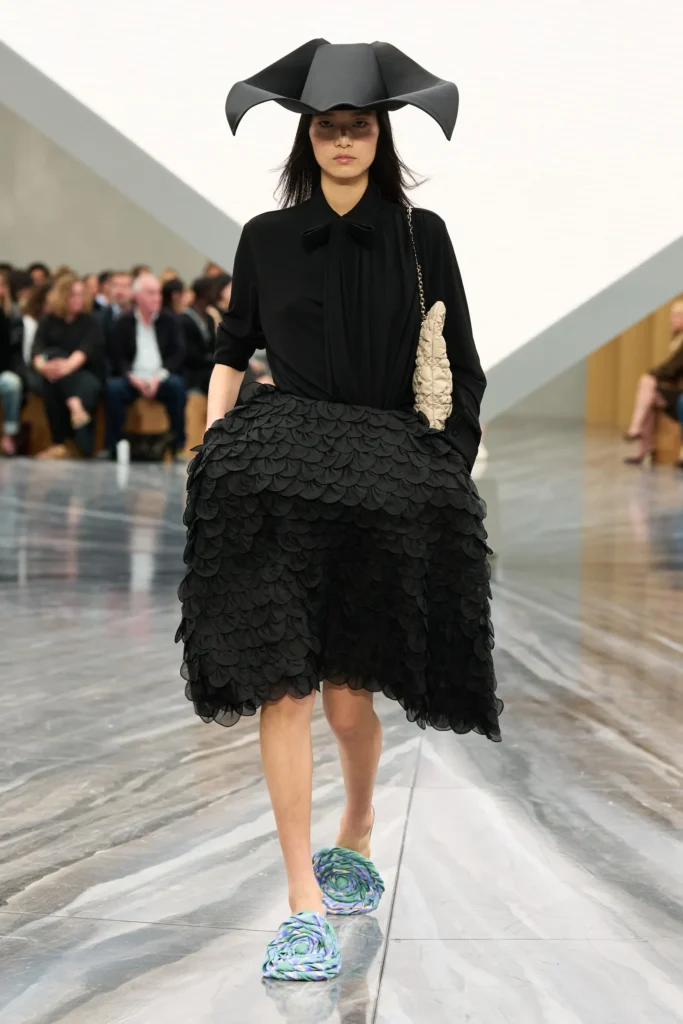
Anderson’s appointment as creative director comes at this precarious moment. His Spring 2026 debut collection, previewed through Jennifer Lawrence’s appearance at the Beverly Hills dinner, will be measured not only against current market expectations but against the accumulated weight of Galliano’s legacy. Lawrence wore Look 58—a bow-embellished blouse and textured midi skirt with petal-like appliqués—representing Anderson’s first womenswear statement for the house. The piece demonstrated his signature attention to craft and texture, hallmarks of his acclaimed work at Loewe. Yet even this carefully orchestrated debut was visually overshadowed by the Jenners’ vintage selections, a dynamic that crystallizes the challenge Anderson faces.
The broader implications extend beyond Dior to the entire luxury sector. If the most influential consumers are systematically preferring heritage pieces over new collections, the industry must reconsider its creative and commercial strategies. Some houses have begun acknowledging this reality by launching their own archive initiatives and partnering with resale platforms. Others are attempting to design with future collectibility in mind, creating pieces intended to become tomorrow’s archives. However, this approach risks producing derivative work that consciously imitates past successes rather than pushing creative boundaries.
The Jenners’ vintage strategy also highlights generational differences in fashion literacy and access. Previous generations of luxury consumers relied on fashion houses to curate their options through seasonal collections. Today’s influential consumers have unprecedented access to fashion history through resale platforms, Instagram accounts dedicated to archival fashion, and digital databases that make decades of runway history searchable and shoppable. This democratization of fashion knowledge has created consumers who are as conversant with Galliano’s 1997 debut as with Anderson’s 2025 arrival—and who have decided which they prefer.
As Anderson embarks on his tenure at Dior, the success metric has fundamentally changed. Critical acclaim and strong sales, while important, are no longer sufficient. The ultimate measure will be whether his work can achieve what Galliano’s did: create pieces so compelling, so culturally resonant, that they will be sought after decades from now. Whether future generations will wire money to vintage dealers for Spring 2026 Anderson-era Dior remains the defining question. The Jenners, arriving at Anderson’s welcoming dinner in carefully selected ghosts from Dior’s past, have already rendered their preliminary verdict. The luxury fashion industry is watching to see if Anderson can change it.