
Sleeq Hair, a New York-based hair care and styling brand, has been watching hair care borrow its logic from skincare over the past several years. Salicylic acid, niacinamide, peptides and caffeine now show up in scalp formulas as often as they do in facial serums, and along with those ingredients came skincare’s approach to timing. Epidermal cells turn over roughly every 28 days, so skincare users are taught to check for change at four weeks, eight weeks and twelve weeks. Hair operates on a different clock, and understanding that difference matters more than the ingredient list itself.
The scalp is where each hair cycle starts, and it responds faster than the hair growing out of it. The American Academy of Dermatology draws a distinction worth knowing: losing between 50 and 100 hairs a day is normal, usually tied to a specific trigger such as childbirth, a high fever, surgery, significant weight loss or stress. Hair loss is a separate condition, defined by hair that has stopped growing altogether. The AAD lists causes ranging from hereditary and immune-related conditions to medication use and certain styling or hair-care habits. Much of what looks alarming in the mirror turns out to be normal, temporary or treatable, and the organization’s guidance is consistent on one point: a change that is sudden, persistent or accompanied by irritation should go to a board-certified dermatologist first, since earlier diagnosis tends to produce better outcomes.
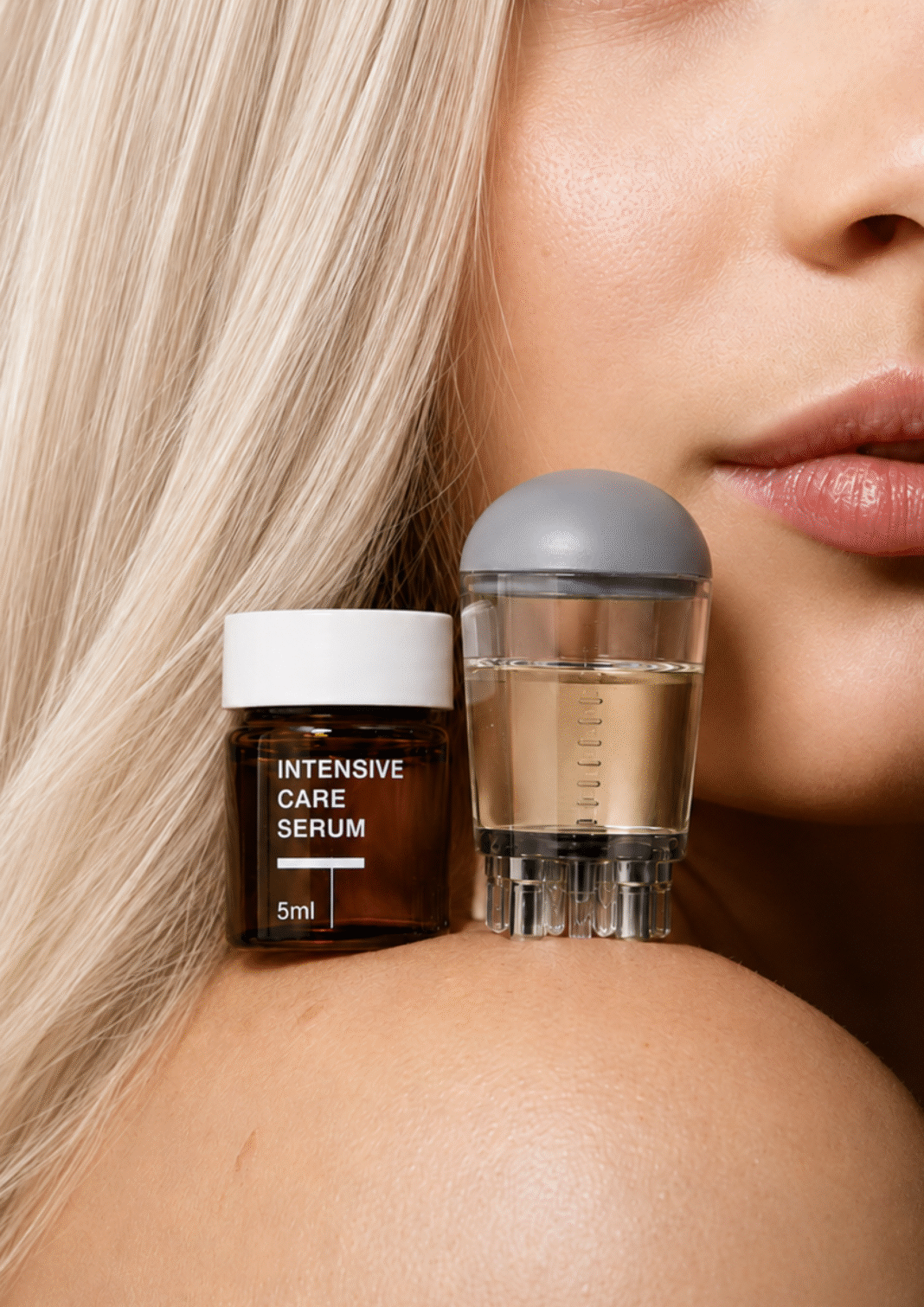
The AAD’s own recommendations for managing hair loss center on protecting the hair that already exists, through a mild shampoo, conditioner after every wash, leave-in products to cut down on breakage, lower heat when styling, looser styles, and avoiding tight buns, ponytails and braids that put tension on the strand. Useful as that guidance is, it addresses the strand rather than the scalp beneath it. Sleeq Hair built its 4-in-1 Hair Growth Serum around the argument that thinning and shedding call for attention to that scalp environment as well. The serum is a lightweight, non-oily, non-sticky, no-rinse treatment applied directly to the scalp, combining ginseng, which the brand says supports stronger-looking, revitalized hair, with rosemary for general scalp care, thuja leaf for what it describes as a healthier-looking scalp environment, and biotin for the appearance of thicker, fuller hair.
Dr. Ailee Merel, a hair and scalp wellness specialist, frames consistency as the deciding factor in whether scalp care works: “Consistent scalp care is essential when addressing visibly thinning hair.” Dr. Lia Lee makes a related point about the no-rinse format specifically, arguing that its ease of use is what sustains a routine:
“It encourages consistency. One of the most important factors in hair care routines”
That framing matters because hair does not change on the timeline of a marketing campaign. Sleeq Hair describes a first month in which the visible goal is a cleaner, more balanced-feeling scalp and hair that is easier to manage day to day, with any shift toward stronger-looking roots and improved fullness expected to surface over the months that follow. The biology behind that timeline is not brand-specific: a hair follicle spends years in an active growth phase before moving through a transition phase and then a resting phase that ends in shedding, which is why meaningful change in a hair-care routine is measured in months rather than days.
Hair loss is closely tied to a person’s sense of identity, which is part of why thinning can feel disproportionately upsetting relative to its medical significance. But the underlying causes vary, and shedding that is persistent, sudden or patchy warrants evaluation by a board-certified dermatologist or a qualified scalp specialist rather than self-diagnosis, so the specific type of hair loss can be identified correctly. Where scalp care does apply, both the AAD’s guidance and Sleeq Hair’s positioning point to the same conclusion: hair grows in cycles, and results depend on supporting the scalp on a regular basis and allowing enough time for that cycle to run its course.
Skincare taught a generation to check the mirror at four weeks. Sleeq Hair is asking the same audience to wait a little longer and look a little closer, starting at the scalp. The 4-in-1 Hair Growth Serum is available through sleeqhair.com.